


Risky Stocks Break

Trades in Soda and Whisky;
The US Midterms are upon us. I gather we should know the likely election result tomorrow morning UK time. The odds strongly favour a Democratic sweep, meaning they win both houses.
Polymarket Betting Odds – Democrat Win
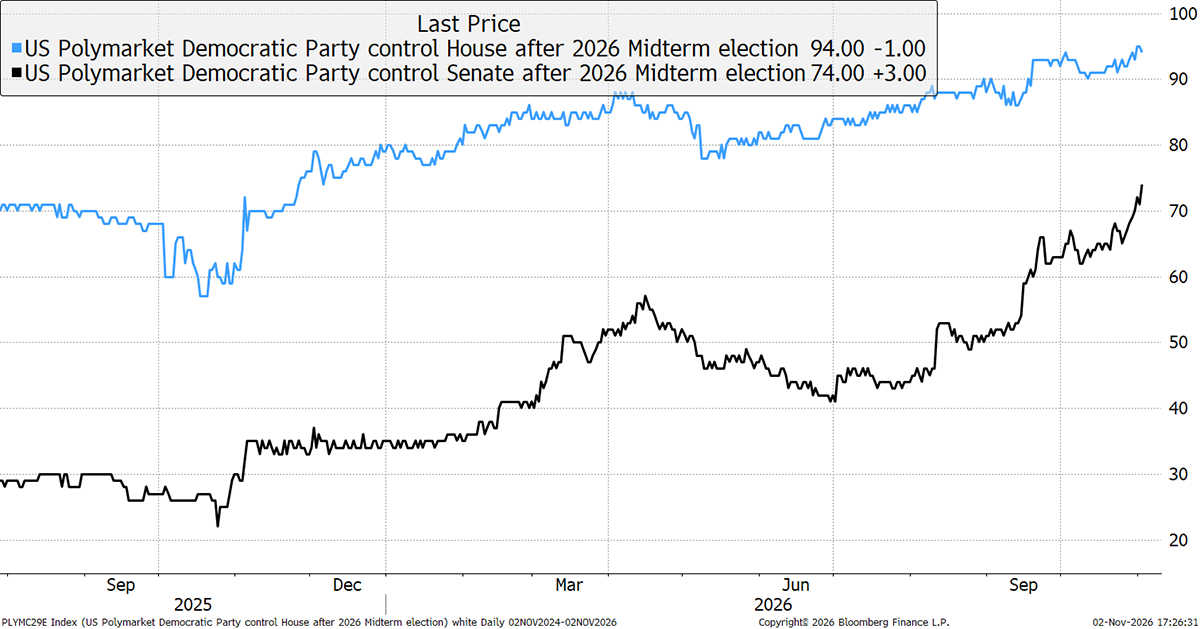
The Democrats are campaigning against data centres, and this threatens the core of this multi-year bull market. Trump can veto national legislation, but the risk is at the state level. Tech hardware and industrials have already weakened as the Democrats’ odds have improved. The US market has come under renewed pressure as the cost of AI faces reality. Elon Musk said that Grok, X’s AI platform, needed to control costs:
“The cost of serving Grok Bot was unsustainably high relative to revenue.”
Anthropic's anticipated IPO price is down 23% since September, and Google’s shares are down 30% from their peak. Intel, backed by a state investment from Trump, is down 58%. There are many others.
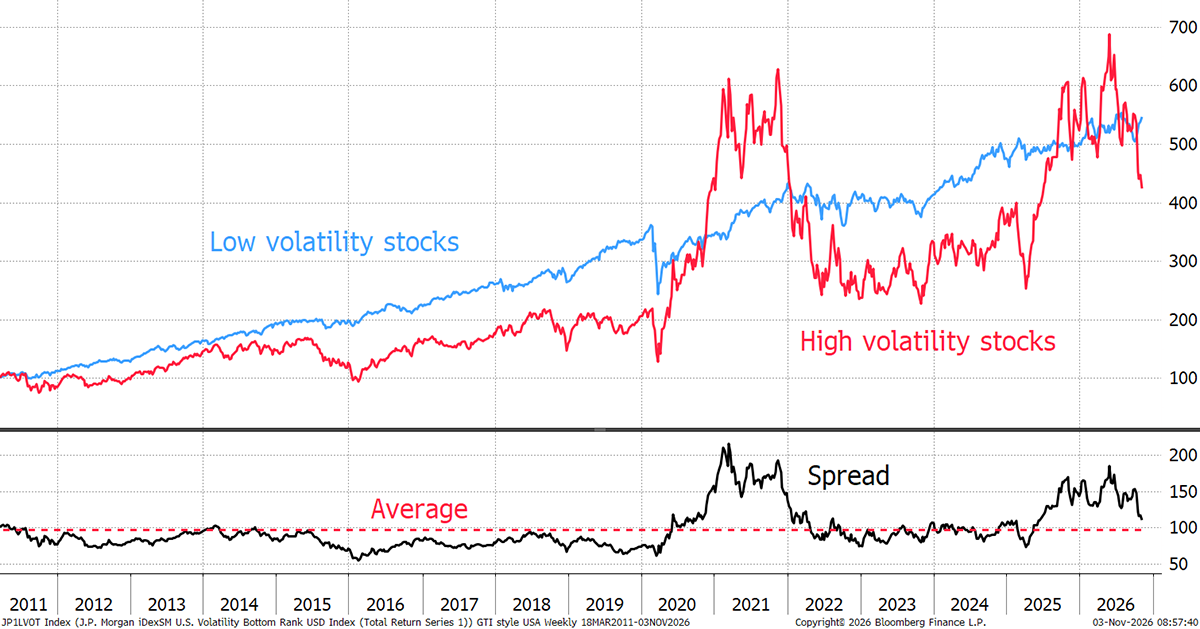
You’ll be familiar with this chart, which sums it up nicely. High-volatility (speculative) stocks are troubled while low-volatility (quality) stocks are beneficiaries. The red line has made a significant low.
Quality vs Speculative Stocks
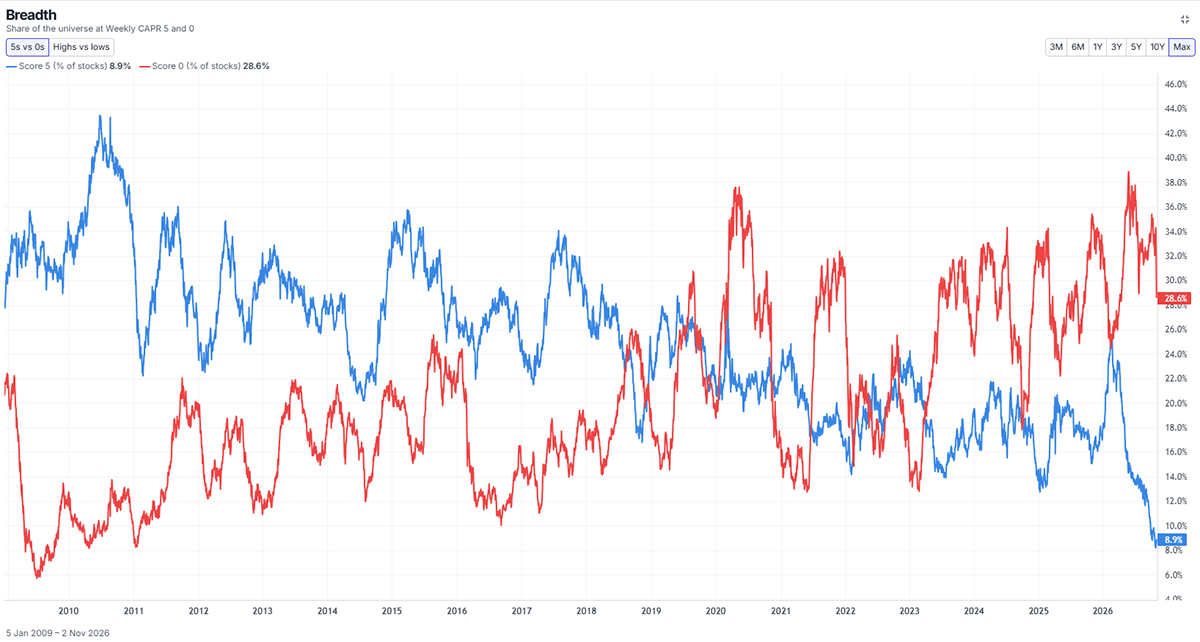
Inside the market, a mammoth rotation is underway. The blue line below shows the percentage of winners, i.e. the stocks that have been beating the market. Pre-2020, you could say 25% of all stocks were outperforming the market, but since then, that figure has dropped to a record low of 8.9%. Similarly, the percentage of stocks lagging the market had spiked to 39%, but that is now falling.
Percentage of Winning vs Losing Stocks
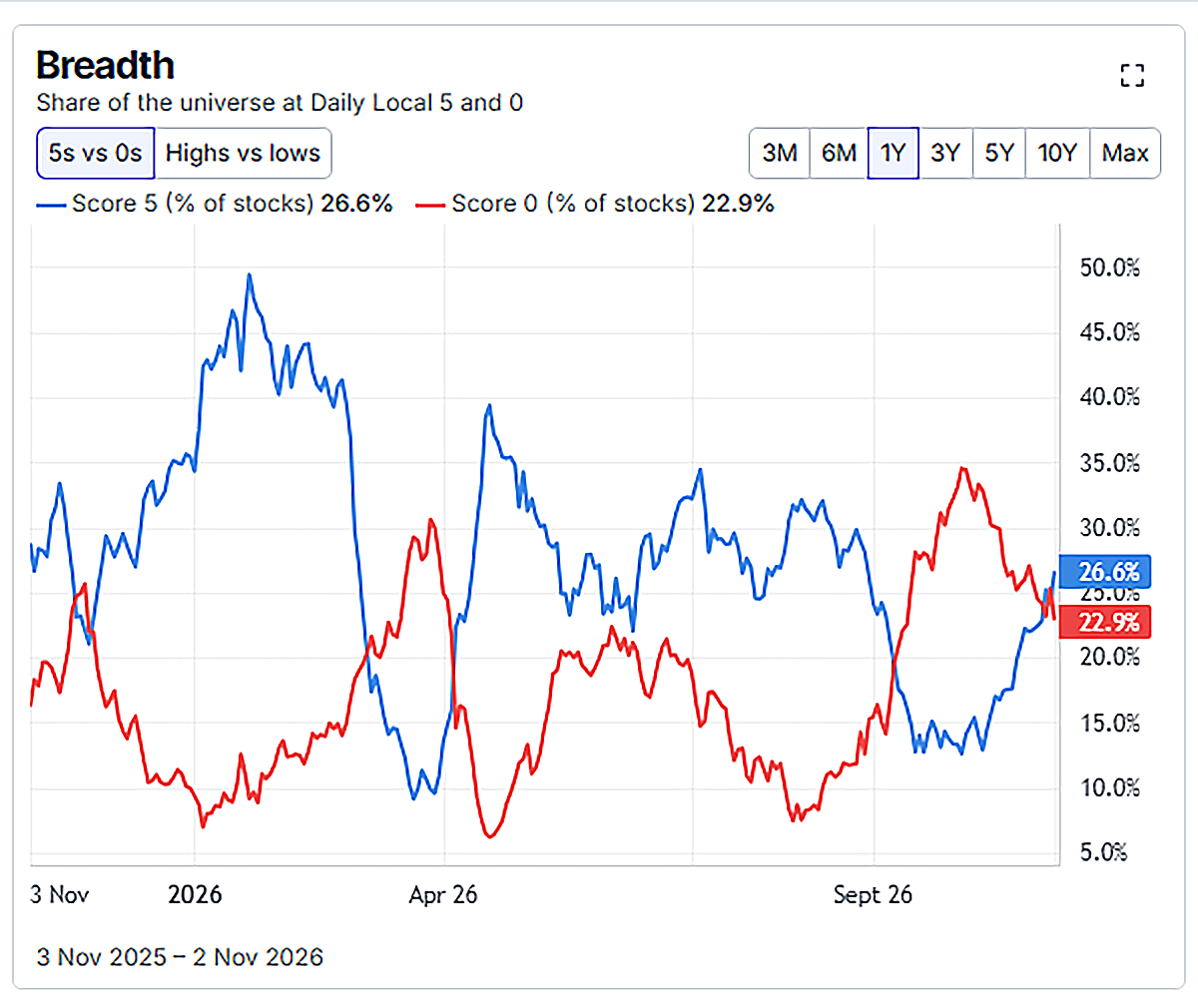
This is a price-relative chart, focusing on stocks leading or lagging the market as opposed to rising or falling in price. Moving on to the latter, the rotation in relative performance has been positive for most stocks. Investors dumping the AI trade, which includes the largest stocks, have reallocated capital across the market. As a result, more stocks are now rising than falling. While the market may slump in the future, here and now, we have improving breadth, which is a good thing, especially for active investors.
Percentage of Rising vs Falling Stocks
Wheeling out my old momentum chart, the correction is underway. The spread on the lower chart shows it better. The momentum effect had been heavily extended, in line with 1999 (tech), 2003 (overloaded with defensive stocks after a bear market), and 2007 (real estate, emerging markets, and commodities). If I were a betting man, which to some extent is my job, it looks like the latest great momentum cycle is done. Good riddance.
Performance of Winners vs Losers since 1996
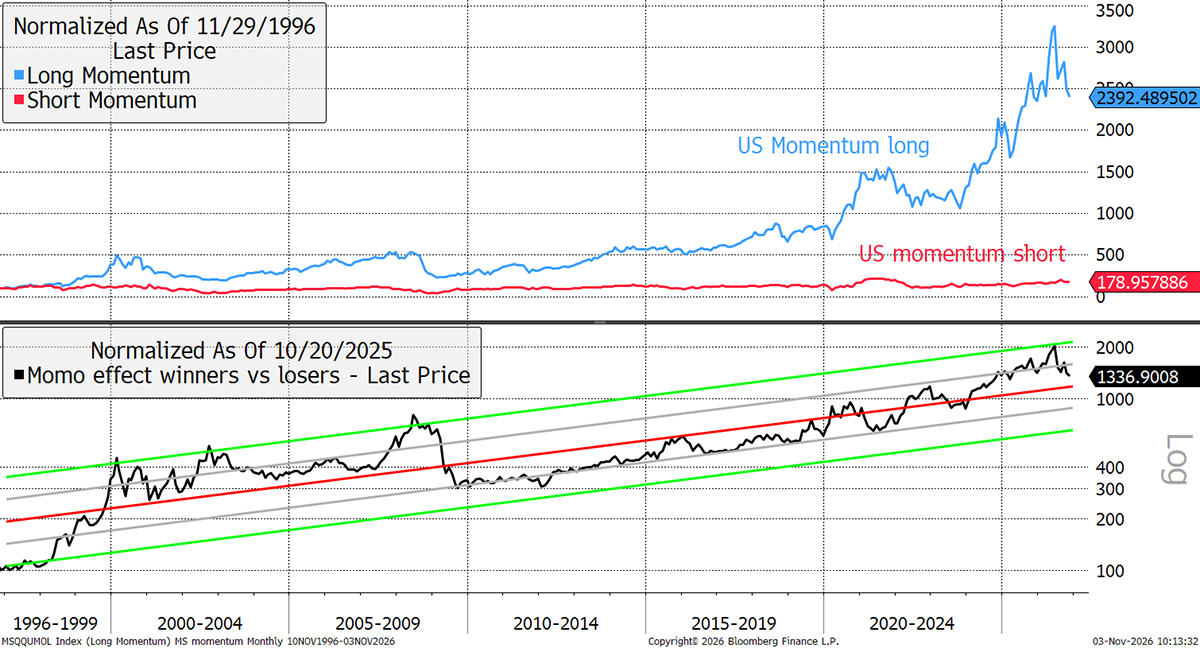
That shifts the odds of a bear market considerably, but as I have shown many times before, that doesn’t mean investors need to cash in immediately. As Buffett said, the market is a church with a casino attached. It is time to spend more time at church.
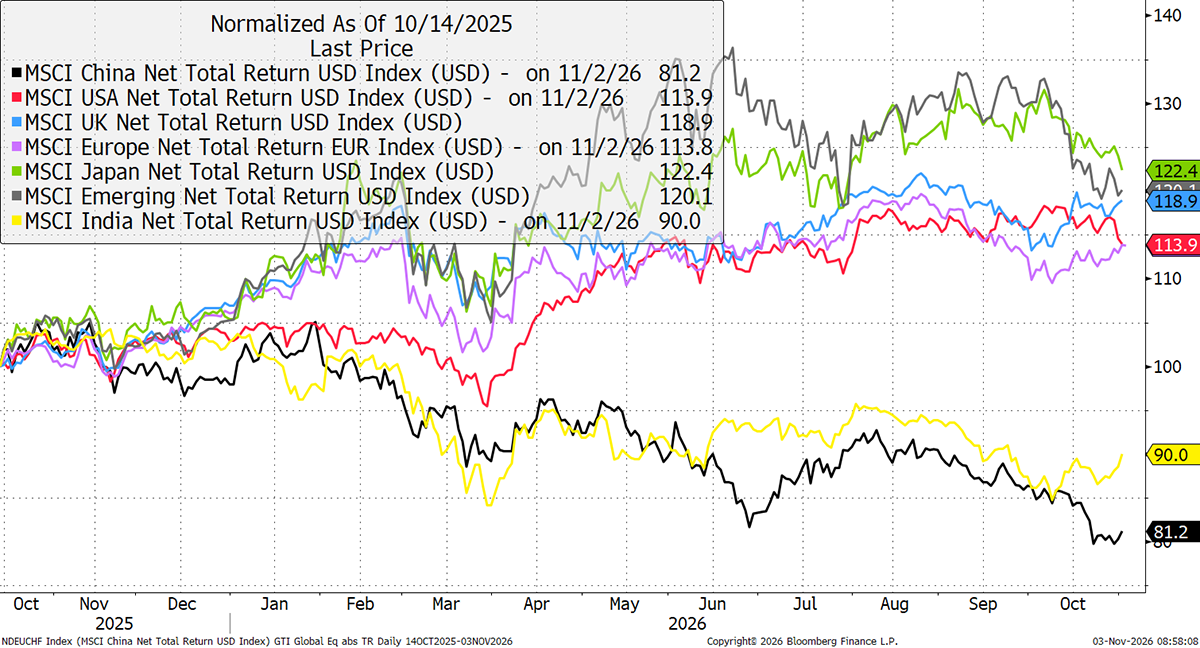
Geographically, we see weakness in emerging markets and Japan, with the UK resilient. China (black) remains weak, but India (yellow) might be worth a look. The best thing about falling prices, at least when you don’t own them, is that they provide future opportunities.
Global Equities Total Return Past Year
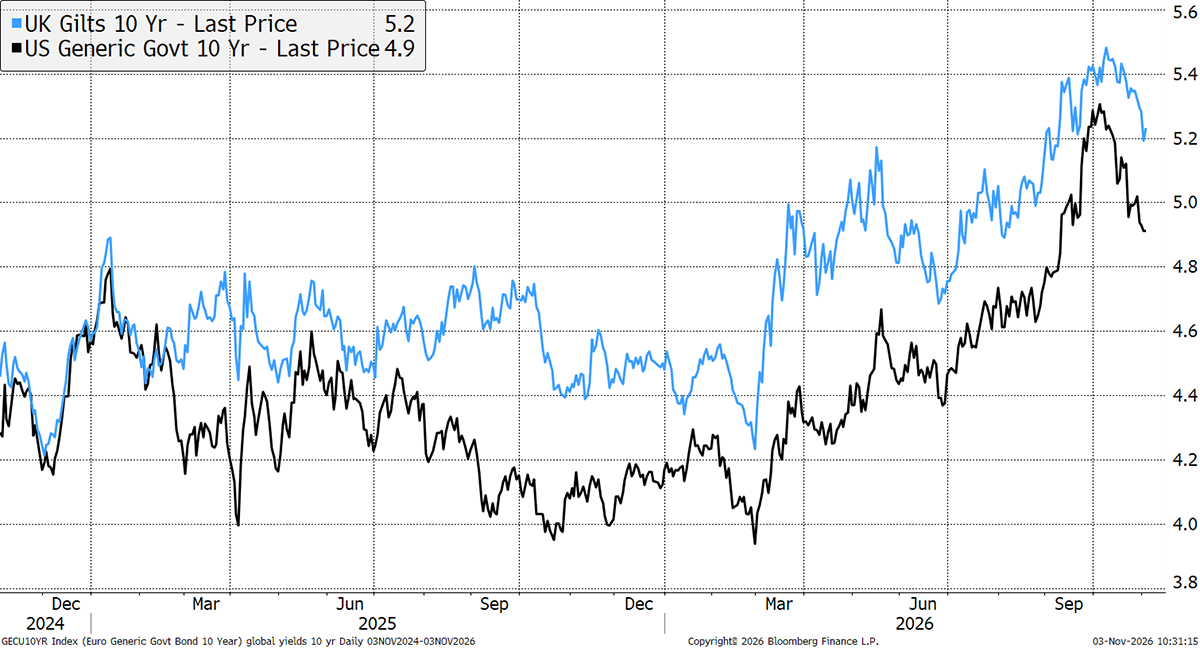
Market rotation means the old losers are doing better, while the winners give up ground. As I wrote in Where’s Goldilocks, market breadth deteriorated as bond yields rose. Quite simply, low growth companies, which make up the majority, suffer as the cost of borrowing rises. In recent weeks, bonds have found a bid, and so the improvement in breadth has duly followed. UK Gilts and US Treasuries have seen yields fall meaningfully.
UK and US Bond Yields
Let us not forget how bad this bond rout has been. Since 2009, equities have beaten bonds, but most of that has occurred since 2020. The scale of the divergence is unprecedented, worse than the 1970s. This time, yields started to rise from near-zero rates, which has exacerbated this bond bear as yields normalised.
US Bonds vs Equities since 1972
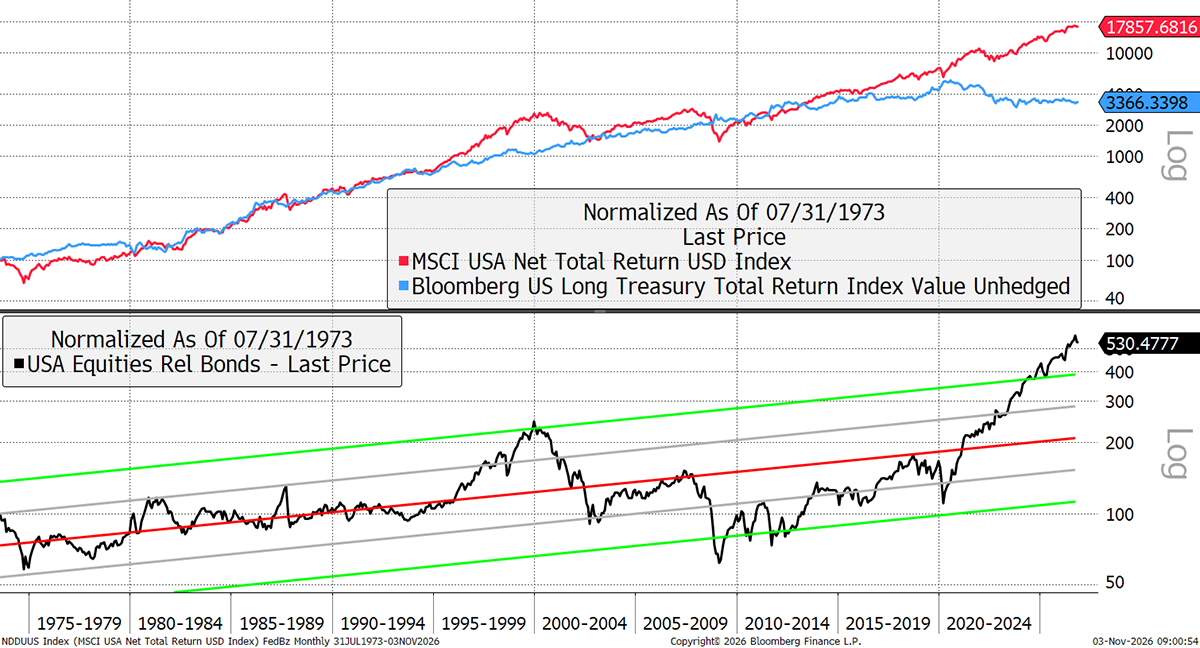
While we all fear the long-term impact of our heavy spending governments and growing debt piles, when equities come under pressure, bonds soon become the cleanest dirty shirt. Zooming in on the above chart, something has changed.
US Bonds vs Equities Past Year
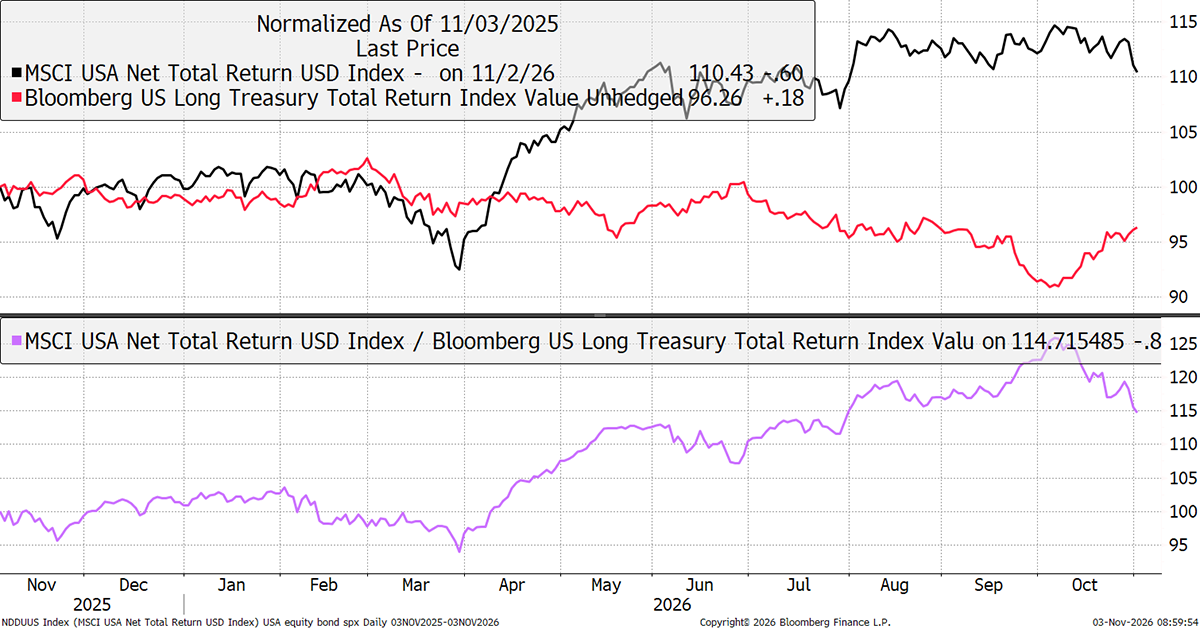
It’s safety first, and our stocks are on the right side so far, but things change, and we will have to adapt as needed.
General - Your capital is at risk when you invest, never risk more than you can afford to lose. Past performance and forecasts are not reliable indicators of future results. Bid/offer spreads, commissions, fees and other charges can reduce returns from investments. There is no guarantee dividends will be paid. Overseas shares - Some recommendations may be denominated in a currency other than sterling. The return from these may increase or decrease as a result of currency fluctuations. Any dividends will be taxed at source in the country of issue.
Funds - Fund performance relies on the performance of the underlying investments, and there is counterparty default risk which could result in a loss not represented by the underlying investment. Exchange Traded Funds (ETFs) with derivative exposure (leveraged or inverted ETFs) are highly speculative and are not suitable for risk-averse investors.
Bonds - Investing in bonds carries interest rate risk. A bondholder has committed to receiving a fixed rate of return for a fixed period. If the market interest rate rises from the date of the bond's purchase, the bond's price will fall. There is also the risk that the bond issuer could default on their obligations to pay interest as scheduled, or to repay capital at the maturity of the bond.
Taxation - Profits from investments, and any profits from converting cryptocurrency back into fiat currency is subject to capital gains tax. Tax treatment depends on individual circumstances and may be subject to change.
Investment Director: Charlie Morris. Editors or contributors may have an interest in recommendations. Information and opinions expressed do not necessarily reflect the views of other editors/contributors of ByteTree Group Ltd. ByteTree Asset Management (FRN 933150) is an Appointed Representative of Strata Global Ltd (FRN 563834), which is regulated by the Financial Conduct Authority.
© 2026 ByteTree Group Ltd


