


Artificial Pharmaceuticals

There are no changes to the portfolios.
Life Expectancy and Innovation
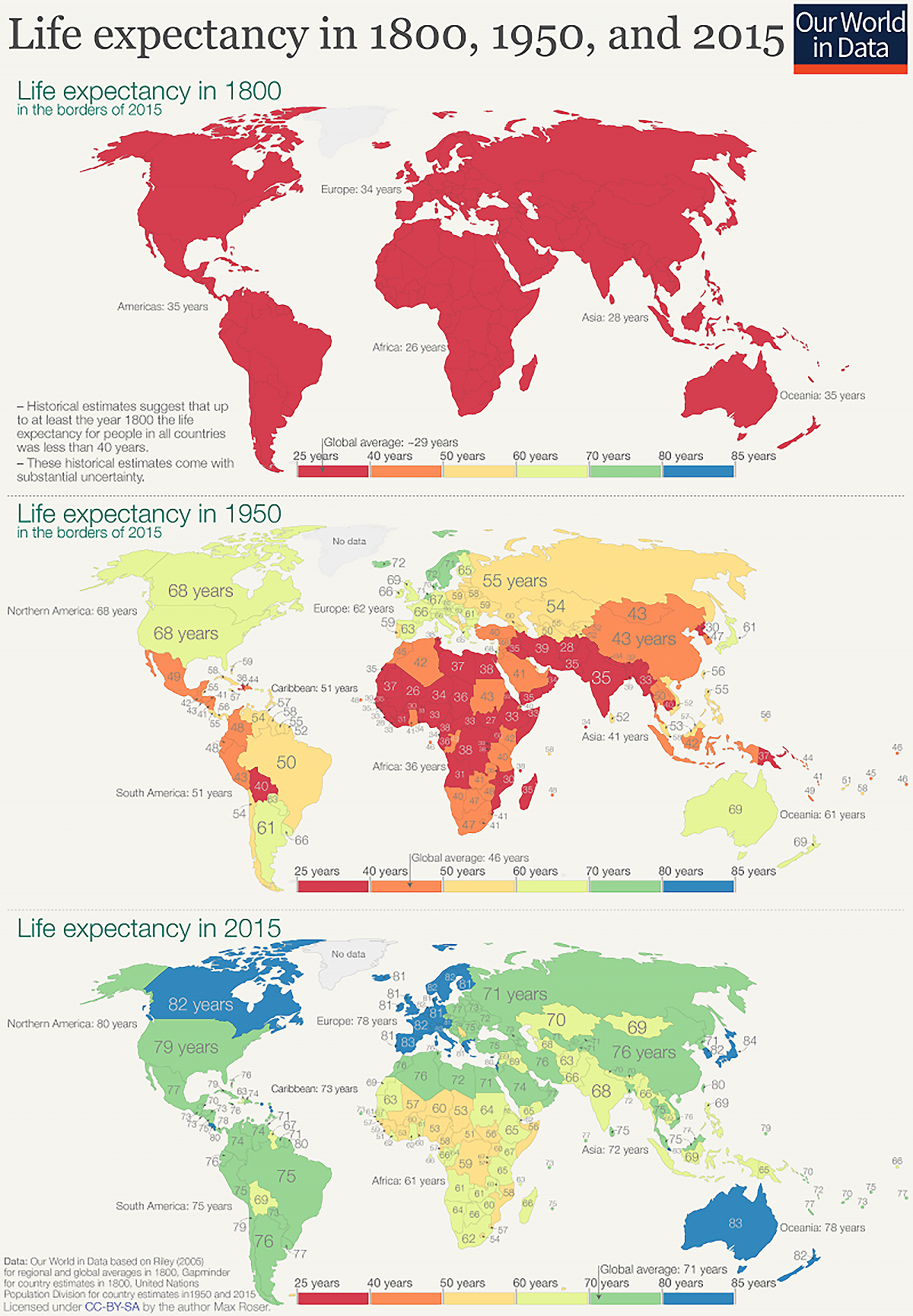
Hans Rosling was a vibrant Swedish economist who played a game with the audience at his talks, quizzing them on things like girls in education, birth rates, and poverty rates. Typically, the audience leaned towards the pessimistic answer, perhaps influenced by negative news stories that loomed large in their minds. But in every case, the answer was positive. There are more girls in school than ever, fewer babies dying than ever, and fewer people in poverty than ever. As GDP per Capita improves, life expectancy rises with it.
Demographics is one of those powerful forces that move too slowly for financial markets to focus on - a classic frog in boiling water. Baby boomers are enjoying unprecedented lifespans thanks to the fantastic advances in modern medicine.
The Greatest Achievement of the 19th and 20th Centuries?
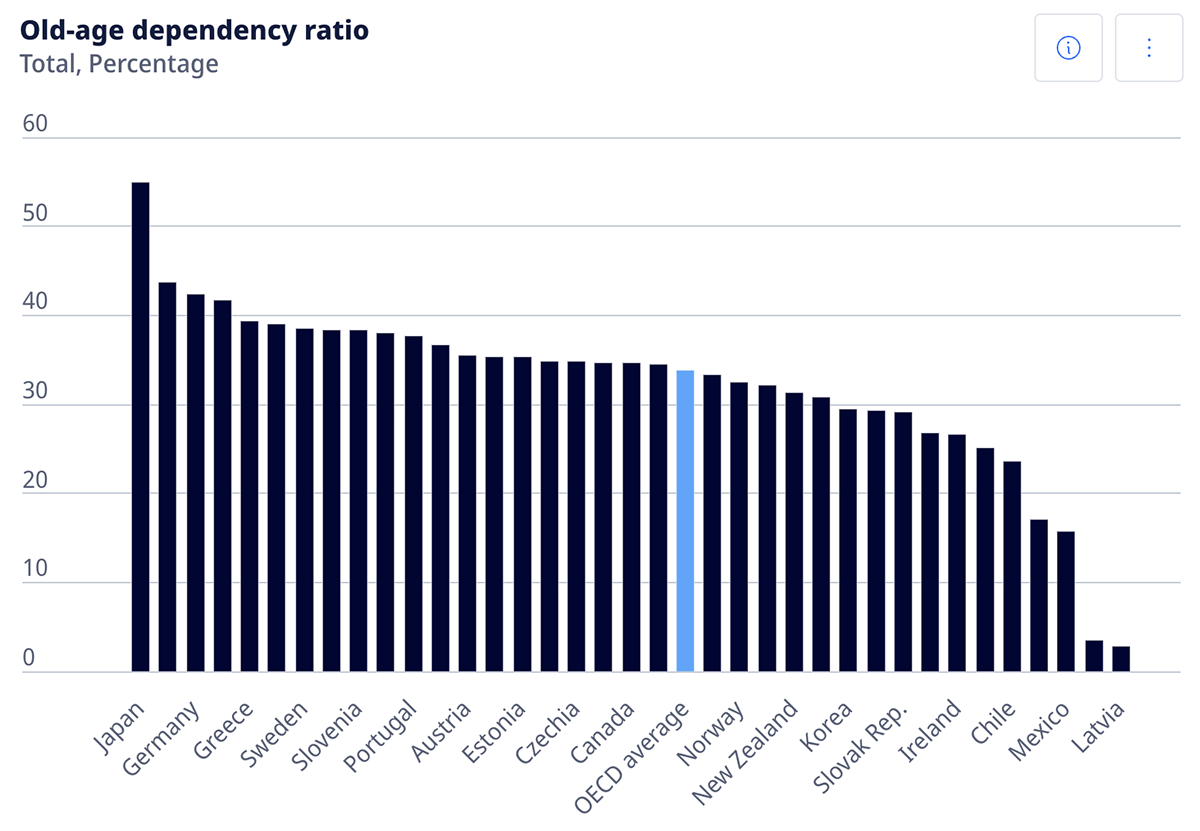
The end of WWII, which led to a baby boom, also gave rise to many of today’s pension and healthcare systems. These were predicated on the technology and demographics of the time. One of the most influential books on this is The Great Demographic Reversal, by Charles Goodhart and Manoj Pradhan. They argued that the impact of this today will be inflationary, as the blessing of long life expectancy is accompanied by the challenge of serving the same quality of life and healthcare to more people, while there are proportionally fewer workers to pay for it. This ratio of workers to retirees is called the dependency ratio. Japan is leading the way in automating healthcare services, and this chart shows why – they have to.
OECD Dependency Ratio
The driving force of human progress has been the ability to do more with less, like what the Industrial Revolution did for manual labour. While much political debate today is centred around how to fund and deliver a high-quality retirement, AI has opened up the possibility of tackling the problem not through taxation and distribution, but through innovation.
Healthcare: The Prime Beneficiary?
A recent study by a firm called Citrini has brought this debate to the fore. They gained fame for their work on AI bottlenecks, identifying niche Asian tech hardware companies whose products were in high demand but in short supply, and for the data centre buildout. (That, and sending an analyst into the Strait of Hormuz on a speedboat at the peak of the crisis.)
As for their turn towards biotech, they said,
“In early June, we began searching for opportunities outside of AI infrastructure, concerned about crowding. One particular area struck us as asymmetric: Life Sciences & Healthcare.”
With that in mind, they worked with Anthropic at their offices to develop a scorpion antivenom.
“Our hypothesis was simple… if we managed to use AI to create a molecule that worked (in a test tube, unless we accidentally vibe-coded a ten-billion-dollar drug…), we could reasonably underwrite that something had changed.”
When we talk about AI in drug development, the key distinction is that this is not ChatGPT for biology. Many of the LLMs we interact with are trained on endless, free internet text, while biological models learn from scarce, costly, scientific datasets. Meanwhile, while code can be verified in seconds, a biological molecule needs months of testing, a timescale that cannot be compressed, followed by nearly a decade of clinical trials. Meanwhile, as the study notes, the risk of creating biologically harmful products is “non-zero”. This is a high-risk business.
What can change is the simulation of targets and ideas, not the early testing or the clinical trials, which are a well-trodden, time-consuming, and expensive path. Notably, 52% of candidates pass Phase 1 trials (which cost roughly $4m), 29% pass Phase 2 ($12m), and 58% pass Phase 3 ($20m+), with 91% of those who file with the regulator getting approval. Bear in mind that many large pharma companies run numerous trials for the same drug, multiplying the cost, and this process generally takes around 6-8 years of clinical work. Most failures happen in Phase 2, which tests whether the target drug actually causes that disease in humans, while the most costly failures occur in Phase 3, when the most capital has been deployed.
Compounded, around 8% of candidates entering Phase 1 reach approval, and after all that comes reimbursement negotiation, with different bodies in every country. Without sufficient reimbursement, all that work may have yielded little reward, since few can afford the top drugs without insurance coverage.
AI can compress the front end before this clinical funnel, but it can’t accelerate or cheapen this lengthy phase. Suddenly, non-pharma entities like Citrini can conjure candidates for pre-clinical trials. Beyond drug development, AI has also cracked some significant research barriers.
Protein Folding
In January 2024, a Google subsidiary called Isomorphic Labs made headlines when it struck partnerships with Novartis and Eli Lilly. The real story, though, came earlier, with something called “AlphaFold”. AlphaFold is an artificial intelligence system they developed that predicts proteins' three-dimensional structure. As noted in a blog post shared on Google DeepMind,
“Proteins are the complex, microscopic machines that drive every process in a living cell. Composed of long, unique chains of amino acids, they precisely fold into a 3D structure that largely defines the protein’s function - making knowledge of this shape critical for drug discovery and understanding disease. If a protein misfolds, it can lose its function and lead to disease, like Alzheimer’s and Parkinson’s.”
The challenge stemmed from the fact that a protein can theoretically fold into an astronomical number of shapes. For fifty years, this was one of the grand challenges of biology. Previously, figuring that out experimentally took months and millions of dollars. In 2020, Demis Hassabis and David Baker of DeepMind delivered AlphaFold 2, which reduced protein-structure discovery to minutes at near-zero marginal cost. This feat earned them the 2024 Nobel Prize in Chemistry. They said,
“One year later, we released AlphaFold 2’s predictions for more than 200 million protein structures, achieving what would take hundreds of millions of years to solve experimentally.”
Physical AI
Returning to our original question, the final piece of today’s puzzle is physical AI, also known as robotics. Here, physical systems (humanoid or otherwise) can have embedded AI, giving them the ability not only to reason but to act. Physical AI agents trained on healthcare and patient-specific data could ease the burden on many health systems.
Beyond physical care, these systems also struggle to handle the scale of sensitive and fragmented data about the health of entire populations. Regulation and paperwork create a huge burden: one study found that resident doctors spent 73% of their time on non-patient-facing tasks, roughly 4 hours of admin for every 1 hour of direct patient care. This is another area where AI can make a material improvement.
In Japan, which has the highest dependency ratio shown above, the government has implemented programs to promote robots in nursing homes. These care robots (or “kaigo robots”) assist care workers and support residents with daily needs, complementing rather than replacing employees. The equipment fell into three categories:
- Transfer aids are devices that help staff lift residents from beds to wheelchairs, reducing back strain, a leading cause of caregiver burnout.
- Mobility robots are systems that can help residents move, use the bathroom, or shower more independently.
- Monitoring systems are sensors that alert staff when a resident has fallen, or social robots designed to offer companionship and cognitive stimulation.
While robotics is already prevalent in surgery, with Intuitive Surgical’s da Vinci systems as the dominant global machine, we would expect the rest of the world to follow Japan’s lead in reducing the caregiver’s burden with more mundane robotic assistants. (As an aside, one of the key findings of the study was that the more robotic assistance a facility had, the more employees it could attract and retain. Robots make the job easier and more enjoyable, which may reduce fears of AI job replacement.)
Healthcare Winners and Losers
If AI can assist early-stage drug development and parts of the care system, but not the clinical stage trials, what are the investment implications?
Within healthcare, a broader shift from molecules to biologics is underway, from simple chemical compounds to complex and often personalised drugs. AI is accelerating this trend by enabling faster analysis of extreme complexity, such as the human genome. As this idea has taken hold, Biotech has woken from its long slumber.
Biotech vs the World Index
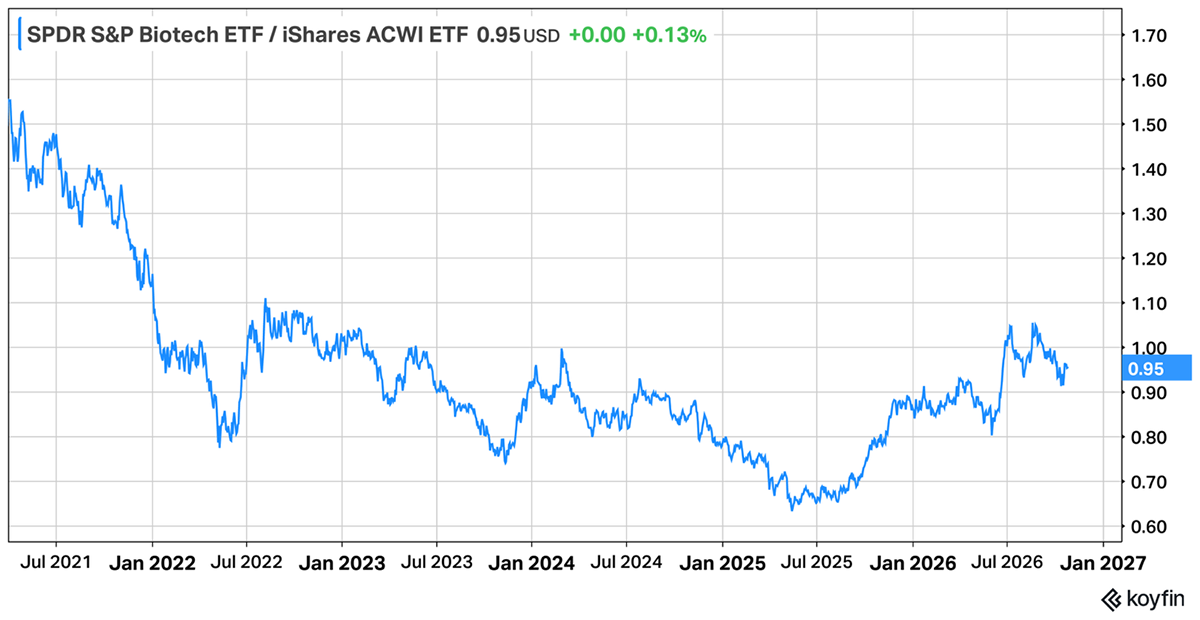
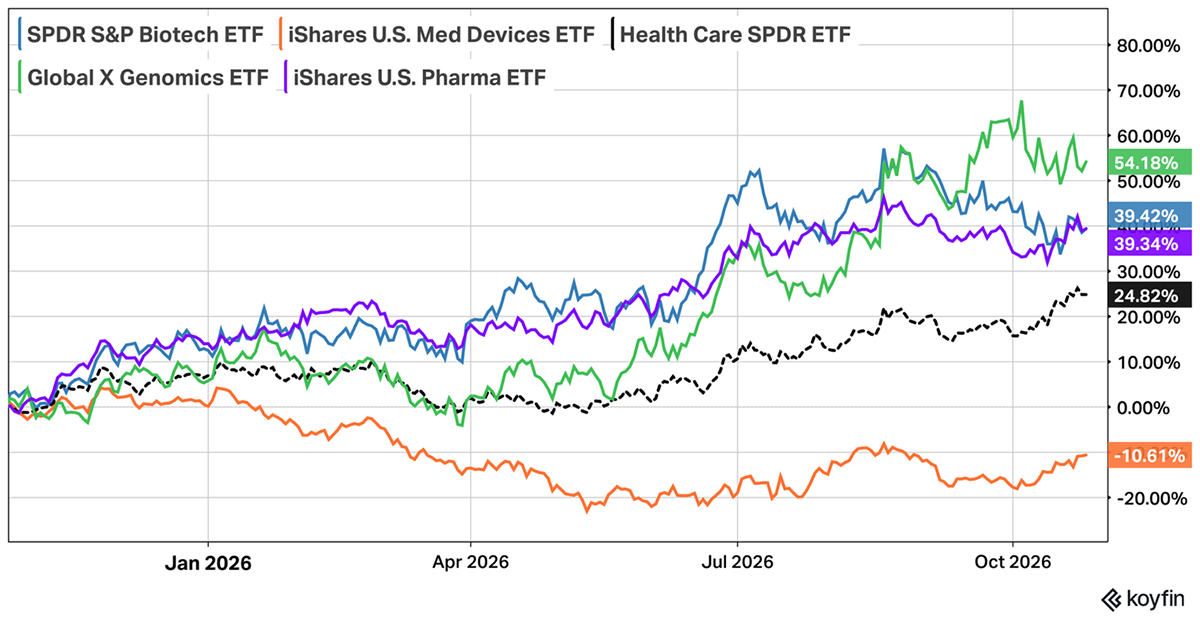
After losing ground to the broader stock market since the pandemic, the biotech sector picked up again last year. Genomics (green), a biotech subset that harnesses human genetics for medical purposes, has done even better. Big Pharma (purple) has been the biggest winner over the past six years, as slow and steady won the race as the broader sector fell. The healthcare sector as a whole is the dashed black line.
Healthcare Subsectors – 5 Years
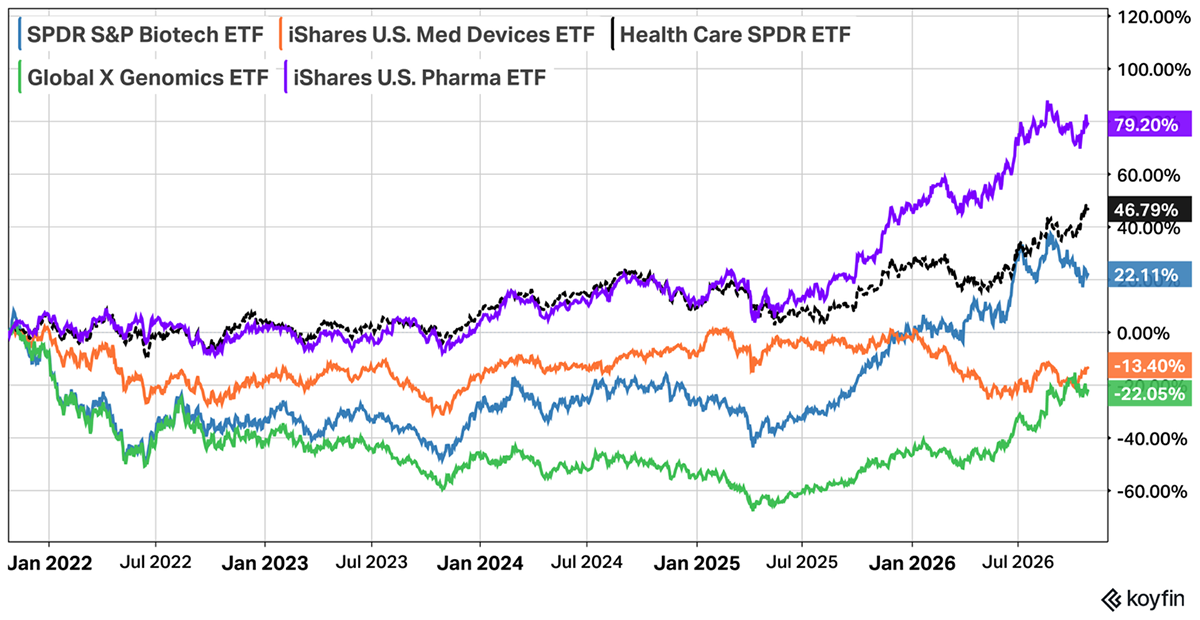
Zooming in, we can see the outperformance of biotech and genomics over the past year. Major breakthroughs like Moderna’s cancer vaccine have claimed the headlines, but a long period without outperformance led to low valuations, which gave it a platform for recovery once the AI narrative began to take hold.
Healthcare Subsectors – 1 Year
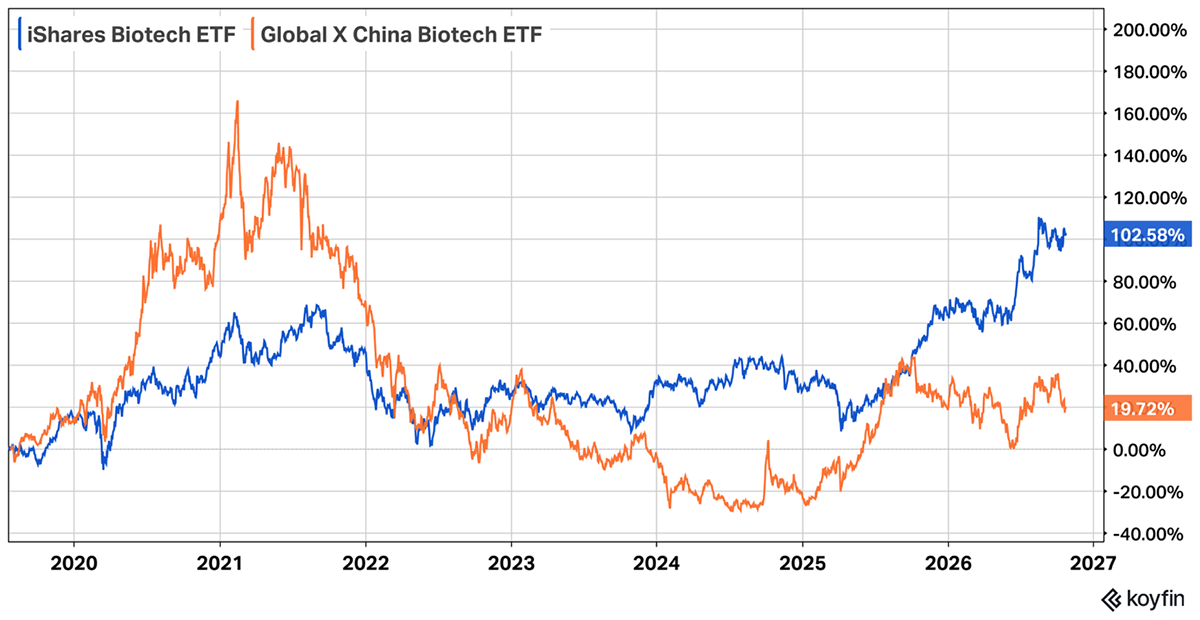
Another notable feature is China's emergence. AI commoditises the drug design phase, as we have shown. This was where US biotech firms earned their premium. China, however, excels at manufacturing high-quality products at scale. It also has fewer regulations around recruiting patients for human trials (Phase 3), allowing them to get to market faster. While that may sound positive for China, America leads in AI model development and could still dominate the drug-discovery element of the value chain, commoditised or not.
Chinese (orange) vs American Biotech (blue)
Labs and testing equipment benefit from the democratisation of drug development. If AI designs more candidates, it will demand more physical work. For example, Citrini named Charles River (including as a key supplier of trial monkeys), Revvity, and Tecan. They also framed Contract Research Organisations as biology’s equivalent of cloud infrastructure (e.g., Medpace, which provides outsourced clinical development and trial management services). As millions of people use AI to conjure drug candidates more cheaply, they will have more money to “rent” CRO capacity, just as LLM developers rent data centre capacity.
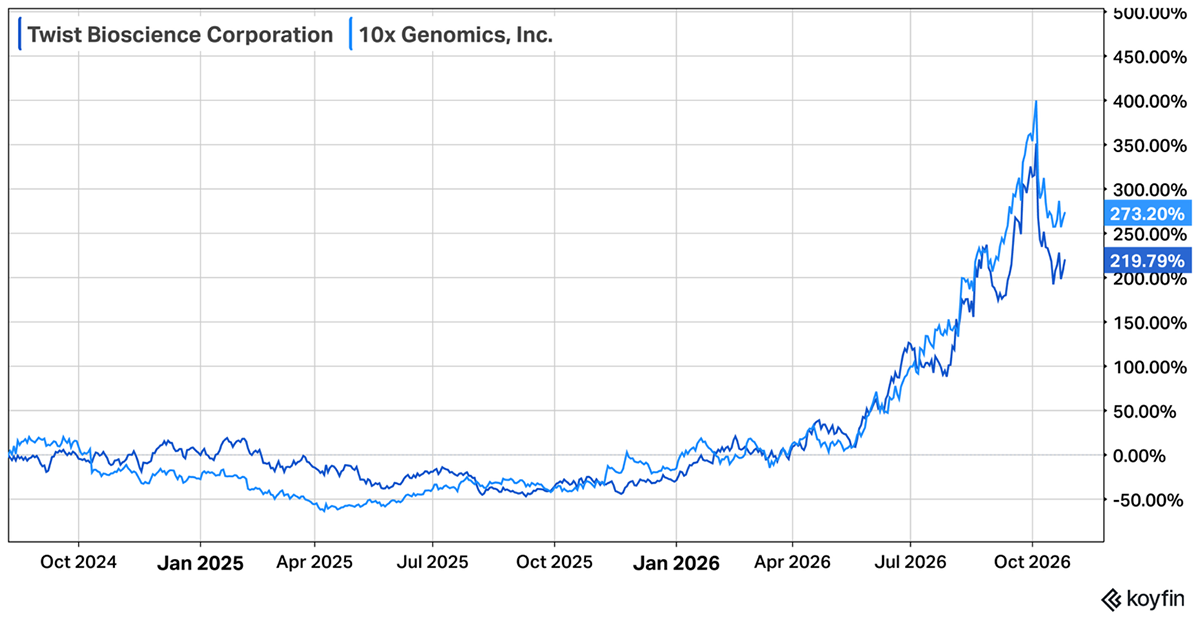
Then there are the companies providing the data that AI models specific to drug development can be trained on. The AlphaFold developer DeepMind has turned it into a massive library of protein models. Here, companies like 10x and Twist (which partnered with Citrini’s project) have already soared. These are held in the Genomics ETF (GNOG), which was recommended in the Whisky Portfolio earlier this year.
Twist and 10x - Performance
In Soda, our funds are also exposed. Guinness has AbbVie and J&J in the top five holdings, while Ranmore has Universal Health Services, a care provider, and Cigna, a health insurance provider, in its top ten. In Venture, companies like Illumina are on the cutting edge of genomics and also had a strong summer.
Then there are slower movers like Novartis, which is in our Quality portfolio. We mentioned it already, as one of Isomorphic’s partners. Like many peers, it is on a constant hamster wheel of patent cliffs, and must produce new blockbuster drugs to replace the old ones. Luckily, it can acquire promising drugs (AI-designed or otherwise), train its models on one of the world’s largest pharma datasets, and partner with the industry’s best AI-native firms to enhance its systems. Here, scale can be an advantage.
Finally, there are the testing and assay instruments from companies like Thermo Fisher, Danaher, Agilent, Medtronic, and Waters. As biotech budgets grow from higher sales and share prices, companies like these benefit, as those budgets are allocated to their instruments, tools, services, and consumables.
On the other hand, AI could hurt single-drug pipeline stocks whose advantage was a molecule they had found. Now, most people can find it, and quickly. Additionally, businesses that hire out chemists to drug developers and offer contract regulatory work and consulting are likely to come under pressure as well.
Summary
The world faces a demographic challenge, and AI can help healthcare meet it through innovation, reducing the burden on governments and working populations. Healthcare has had a good year in markets. It offered value, has a history of defensive performance during tech crashes, and has built some solid momentum, especially in biotech. Across The Multi-Asset Investor, Venture, and Quality, we are well exposed to areas set to benefit from AI-driven enhancements. While there is no rush, we could add more as these themes develop.
All the best,
Kit Winder
Analyst, The Multi Asset Investor
General - Your capital is at risk when you invest, never risk more than you can afford to lose. Past performance and forecasts are not reliable indicators of future results. Bid/offer spreads, commissions, fees and other charges can reduce returns from investments. There is no guarantee dividends will be paid. Overseas shares - Some recommendations may be denominated in a currency other than sterling. The return from these may increase or decrease as a result of currency fluctuations. Any dividends will be taxed at source in the country of issue.
Funds - Fund performance relies on the performance of the underlying investments, and there is counterparty default risk which could result in a loss not represented by the underlying investment. Exchange Traded Funds (ETFs) with derivative exposure (leveraged or inverted ETFs) are highly speculative and are not suitable for risk-averse investors.
Bonds - Investing in bonds carries interest rate risk. A bondholder has committed to receiving a fixed rate of return for a fixed period. If the market interest rate rises from the date of the bond's purchase, the bond's price will fall. There is also the risk that the bond issuer could default on their obligations to pay interest as scheduled, or to repay capital at the maturity of the bond.
Taxation - Profits from investments, and any profits from converting cryptocurrency back into fiat currency is subject to capital gains tax. Tax treatment depends on individual circumstances and may be subject to change.
Investment Director: Charlie Morris. Editors or contributors may have an interest in recommendations. Information and opinions expressed do not necessarily reflect the views of other editors/contributors of ByteTree Group Ltd. ByteTree Asset Management (FRN 933150) is an Appointed Representative of Strata Global Ltd (FRN 563834), which is regulated by the Financial Conduct Authority.
© 2026 ByteTree Group Ltd


