


Modified Duration and Value in Bonds

Market strategist Jim Bianco has been doing the rounds this week. He has long been a bond bear but has turned neutral. He doesn’t love bonds, nor is he predicting lower yields, but he says the risk is now priced in.
He refers to “modified duration”, a measure of a bond’s sensitivity to a change in rates. Modified duration measures the percentage change in a bond's price when interest rates change by 1%. I shall explain.
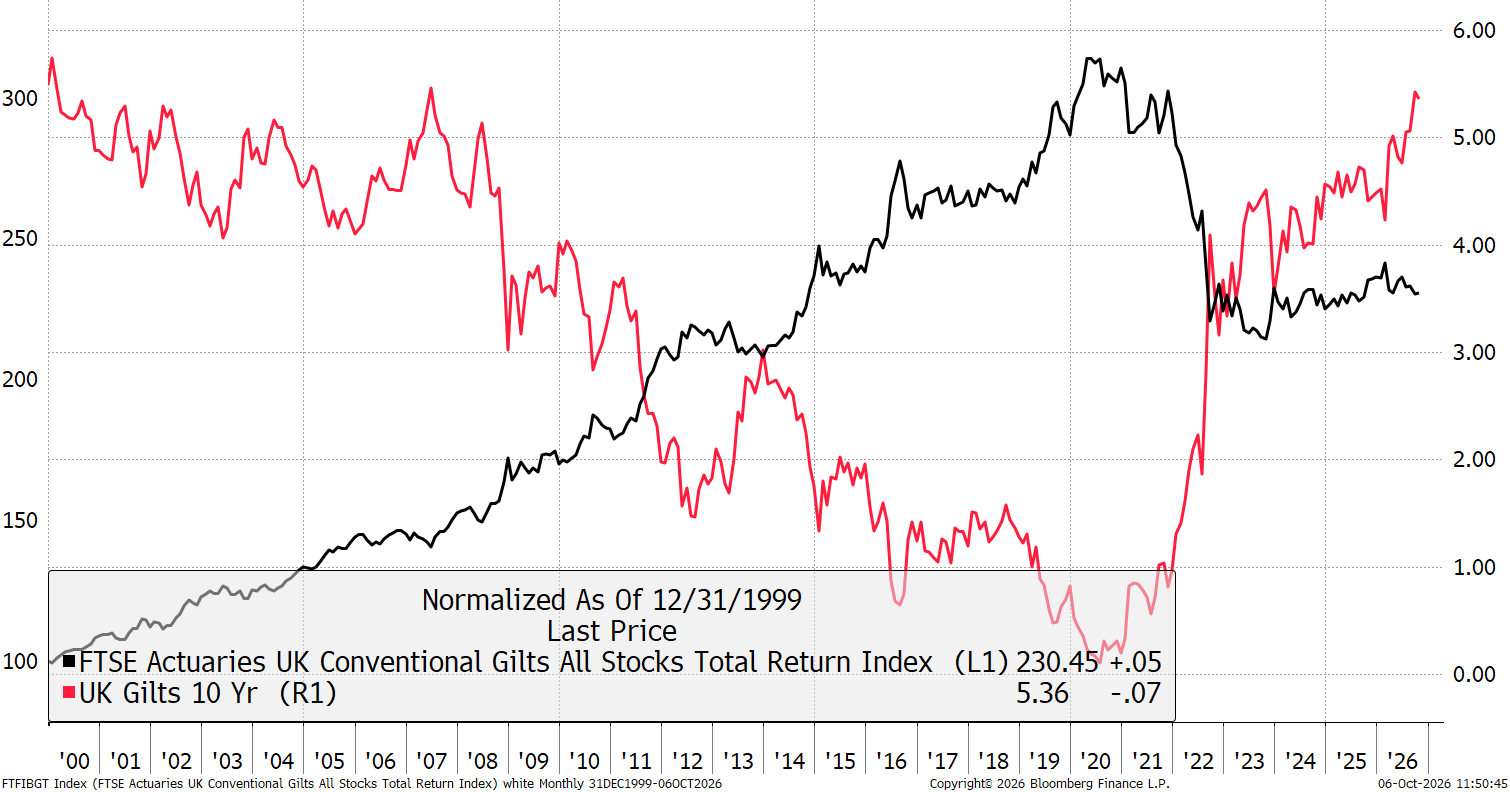
As you know, yields (red) and prices (black) move inversely. Gilts were hugely valuable when yields approached zero in 2020 but have since plummeted by 40% in price, or 26% including dividends. Now that prices are lower, yields are higher, and so there is a greater cushion should rates continue to rise. I show the 10-year gilt yield against the FTSE Actuaries Gilts All Stocks Total Return Index.
Gilt Returns vs the 10-Year Gilt Yield
In simple terms, the cushion is working. As bond yields rose from 0% to 4% by 2022, most of the damage has been done. Higher yields soften the blow. Going from 0% to 1% is not the same as 5% to 6%. I show the FTSE Actuaries Gilts All Stocks index in both capital return and total return since October 2022. While gilt prices (blue) have fallen by 7.5%, investors have made 4.5% (black) due to the dividend income received.
Gilt Returns – Capital and Total Return
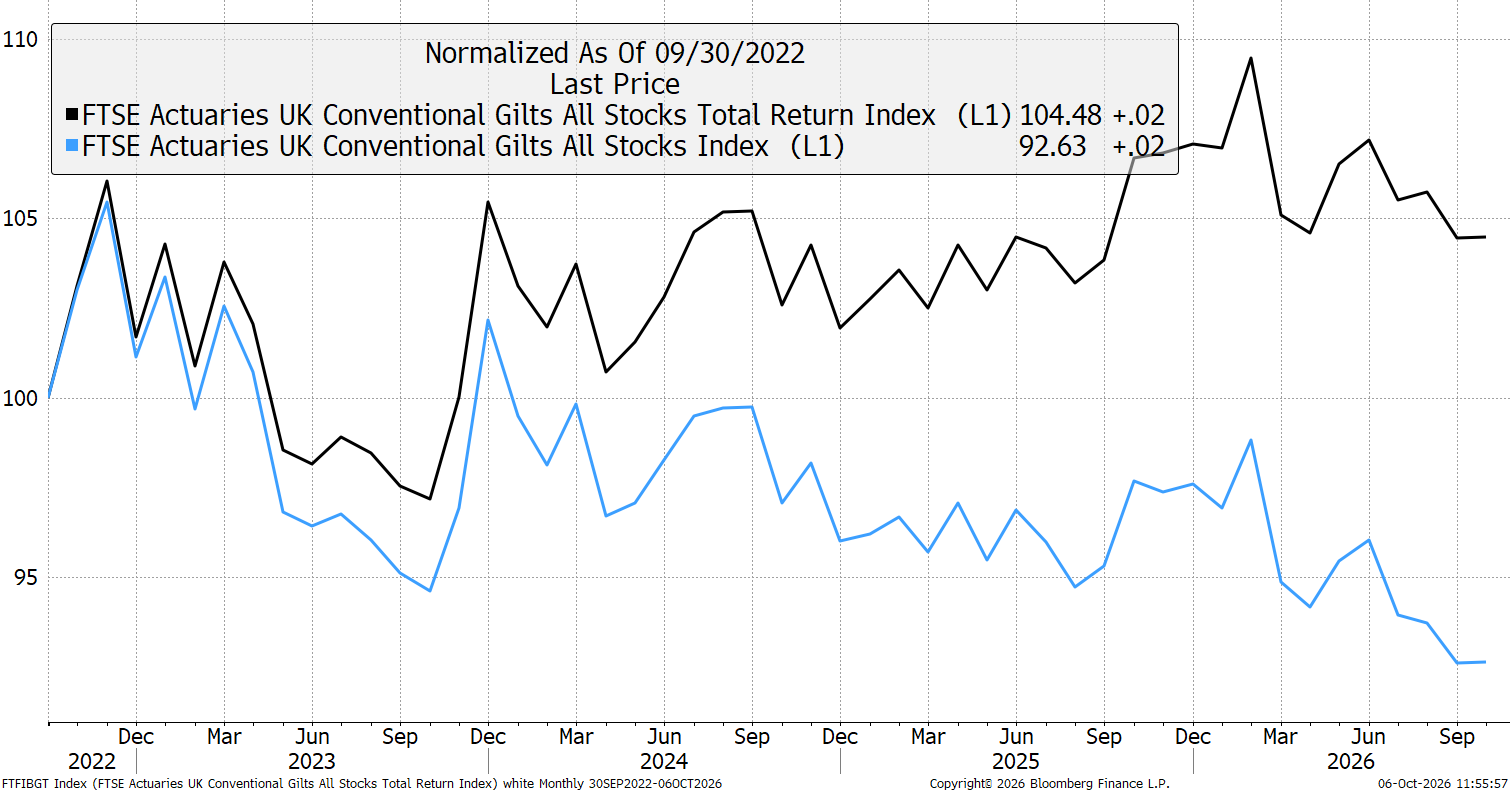
A 4.5% return over four years is nothing to write home about, but it is not a loss. Bianco’s point is that yields are now high enough to compensate investors for even higher yields in the future, should they come. The risk is now priced in.
Coming back to modified duration, bonds had low sensitivity to interest rates in 2002. At that time, a 1% rise in rates would have led to a 7% fall or vice versa. As rates fell, the modified duration rose, and by 2020, a 1% rise or fall in rates led to a 13% move in gilt prices. Today, modified duration is back to 2002 levels.
The Interest Rate Risk in Gilts – Modified Duration
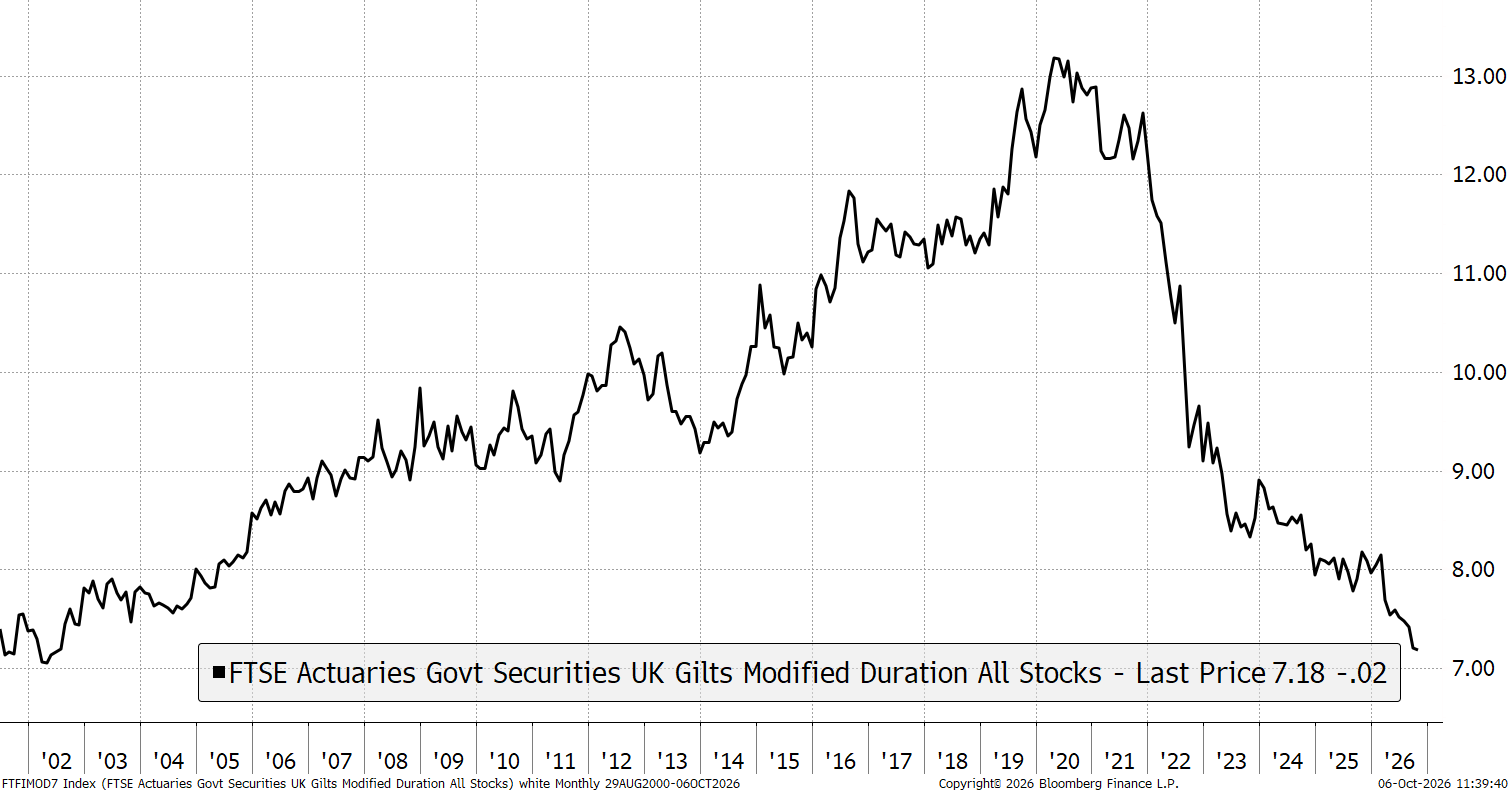
It is a simple but well-made point. There are other reasons to hold or not to hold bonds, but interest rate risk is now the lowest it has been in years.
He went on to clarify that he was not predicting yields to fall, and was not necessarily bullish, but less bearish – or neutral. At this point, he held index-linked bonds (US Treasuries rather than gilts in his case) because they would outperform conventional bonds should rates or inflation continue to rise. Conventional bonds would only outperform if inflation and rates started to fall, which currently seems unlikely.
Going back to bonds versus equities in the UK, it is a reminder of how bonds have bailed out investors in the three major equity downturns since 2000 shown in the blue boxes.
UK Equities vs Bonds
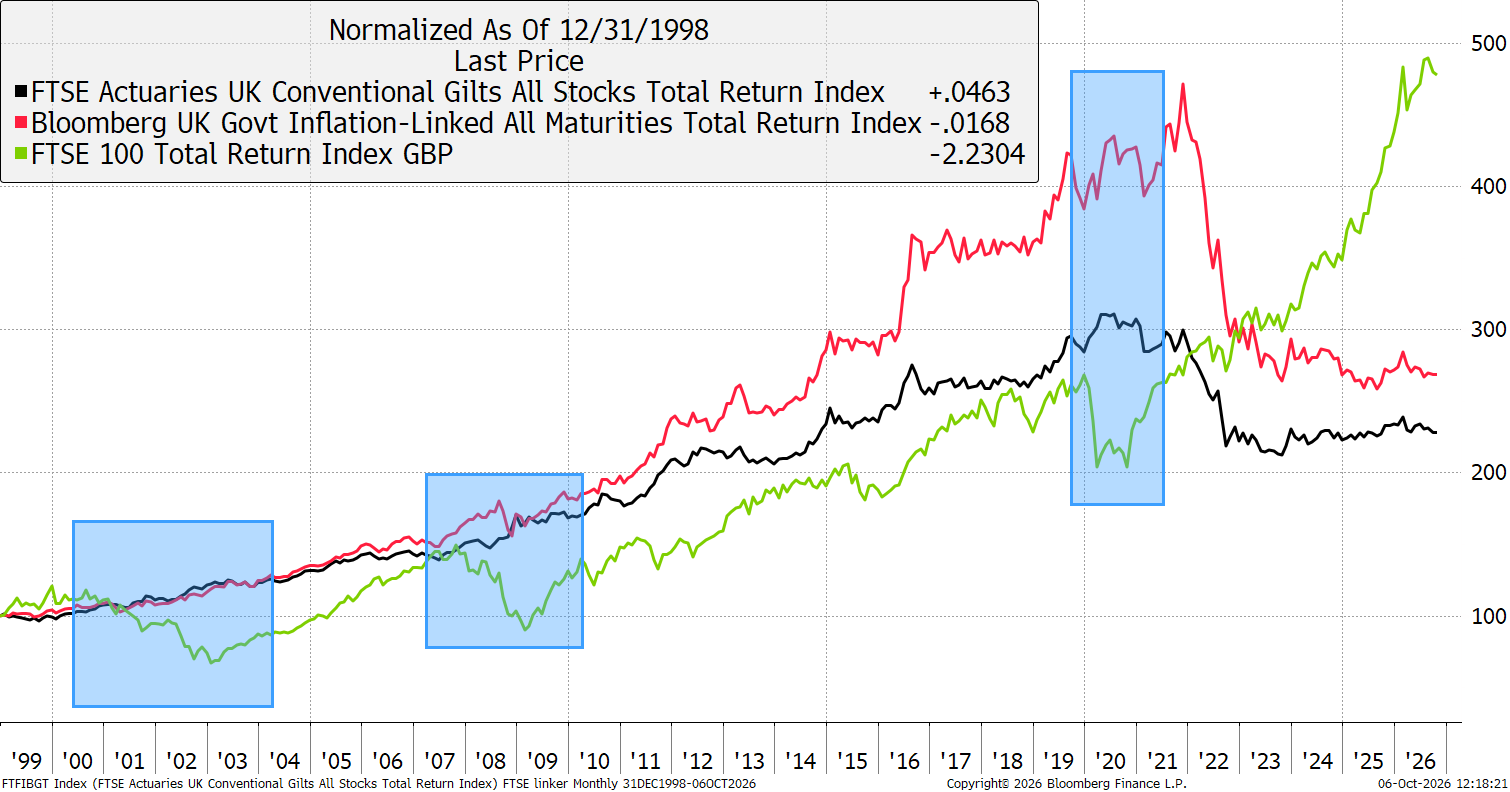
The risk of bonds is no longer capital destruction in the short term. More likely it is low returns over the long term. But I have little doubt that they will provide a safe haven when the stockmarket next comes under pressure.
Comparing conventional against index-linked, it appears that index-linked gilts may be regaining their lead. Index-linked had been overpriced, with negative real yields after the pandemic, but now offer value.
UK Gilts – Index Linked vs Conventionals
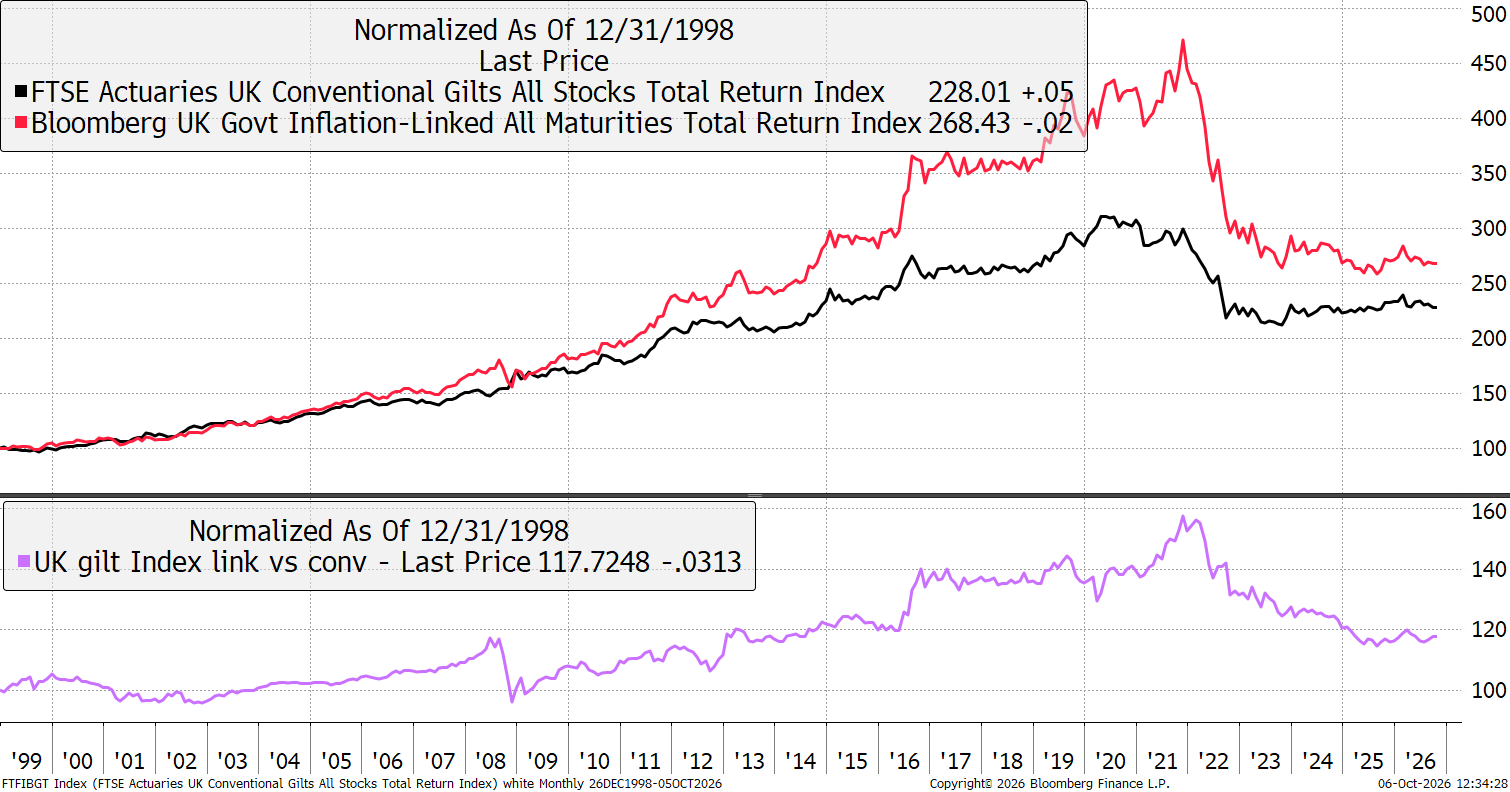
I have opted for TIPS over linkers recently, as I take some comfort with the dollar exposure, as an additional source of diversification. But I am mindful that Bianco’s point is well made. While the current rise in bond yields is a “normalisation” to some, and a “crisis” to others, it is unlikely to be over, and could turn out to be a multi-year affair. The price is right. Even if we go into a dark place, bonds are no longer in a bubble, which they certainly were a few years ago.
General - Your capital is at risk when you invest, never risk more than you can afford to lose. Past performance and forecasts are not reliable indicators of future results. Bid/offer spreads, commissions, fees and other charges can reduce returns from investments. There is no guarantee dividends will be paid. Overseas shares - Some recommendations may be denominated in a currency other than sterling. The return from these may increase or decrease as a result of currency fluctuations. Any dividends will be taxed at source in the country of issue.
Funds - Fund performance relies on the performance of the underlying investments, and there is counterparty default risk which could result in a loss not represented by the underlying investment. Exchange Traded Funds (ETFs) with derivative exposure (leveraged or inverted ETFs) are highly speculative and are not suitable for risk-averse investors.
Bonds - Investing in bonds carries interest rate risk. A bondholder has committed to receiving a fixed rate of return for a fixed period. If the market interest rate rises from the date of the bond's purchase, the bond's price will fall. There is also the risk that the bond issuer could default on their obligations to pay interest as scheduled, or to repay capital at the maturity of the bond.
Taxation - Profits from investments, and any profits from converting cryptocurrency back into fiat currency is subject to capital gains tax. Tax treatment depends on individual circumstances and may be subject to change.
Investment Director: Charlie Morris. Editors or contributors may have an interest in recommendations. Information and opinions expressed do not necessarily reflect the views of other editors/contributors of ByteTree Group Ltd. ByteTree Asset Management (FRN 933150) is an Appointed Representative of Strata Global Ltd (FRN 563834), which is regulated by the Financial Conduct Authority.
© 2026 ByteTree Group Ltd


