


We Need to Discuss Bitcoin

Tomorrow, the US Federal Reserve will announce interest rates, and the Bank of England will do the same on Thursday. Last week, the European Central Bank hiked rates for the second time this year, just as people were thinking the rate rises were behind us.
Interest Rates
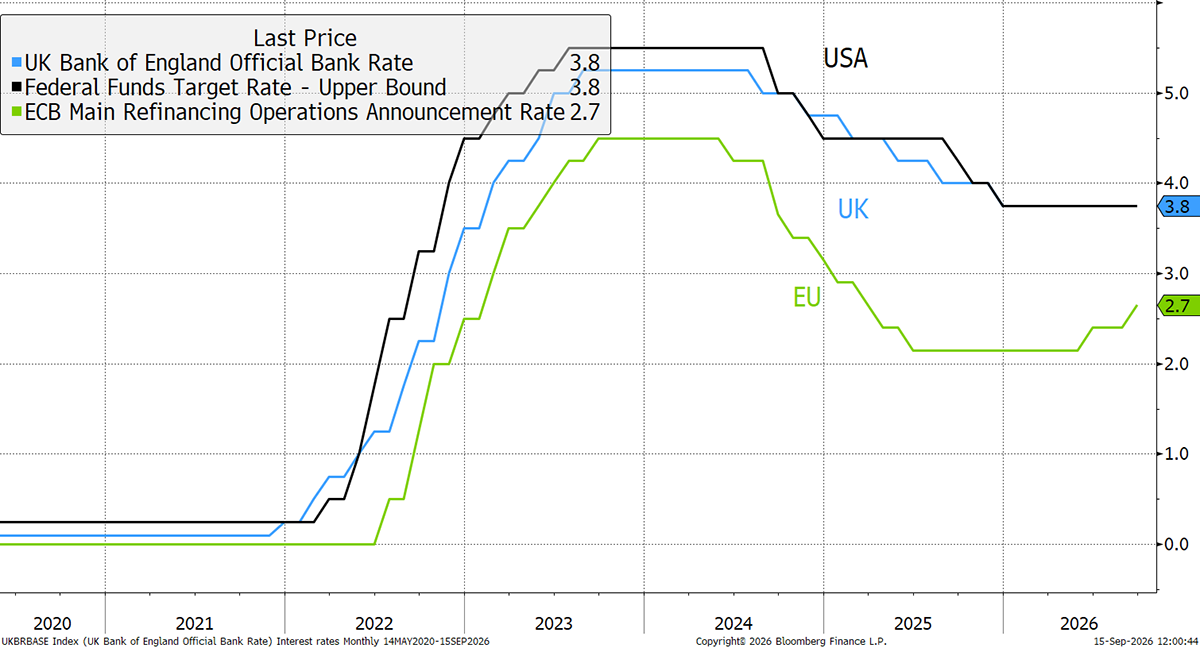
Both the Fed and the Bank of England are expected to hike. Kevin Warsh at the Fed is likely to raise rates this week. At his annual Jackson Hole speech for central bankers, he remarked that the Fed must be confident that underlying inflation is moving toward the 2% target “clearly and at sufficient speed. Otherwise, we have work to do.” It means that last Friday’s inflation data at 3.4% is unwelcome, and the market now expects a 0.25% hike tomorrow. The 1970s analogue is going rather too well.
Spooky: US Inflation Today and in the 1970s
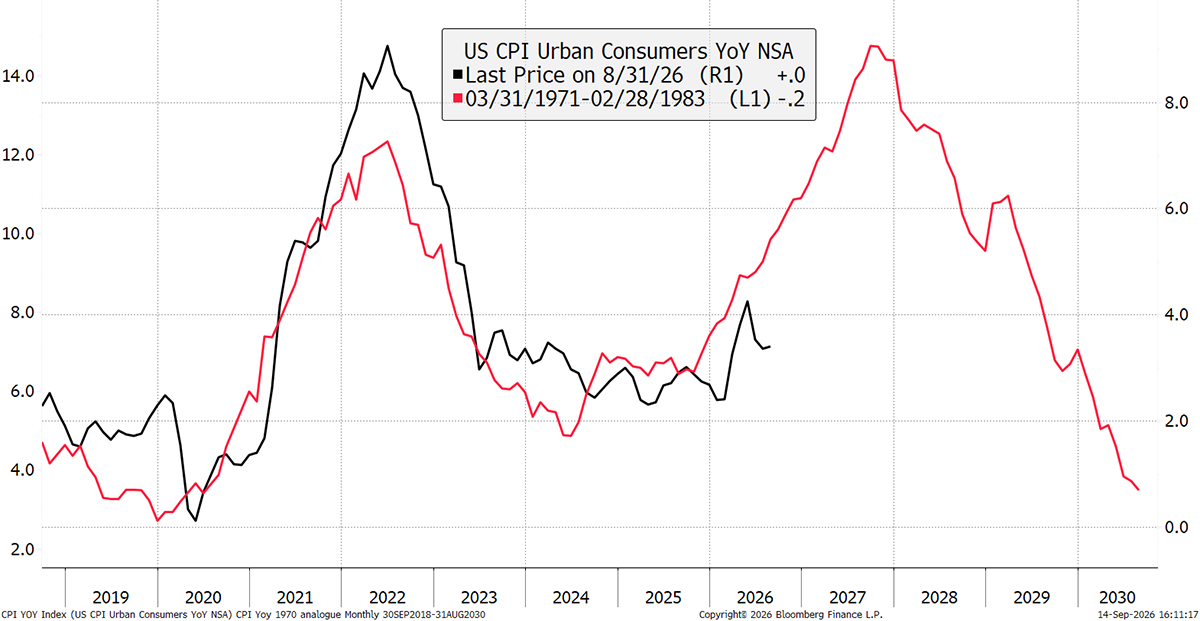
US employment is low while inflation is still way above target. With the bond market selling off sharply, the Fed’s credibility matters. Some say the inflation relates to the energy shock, so a hike will reduce demand at a time when the economy needs support. But the inflation is broader than just energy, and last Friday’s release highlighted a one-off spike in mobile phone contracts. The one-offs keep on coming.
If Warsh holds instead of hiking, he could have a real issue with the bond market, as he is not standing up to inflation. Then, there’s President Trump, who wants interest rates to fall because he believes that would boost growth. It would, but it would also boost inflation.
In simple terms, if you hike rates now, you take the pain up front and can look forward to an easier life later. If you cut now, you enjoy the benefits but will face tougher times ahead. This era of higher inflation is far from over.
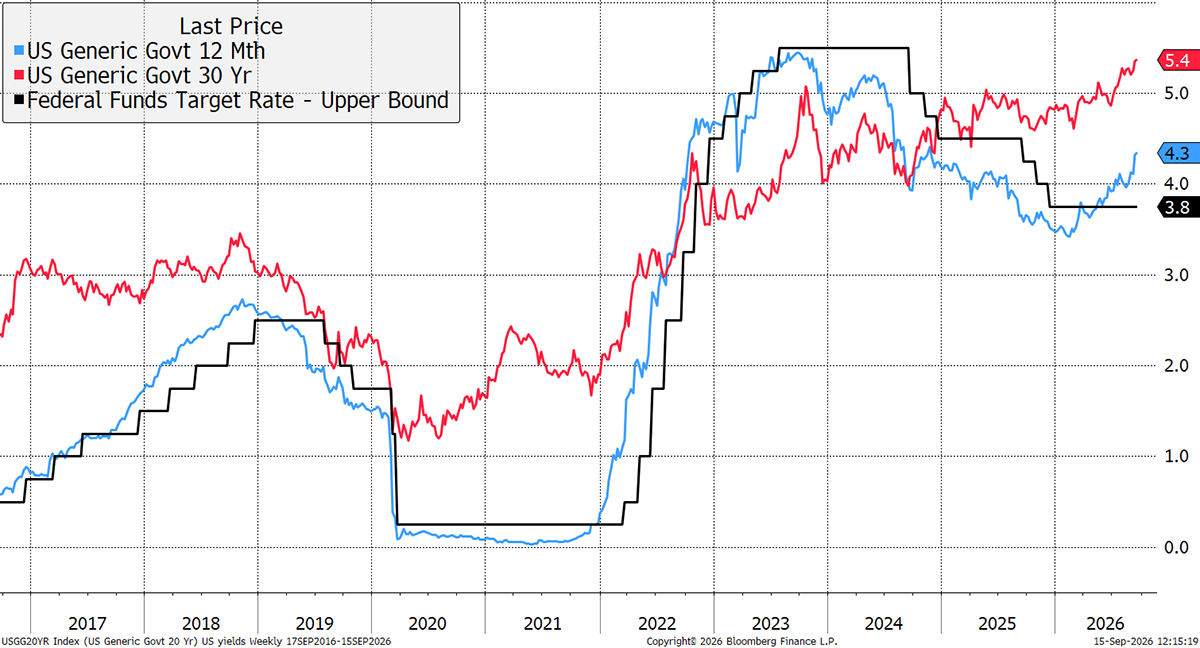
I show US rates (black), the long-bond yield (red), and the 12-month yield (blue). The market is clearly telling us that rates must catch up.
US Interest Rates and Bond Yields
Bank of England
The picture on this side of the pond is similar. The recent speed at which one-year rates have jumped signals that interest rate hikes are imminent.
UK Interest Rates and Bond Yields
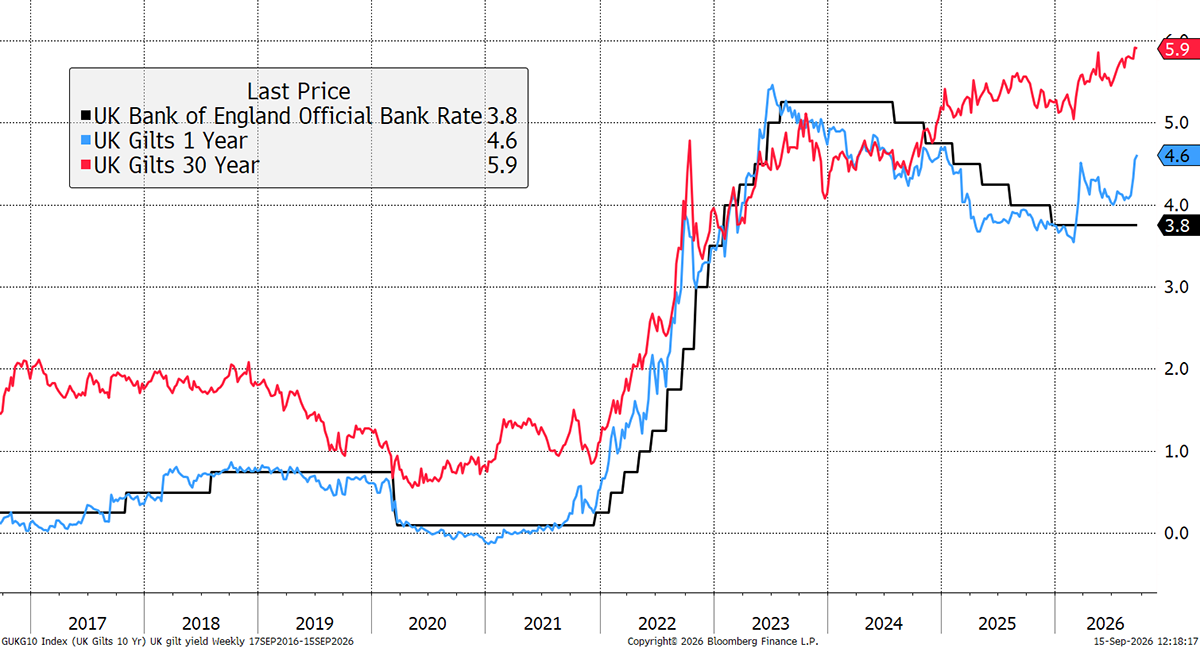
I don’t feel the economy is ready for this, but it’s happening. Here, growth is slower than in the USA, and we no longer have the benefit of being the world’s reserve currency. The UK is borrowing too much, as are many other countries, and the cost of servicing that debt is about to rise again. There is no way to sugar-coat this message.
Oil and the Middle East
As the war in the Middle East escalates, the price of oil keeps on rising. The market backwardation (when current oil prices are higher than long-dated futures) is once again approaching record levels. This is because few believe the oil price will stay up here, as the price of oil for delivery today is 40% higher than in early 2028. That means the market assumes that peace will come in the interim.
Oil Backwardation
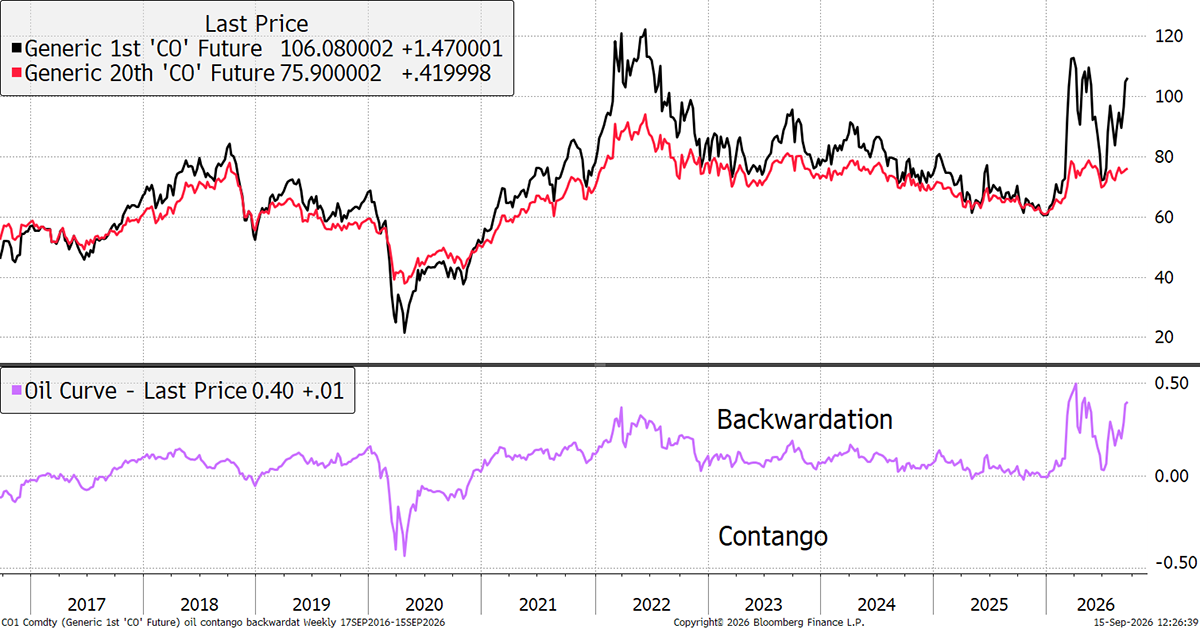
It explains why the oil stocks are half-hearted in this oil rally, following the red line above more closely than the black. But the serious economic risk is that the Middle East oil supplies are blocked for much longer than we think. That will keep interest rates high, which is why I reduced property stocks on Friday.
I like property and think the great downward adjustment of 2022/3 is largely behind us, but rising rates are not an environment for positive revisions. It may be a long time before bond markets are back under control, and we may have to get used to this environment. Property doesn’t like rising interest rates; it’s that simple.
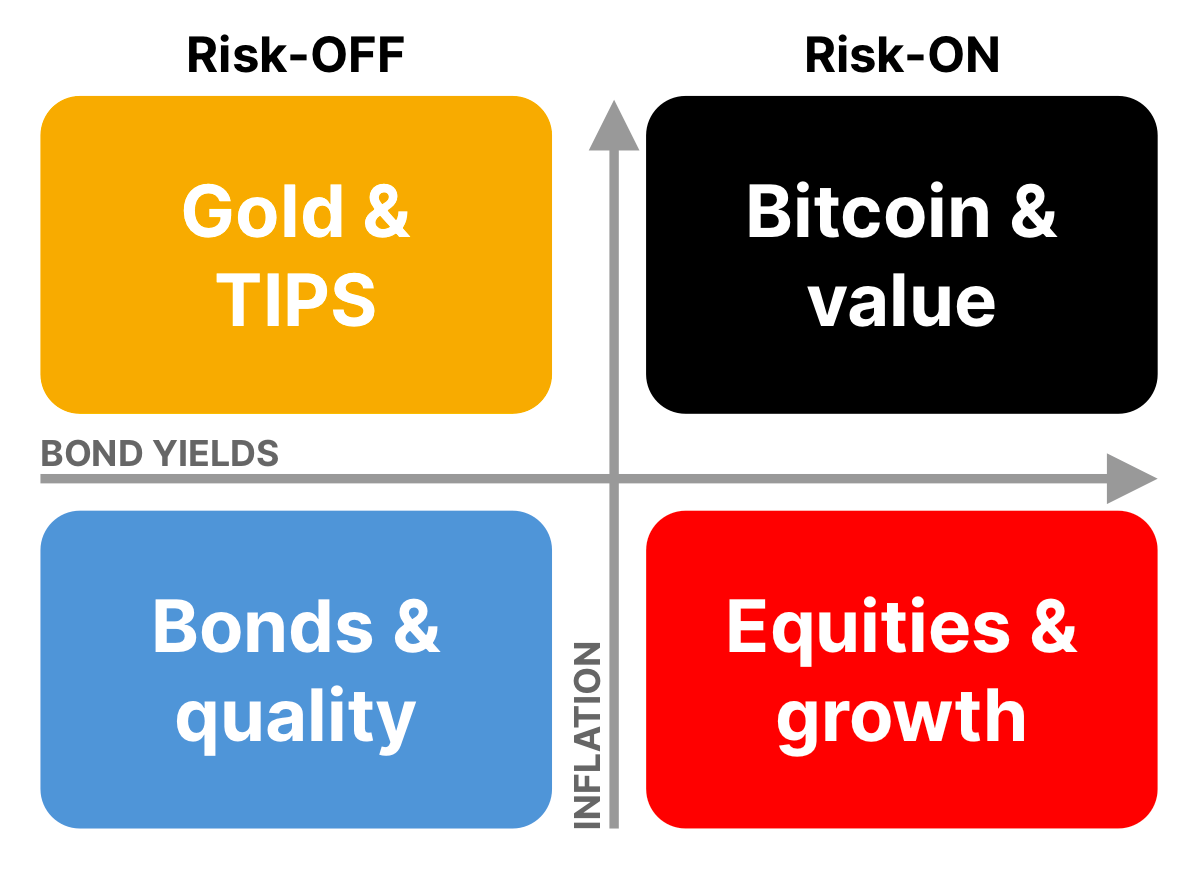
The Money Map
Living with higher rates and inflation doesn’t have to be bad for investors, but it will be for those reluctant to think differently. Most stocks and bonds won’t do well in such an environment. On the other hand, real assets ought to fare much better.
General - Your capital is at risk when you invest, never risk more than you can afford to lose. Past performance and forecasts are not reliable indicators of future results. Bid/offer spreads, commissions, fees and other charges can reduce returns from investments. There is no guarantee dividends will be paid. Overseas shares - Some recommendations may be denominated in a currency other than sterling. The return from these may increase or decrease as a result of currency fluctuations. Any dividends will be taxed at source in the country of issue.
Funds - Fund performance relies on the performance of the underlying investments, and there is counterparty default risk which could result in a loss not represented by the underlying investment. Exchange Traded Funds (ETFs) with derivative exposure (leveraged or inverted ETFs) are highly speculative and are not suitable for risk-averse investors.
Bonds - Investing in bonds carries interest rate risk. A bondholder has committed to receiving a fixed rate of return for a fixed period. If the market interest rate rises from the date of the bond's purchase, the bond's price will fall. There is also the risk that the bond issuer could default on their obligations to pay interest as scheduled, or to repay capital at the maturity of the bond.
Taxation - Profits from investments, and any profits from converting cryptocurrency back into fiat currency is subject to capital gains tax. Tax treatment depends on individual circumstances and may be subject to change.
Investment Director: Charlie Morris. Editors or contributors may have an interest in recommendations. Information and opinions expressed do not necessarily reflect the views of other editors/contributors of ByteTree Group Ltd. ByteTree Asset Management (FRN 933150) is an Appointed Representative of Strata Global Ltd (FRN 563834), which is regulated by the Financial Conduct Authority.
© 2026 ByteTree Group Ltd


