


Gold Smells QE

Atlas Pulse Gold Report Issue 117;
Bessent recently made a fresh attempt to rein in the cost of borrowing by buying long-dated Treasuries at double the rate. Is the government buying bonds? That sounds like QE to me, and gold likes that too.
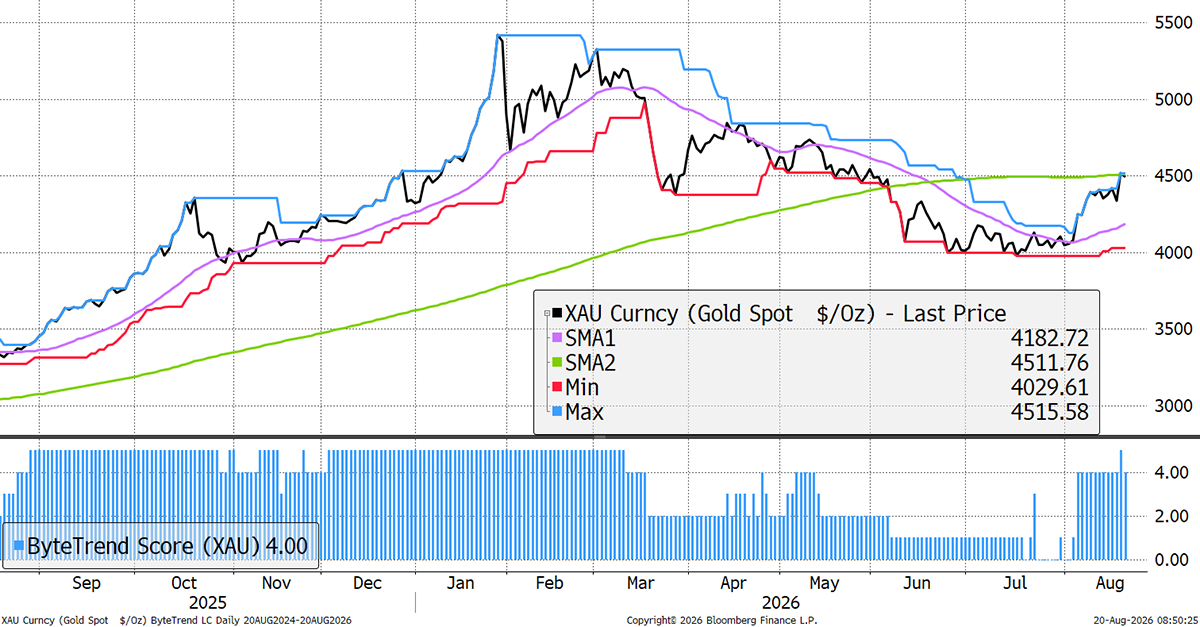
Gold’s trend is improving. We could be back above the 200-day moving average before you can spell S-T-A-G-F-L-A-T-I-O-N.
Gold Rebound
The US public debt recently touched $40 trillion, which some would agree is a lot of money. This grew at 3.7% p.a. in the 1990s, then 7.8% p.a. until the pandemic, and 8.6% p.a. since.
Will it ever slow down?
I doubt it, or at least, not until the markets force it on politics. The total value of the world’s above-ground gold supply has kept up with the total outstanding US debt over a century. The gold supply can only rise at around 2% p.a., and so the gold price has had to do the rest.
Gold Market Cap to US Treasury Market Cap
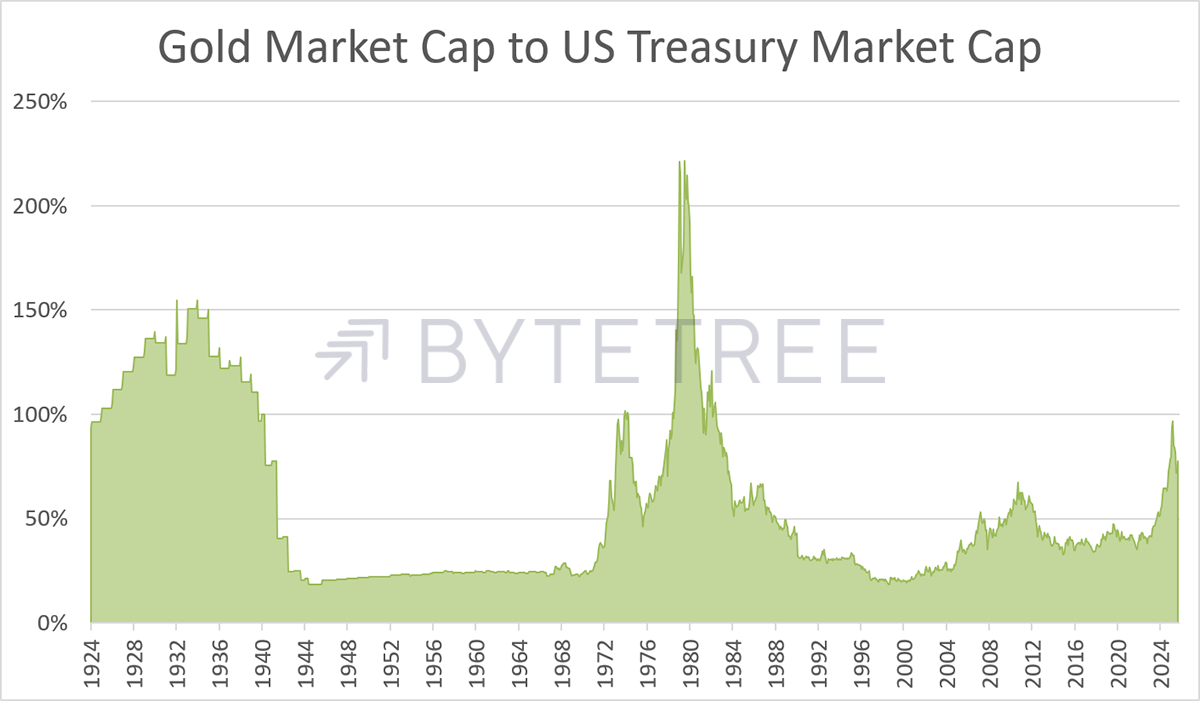
Gold was highly valued compared to debt during the Great Depression, the 1970s inflation, the Credit Crisis, and today. The world’s gold is worth $31 trillion, or 77% of US debt. It has been over 100% several times, so it still has room to climb higher. Let’s not forget that this revaluation comes on top of the 8.6% rate of debt growth.
Good times for gold.
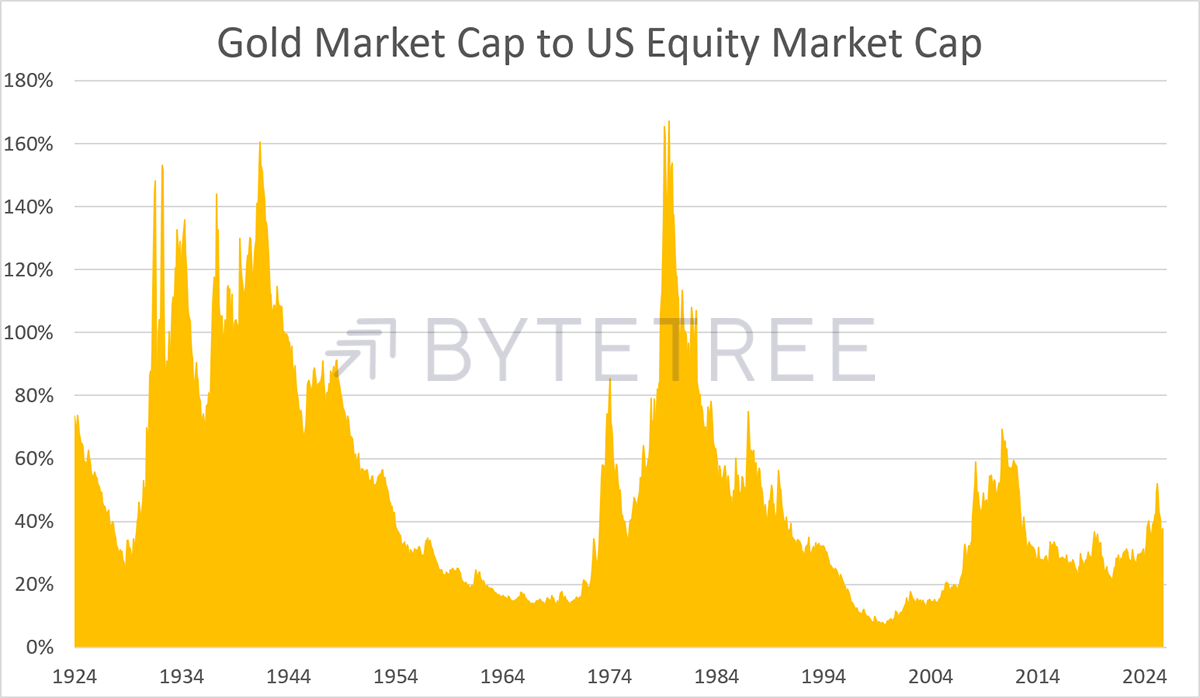
Against equities, where prices are lofty, the world’s gold is a mere 37% of the value of US equities. Surely there is room to go higher? During the Great Depression and the 1970s, it managed 160%, which is 4x from here.
Gold Market Cap to US Equity Market Cap
We know there is a debt problem because it is growing faster than nominal GDP (6.5%), and sooner or later, that becomes unsustainable. More importantly, the US Treasury Secretary and guru macro hedge fund manager from the Soros School, Scott Bessent, is intervening in the markets.
The guy who broke the Bank of England in 1992 is now trying to support the yen with billions of dollars. Naturally, he can print these new dollars, but gold is watching his every move. He announced the yen intervention in late July, and the gold price started to rally.
Then yesterday, Bessent made a fresh attempt to rein in the cost of borrowing by buying long-dated Treasuries at double the rate. Is the government buying bonds? That sounds like QE to me, and gold likes that too.
US Rates and Bond Yields
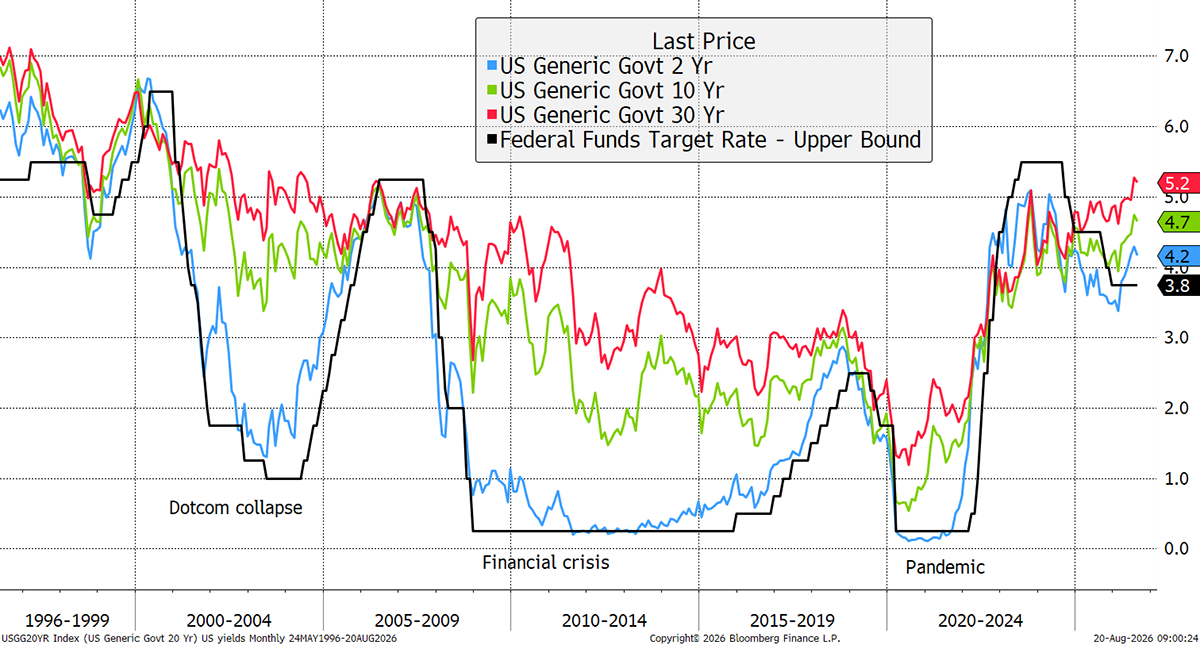
The trouble with the US buying long-bonds is that there are so few of them, at least when compared to shorter-dated bonds, where supply is plentiful. Buying back the debt with printed money may reduce long-term yields in the short-term, but to keep those yields down, you have to keep on going. Post 2008, in a world of debt deflation, that was one thing, but in a reflating environment, it is another thing entirely.
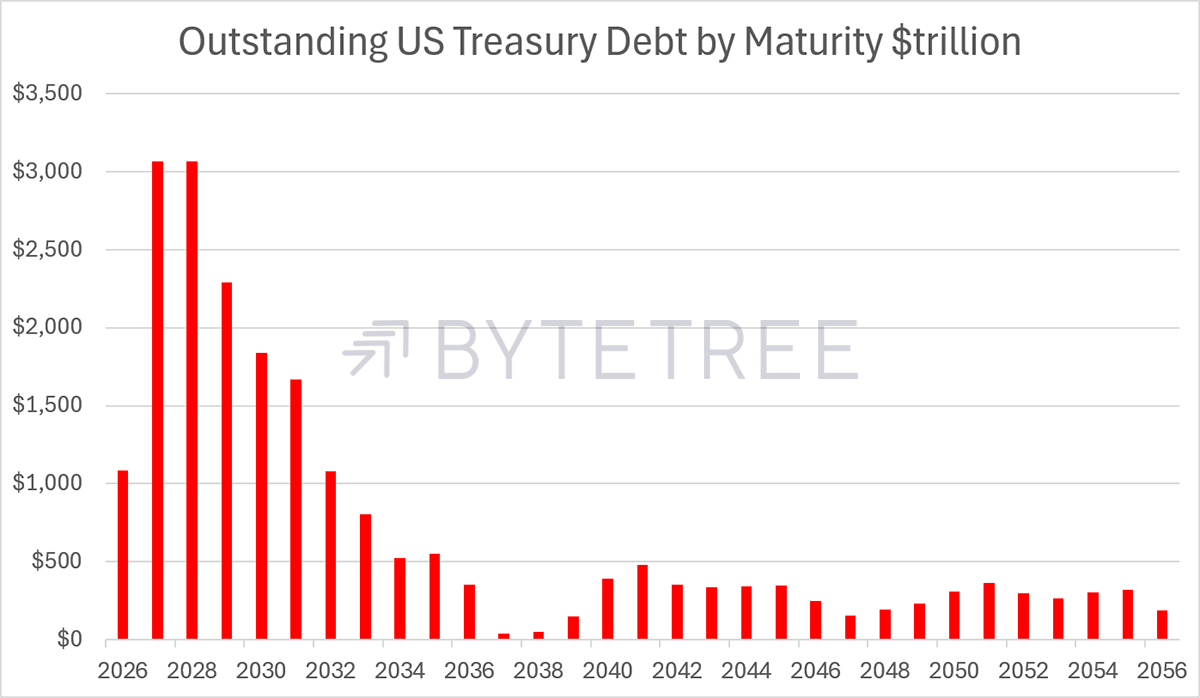
The annual supply of US government debt combines the deficit, the debt interest, and refinancing as short-dated bonds roll off. In 2027 and 2028, that’s $3 trillion of refinancing, which will presumably grow. Little wonder they want to keep interest rates low.
Outstanding US Treasury Debt
This is why the central banks buy gold. If they reject Treasuries, what else is big, liquid, and a long-term store of value with limited supply? All paths lead to gold.
Central Bank Gold Demand
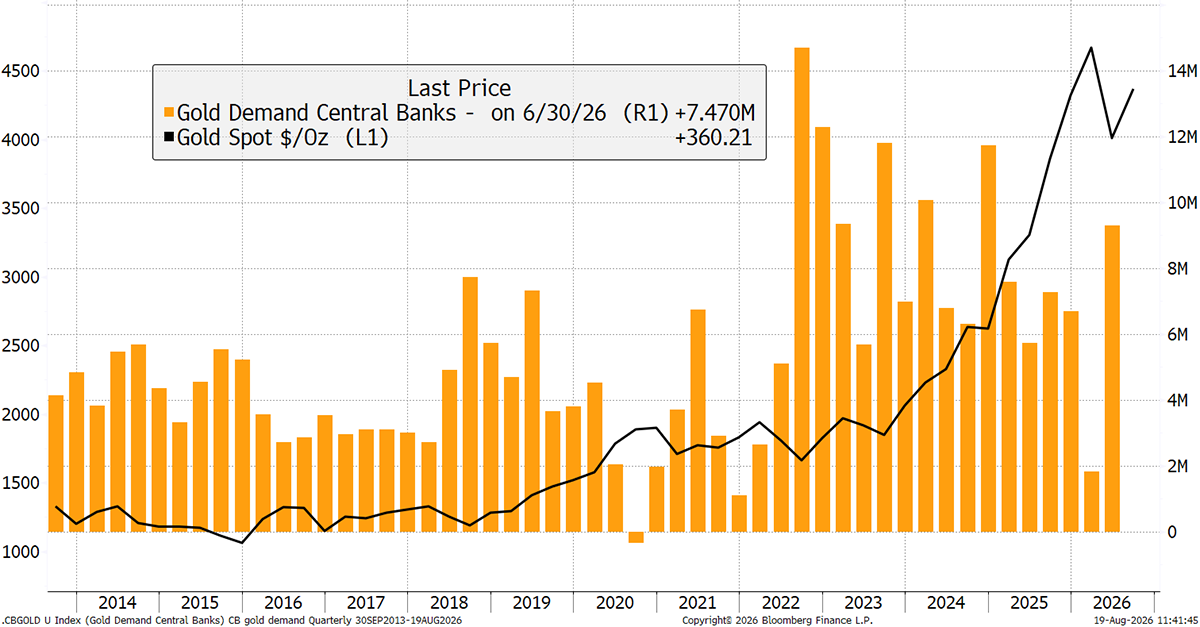
According to the World Gold Council, Russia and Turkey sold some gold in Q1, but demand has rebounded strongly. China has a trade surplus of $1 trillion per year, and a decent share of that flows into gold.
China Gold Demand
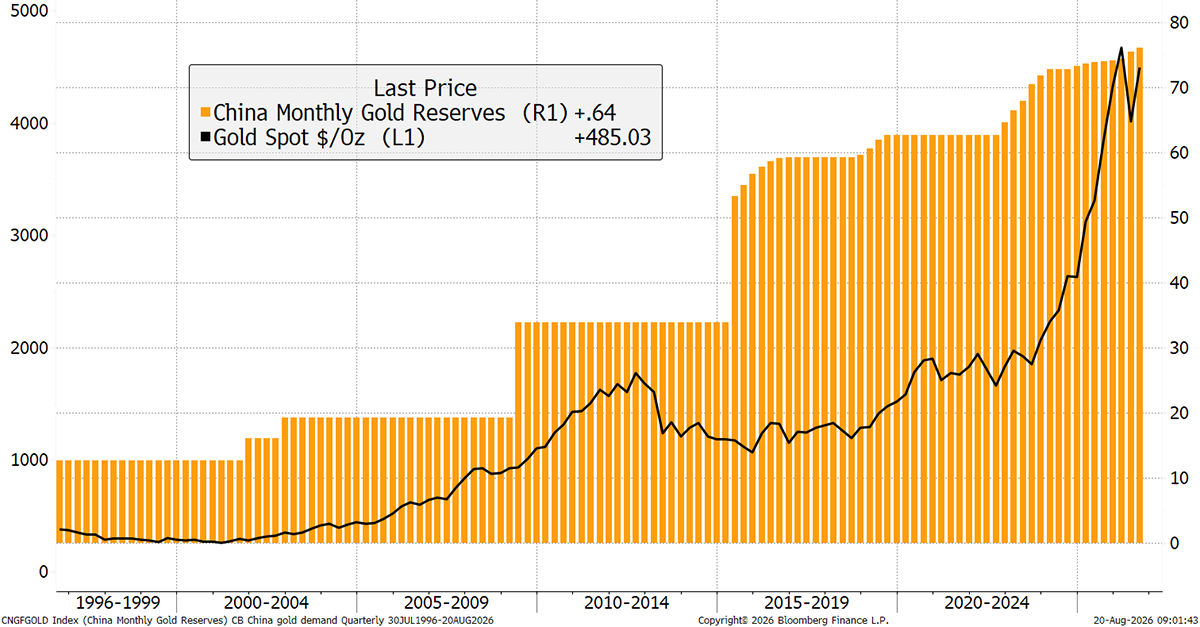
Many believe, and with good reason, that China’s gold reserves are significantly understated, perhaps by a factor of 3x. As global partnerships become more unstable, gold is the must-have asset.
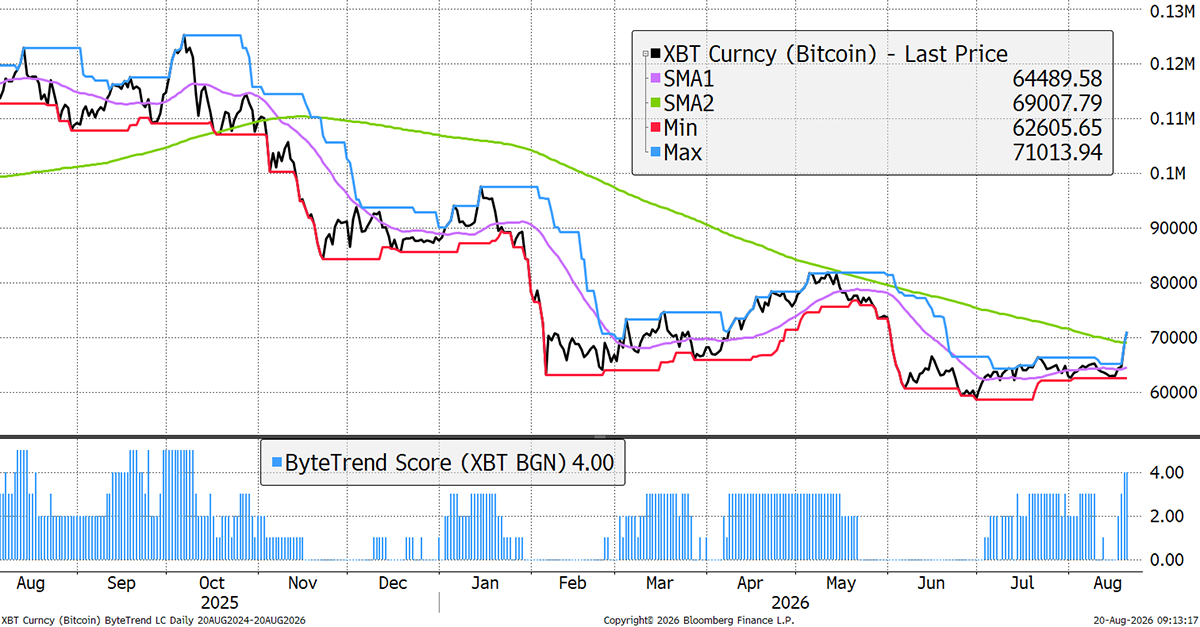
They could opt for Bitcoin, but even the bulls think that might be a tad early for the central banks. Still, the price flew yesterday following a period of ultra-low volatility, which I have been covering over the past two weeks.
Bitcoin Breaks Higher After a Volatility Squeeze
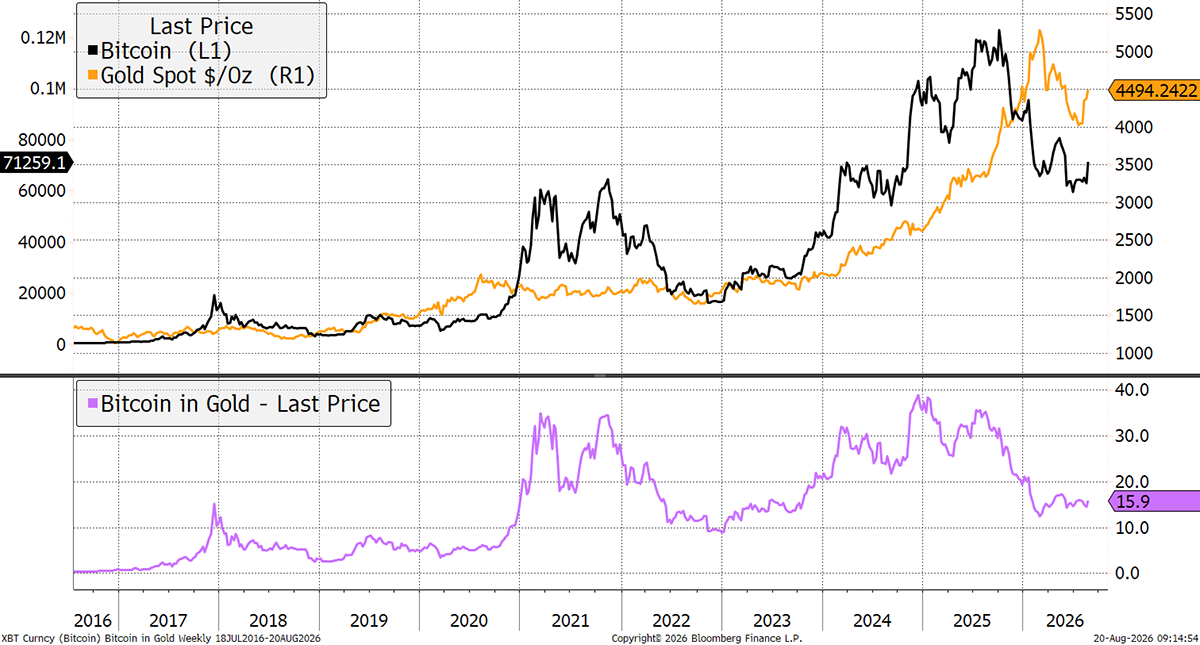
Yesterday was a great day for Bitcoin and gold, which rose 7% and 4.2% respectively, likely marking the end of the slump. In the chart below, the purple line shows the price of a Bitcoin in gold ounces. I am bullish on both assets, but I expect Bitcoin to forge ahead again in the next cycle. It will be interesting to see whether the price of Bitcoin exceeds 40 ounces of gold this time. With the next halving in April 2028, this time could see great things happen.
Bitcoin vs Gold
If you can’t decide whether to own Bitcoin or gold, I say own both. Better still, capture the benefits of BOLD.
BOLD Time - 21Shares Bitcoin Gold ETP - Since Inception
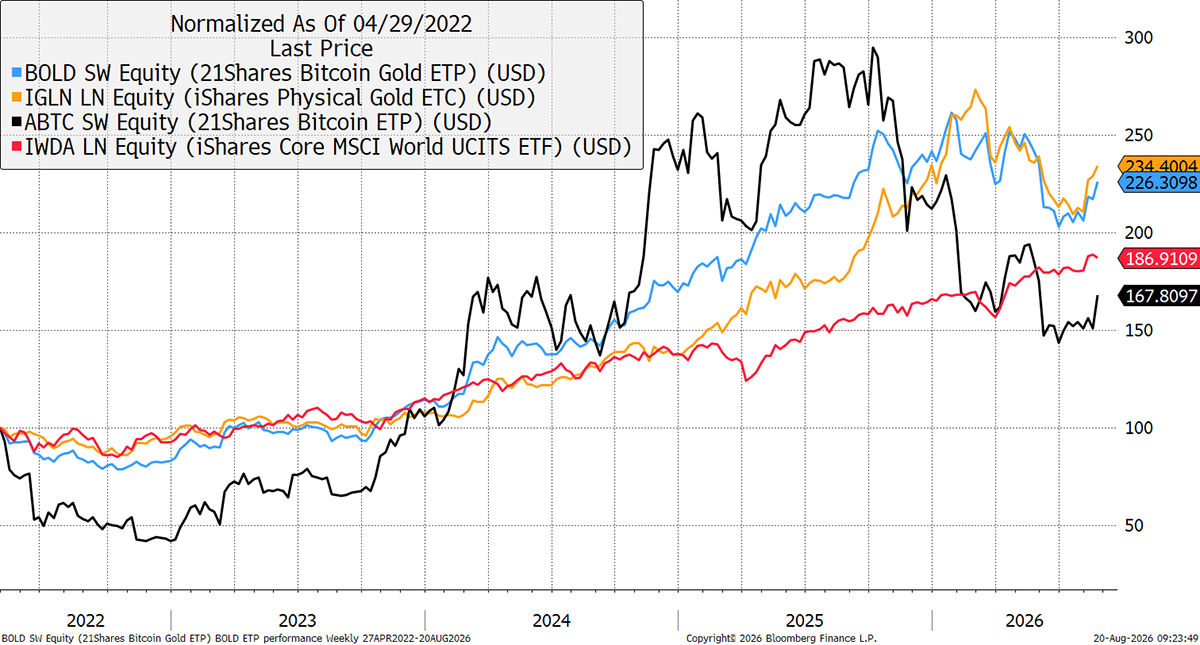
You can follow BOLD’s Bitcoin and Gold weights on our website. For BOLD product details for the 21Shares Bitcoin Gold ETP (BOLD), please visit 21Shares’ website.
Summary
The post-January correction is very likely complete. That’s not to say a new high will be imminent, but it’ll come in time. Gold’s strength stems from insatiable demand, driven by government policy. Gold provides certainty in an uncertain world.
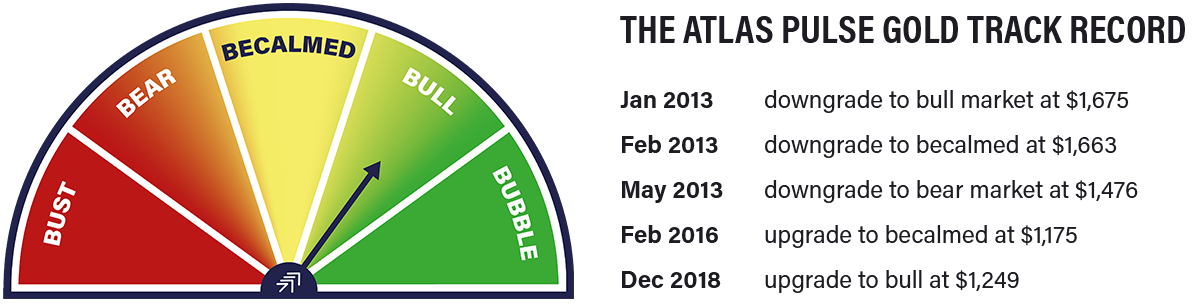
Thank you for reading Atlas Pulse. The Gold Dial remains in Bull Market.
Charlie Morris is the Founder and Editor of the Atlas Pulse Gold Report, established in 2012. His pioneering gold valuation model, developed in 2012, was published by the London Bullion Market Association (LBMA) and the World Gold Council (WGC). It is widely regarded as a major contribution to understanding the behaviour of the gold price.
Please email charlie.morris@bytetree.com with your thoughts.


