


Barrels and Bullion

The gold price rallied last week and is now 10% off its low. It’s a welcome recovery that reassures me the worst is behind us. I’ll come back to that.
Oil Rally
More immediately, and something less talked about, is the rally in oil, as the war shows no signs of ending.
Brent Crude Is Rising
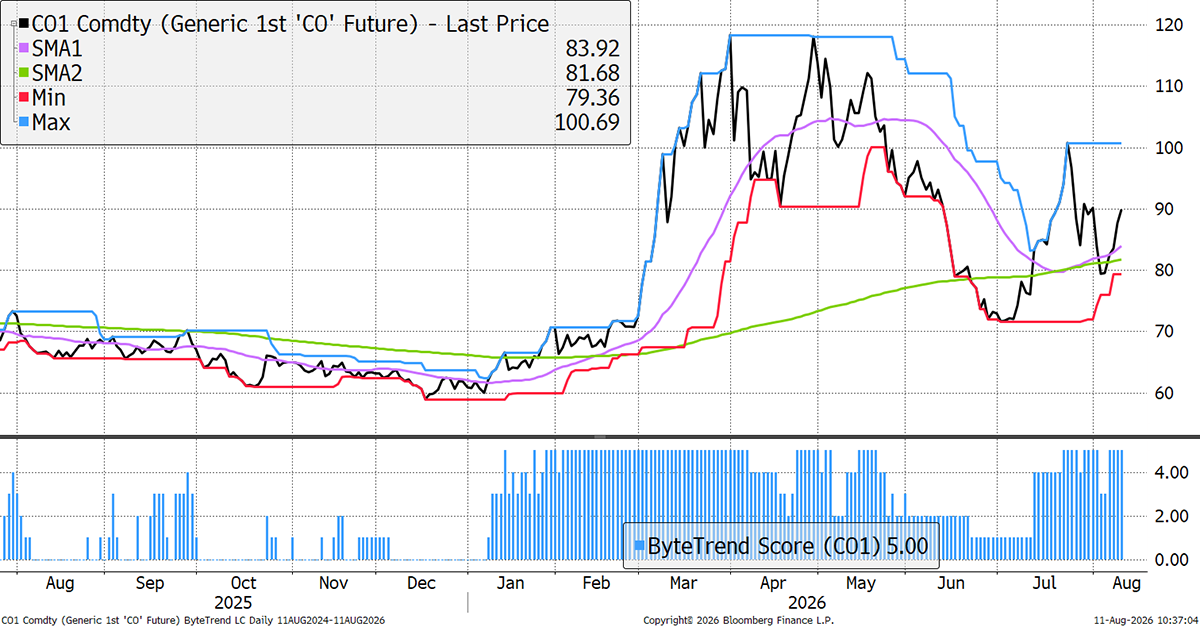
The daily ByteTrend Score is a 5 (strongest reading as the price is pointing upwards). This comes despite all possible market manipulations and the unleashing of the US strategic reserves. This will soon drop below the 300-million-barrel mark, which is deemed to be critical.
US Total Oil Inventories Are Near Critical
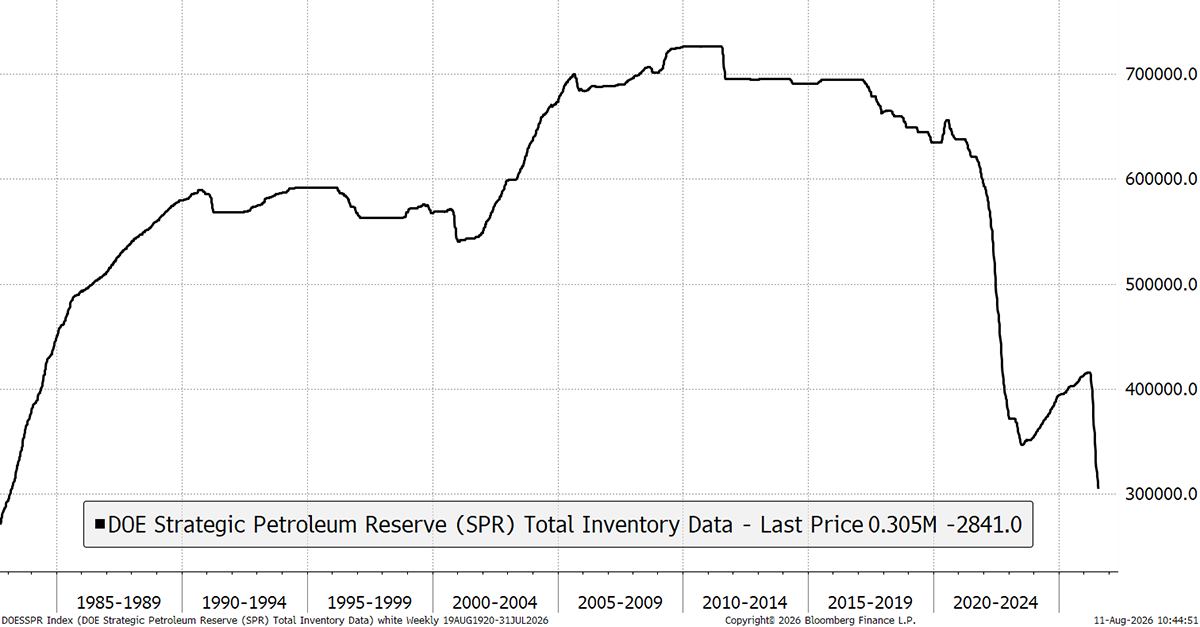
The US has been easing the pain, but curiously, Chinese demand has dropped too as their oil imports have waned. This is less well understood, other than their heroic leap into electrification.
China Crude Oil Imports Have Slumped - Can This Last?
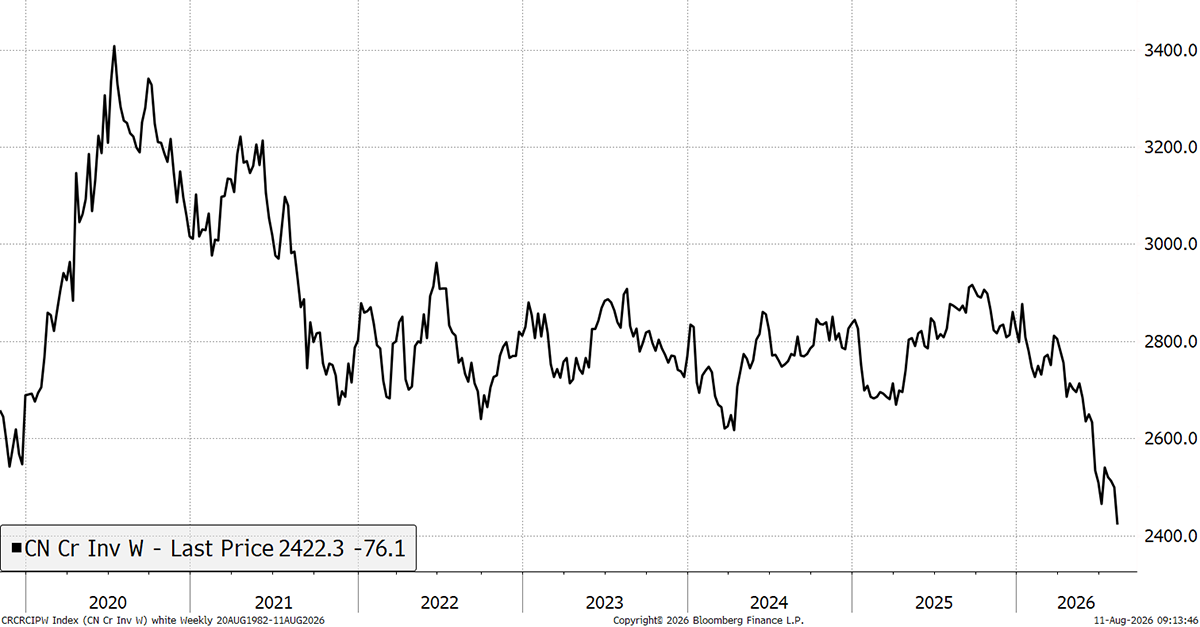
Still, we have a rising oil price, in the full knowledge that the US contribution has little left to run.
My go-to guru on this is Alexander Stahel. I quote:
“According to the New York Times, Iran’s top security official followed up on the Oman deal rumour by stating that the Strait of Hormuz will not reopen until the U.S. meets a sweeping list of demands:
1. Lifting its naval blockade;
2. Lifting sanctions on Iranian oil, petrochemical and gas exports;
3. Releasing all of Iran’s blocked funds and paying war reparations;
4. Ending the war in Lebanon;
5. Accepting Iran’s right to collect maritime fees on every ship;
6. Withdrawing the U.S. military from around Iran.
Once the U.S. implements these commitments, Iran says, the Strait of Hormuz will reopen — under full Iranian sovereign control.
So forgive me if I don’t hold my breath for a deal to emerge next week. My view is unchanged since March 2026: Iran’s maximalist demands make negotiating a waste of Trump’s time. In reality, there are only two paths to restoring normal oil flows in the Middle East:
a) Regime change;
b) Bypassing Hormuz.”
Regime change has failed. It looked easy but wasn’t. Iran, despite being heavily damaged and with a severely weakened economy, has maintained a significant military threat. That leaves the second point.
Over the next two years, we’ll see more pipelines diverting oil to the Red Sea. But still, there are the Iran-backed Houthis. To ship oil to Asia from the Gulf, the ships need to pass through the Mediterranean, which more than doubles the time and materially increases costs.
Those thinking these problems are far away from here, I show North Sea Gas, which sets the price of UK electricity. That too is in an uptrend, with a set-up similar to what we saw in 2021.
North Sea Natural Gas Is Also Rising
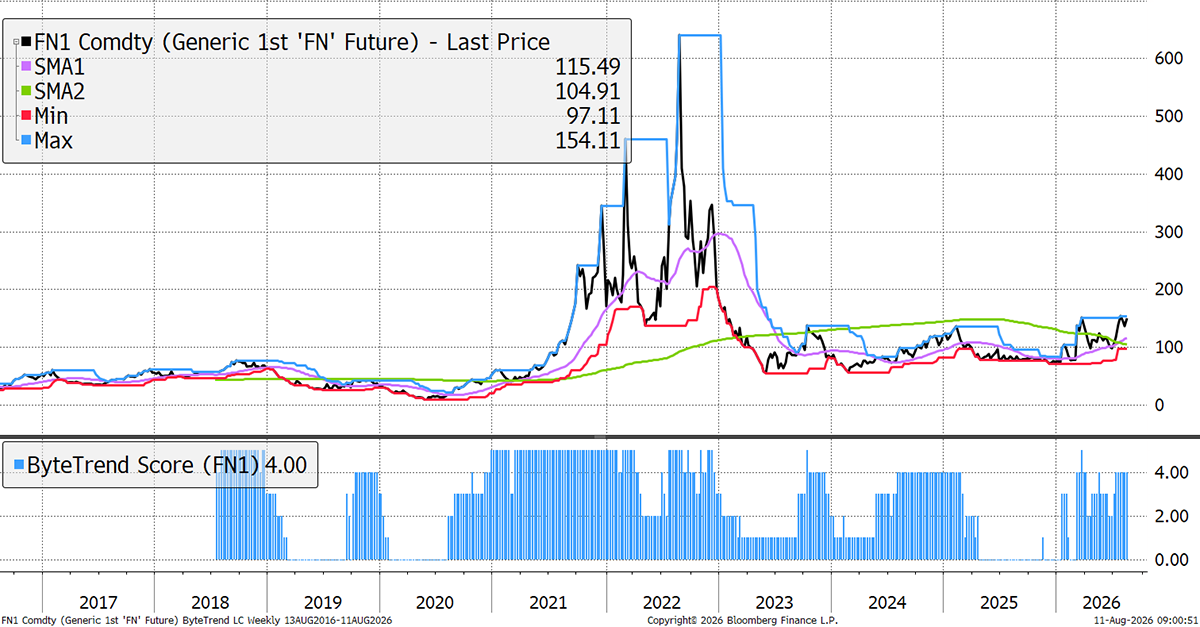
A shock in power prices would put huge pressure on the consumer this winter, and I doubt the UK is ready for that.
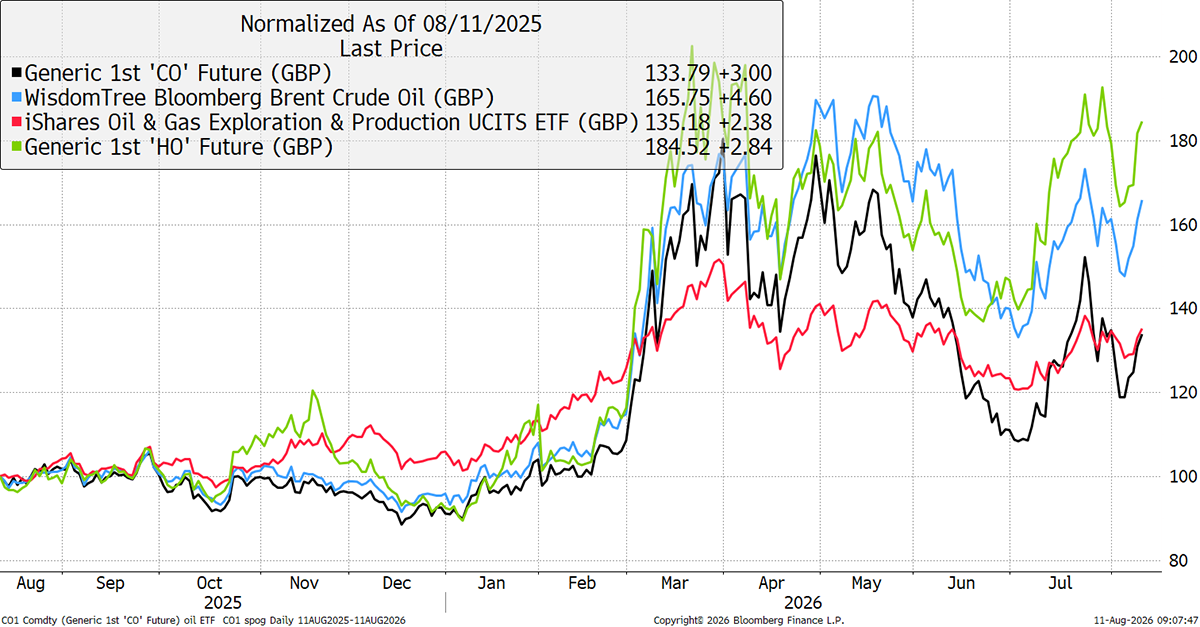
Finally on oil, I show the oil stocks (red) and oil (black) with the Brent Crude ETF (blue) and the Heating Oil ETF (green). Heating oil is heavier than petrol and gas and reflects the price of jet fuel and diesel. Higher prices remain a serious risk, and one that financial markets and governments are not taking seriously enough.
Oil Investments
Yen and Yields
Sticking with commodities, gold rallied, and I suspect the root cause came from Japan. The US Treasury and the Bank of Japan intervened to support the yen. Gold liked it because it sensed a coming boost to the world’s money supply.
Japan is the largest foreign owner of US Treasuries ($1.14 trillion in black). While that was growing pre-2011, the yen was strong. Yet since that time, Japan has not increased its holdings of Treasuries, while the yen has fallen.
Japan’s US Treasury Reserves and the Yen
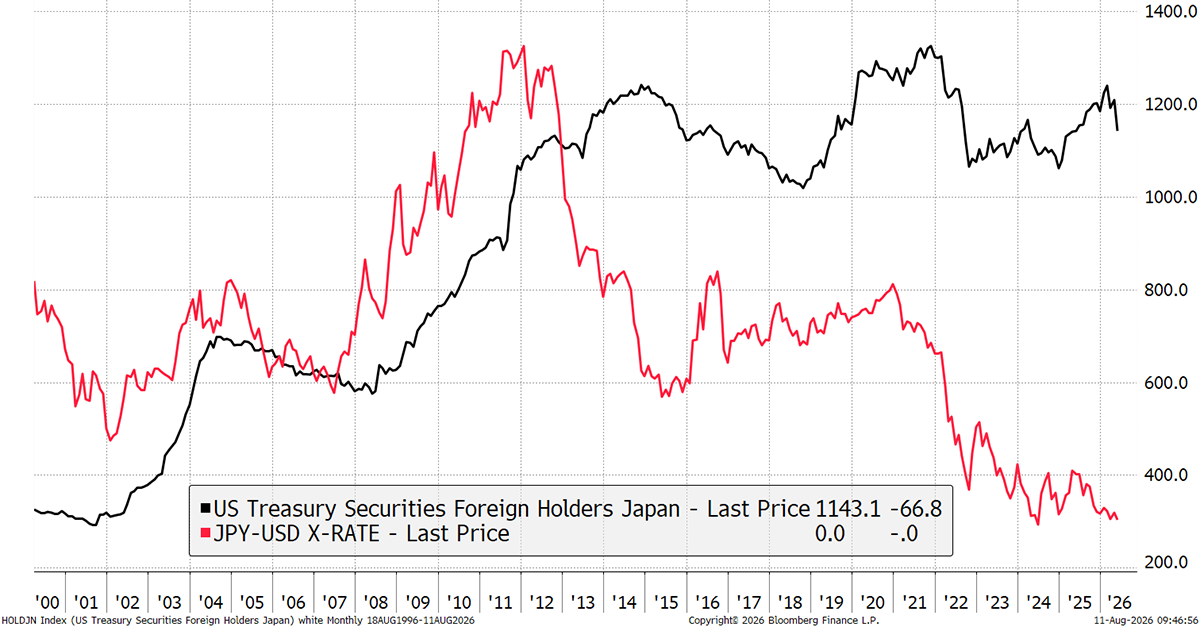
There are other reasons for yen weakness, but the link is notable. Above all, the persistently low interest rates of just 1% continue to make the yen attractive to borrow. What US Treasury Secretary Scott Bessent has noticed is that US Treasury bonds have been falling in sync with the yen.
Yen and US 30-Year Treasuries
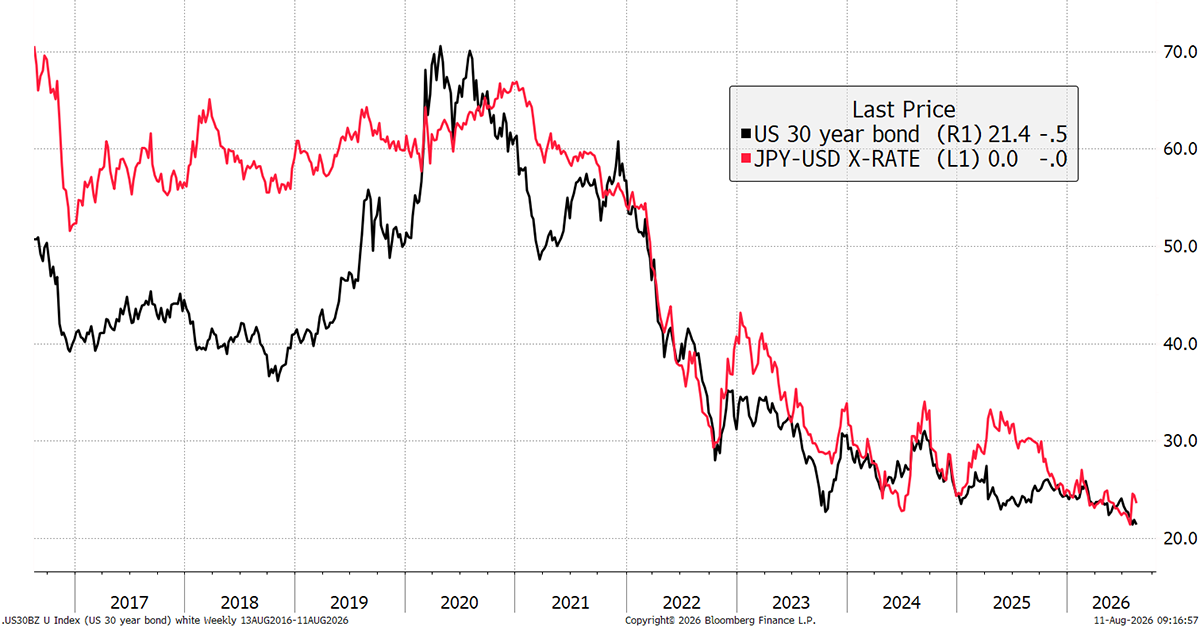
A falling bond price means a rising yield, and Bessent intervened thinking it might support Treasuries. As the man who helped break the Bank of England in 1992, while working for George Soros, you’d think he’d know better. To support a major currency, you need an unlimited supply of money. The US has that, because it can print it. That is most likely why gold woke up last week.
Precious Metals
The moves in gold and silver are modest by recent moves, but they mark a turn. I would jump at the chance to purchase silver again, but at the average historical price relative to gold, it is still no bargain.
Gold and Silver
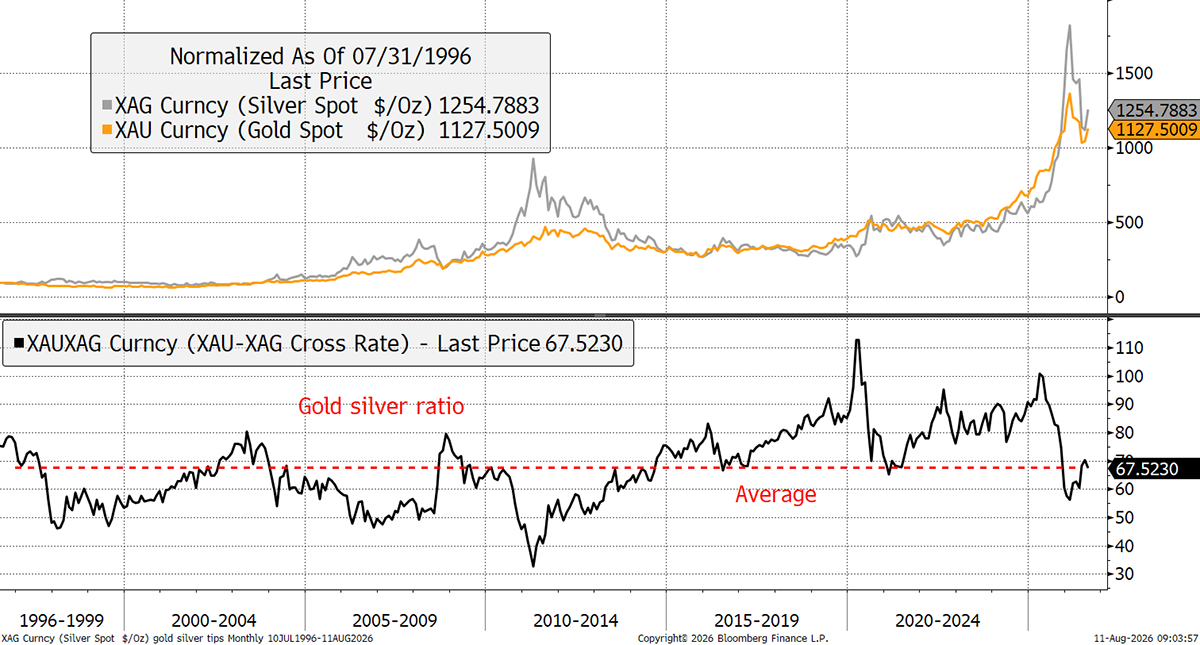
Silver is also riskier than gold and can collapse during a crisis. For me to feel comfortable holding it, I want to know that it is undervalued or, at the very least, has a strong technical setup. That may come, but I still feel silver has more work to do.
Last week’s stars of the precious metals were the gold miners. They rallied much harder. Remarkably, the miners in gold (black) are not far off their highest point. The market is clearly saying that should gold move higher, this is where the money will be made.
Gold vs the Miners
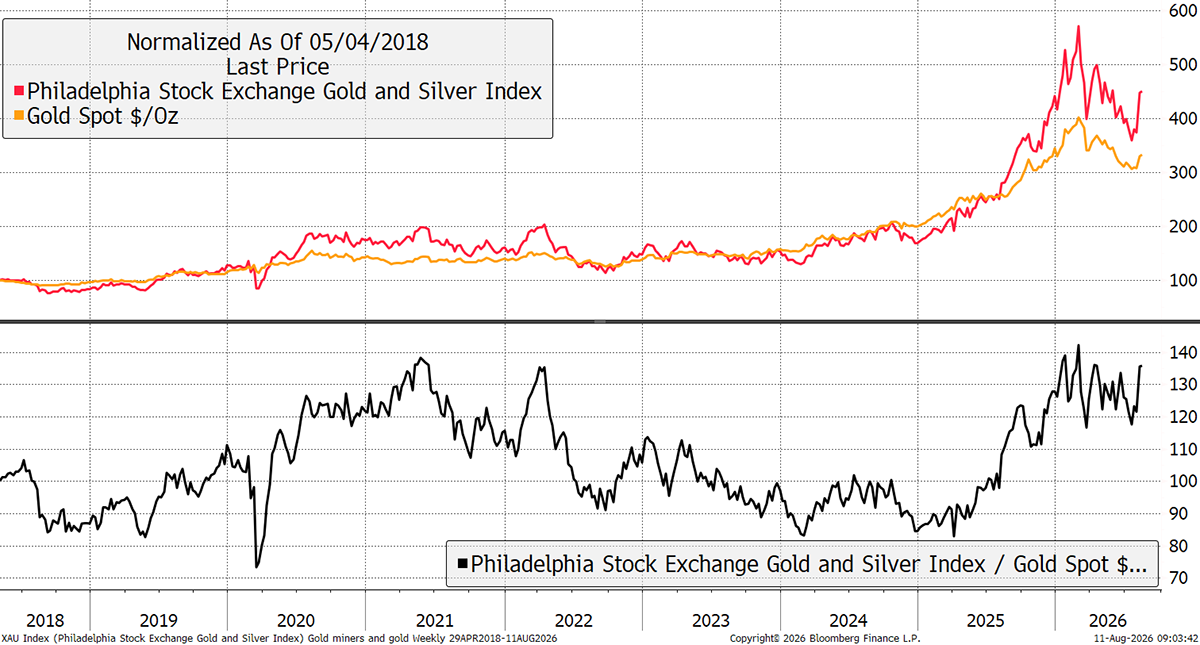
I have been thinking through whether to increase our positions in precious metals.
General - Your capital is at risk when you invest, never risk more than you can afford to lose. Past performance and forecasts are not reliable indicators of future results. Bid/offer spreads, commissions, fees and other charges can reduce returns from investments. There is no guarantee dividends will be paid. Overseas shares - Some recommendations may be denominated in a currency other than sterling. The return from these may increase or decrease as a result of currency fluctuations. Any dividends will be taxed at source in the country of issue.
Funds - Fund performance relies on the performance of the underlying investments, and there is counterparty default risk which could result in a loss not represented by the underlying investment. Exchange Traded Funds (ETFs) with derivative exposure (leveraged or inverted ETFs) are highly speculative and are not suitable for risk-averse investors.
Bonds - Investing in bonds carries interest rate risk. A bondholder has committed to receiving a fixed rate of return for a fixed period. If the market interest rate rises from the date of the bond's purchase, the bond's price will fall. There is also the risk that the bond issuer could default on their obligations to pay interest as scheduled, or to repay capital at the maturity of the bond.
Taxation - Profits from investments, and any profits from converting cryptocurrency back into fiat currency is subject to capital gains tax. Tax treatment depends on individual circumstances and may be subject to change.
Investment Director: Charlie Morris. Editors or contributors may have an interest in recommendations. Information and opinions expressed do not necessarily reflect the views of other editors/contributors of ByteTree Group Ltd. ByteTree Asset Management (FRN 933150) is an Appointed Representative of Strata Global Ltd (FRN 563834), which is regulated by the Financial Conduct Authority.
© 2026 ByteTree Group Ltd


