Bitcoin’s Bullish Volatility Signal


ByteFolio Issue 221;
Bitcoin’s ByteTrend Score is a 1. On the face of it, this is bad news as the trend has softened.
Bitcoin Daily
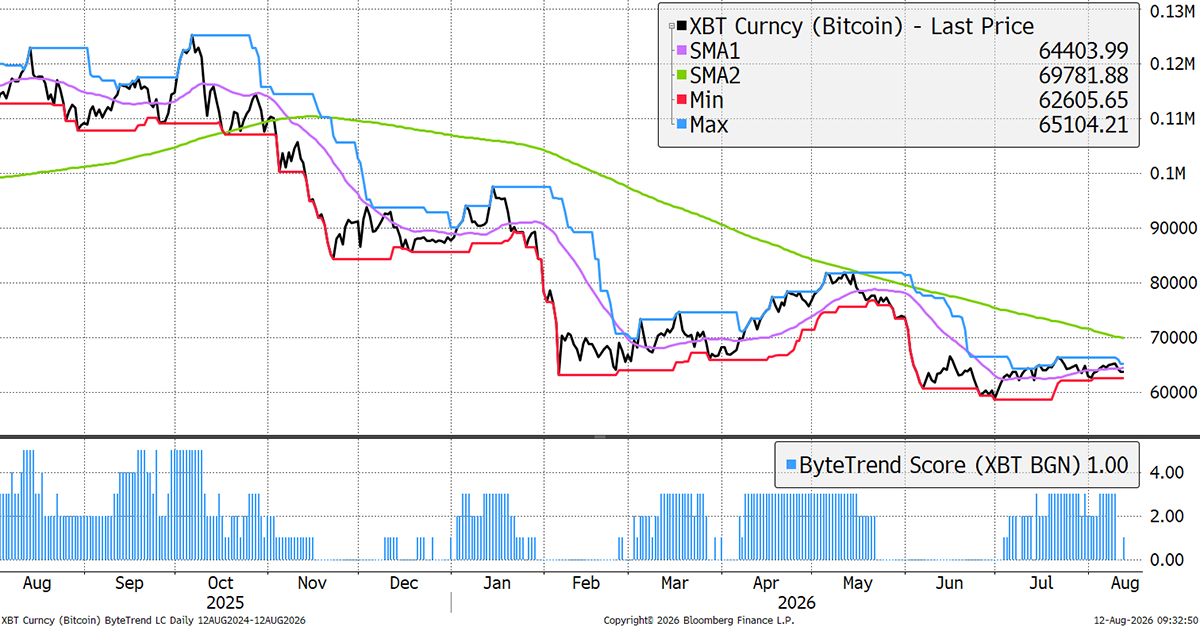
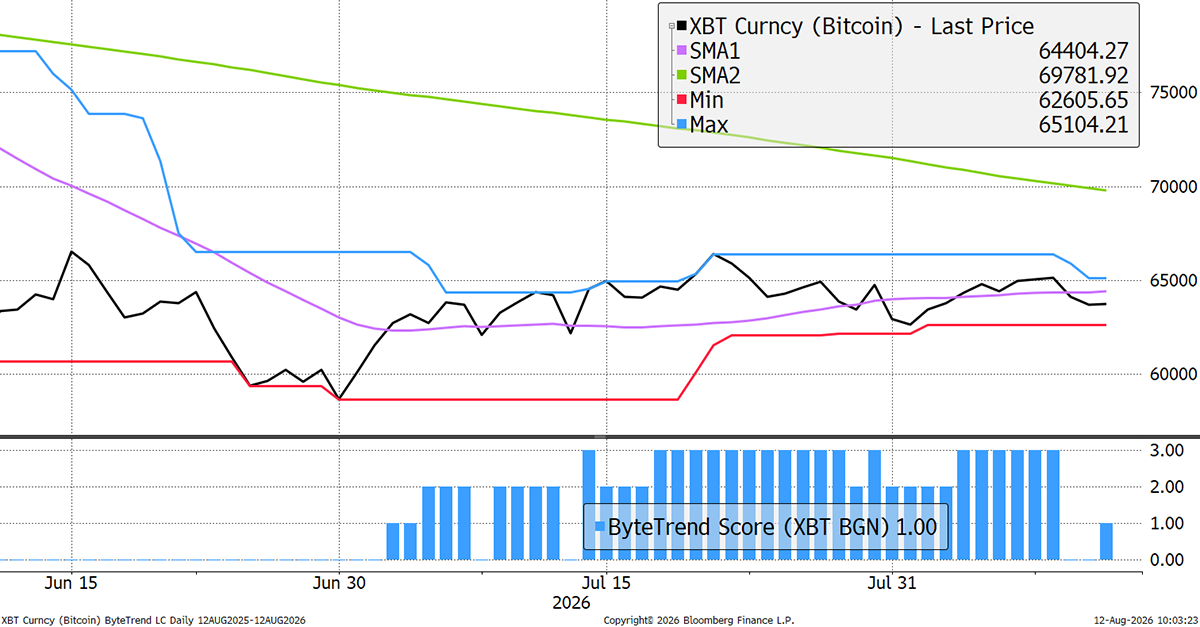
Zooming in, the positive is a rising 30-day moving average. That said, the real story here is the ultra-low volatility, highlighted by the narrowing max/min bands.
Bitcoin Daily – Short-Term
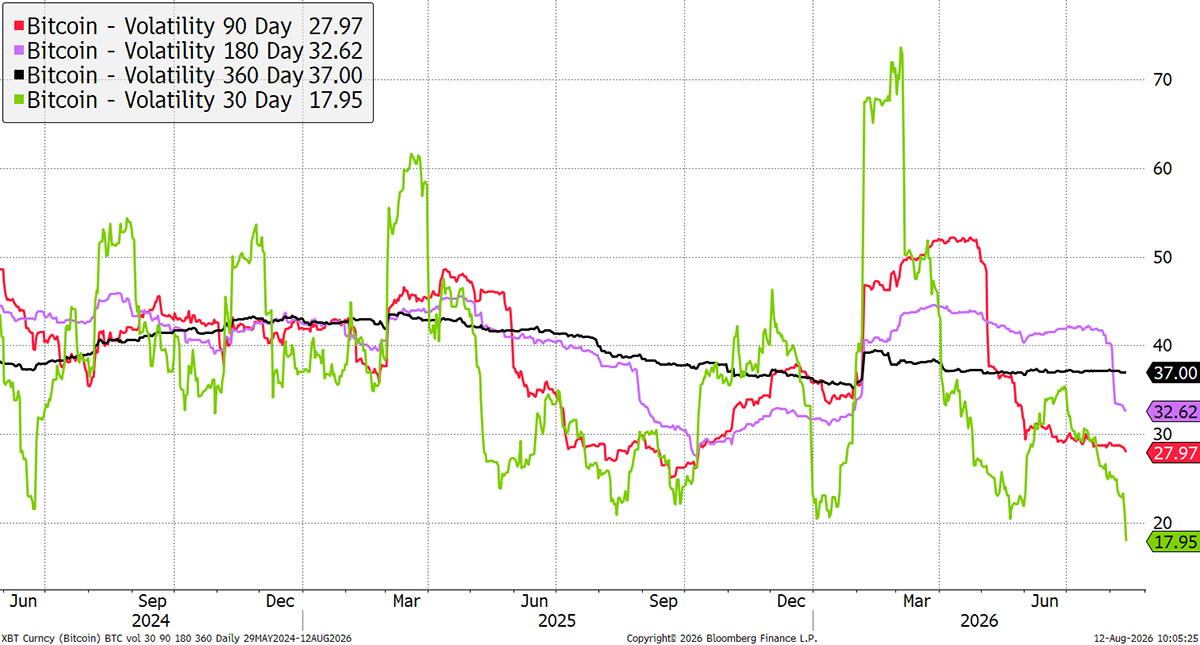
Checking in on volatility, Bitcoin shows 18% volatility over the past 30 days, which truly is ultra-low. Other measures over 90 days and 180 days are also low and falling. The 360-day volatility remains stable.
Bitcoin Volatility
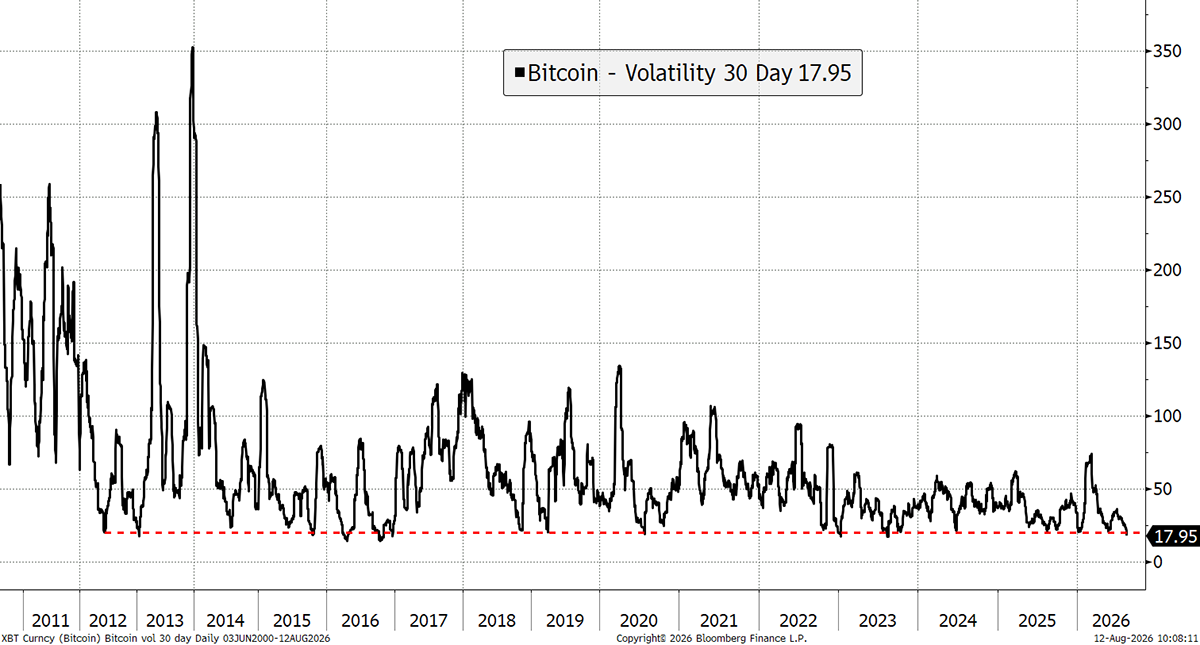
Longer term, Bitcoin’s volatility has been below 20% on 87 days since 2010. That is 87 days out of a total of 5,162 trading days, or an event that is seen just 1.7% of the time.
Bitcoin 30-Day Volatility
These have often come in clusters. I have marked the first day on each occasion.
Bitcoin 30-Day Volatility – Start of Cluster
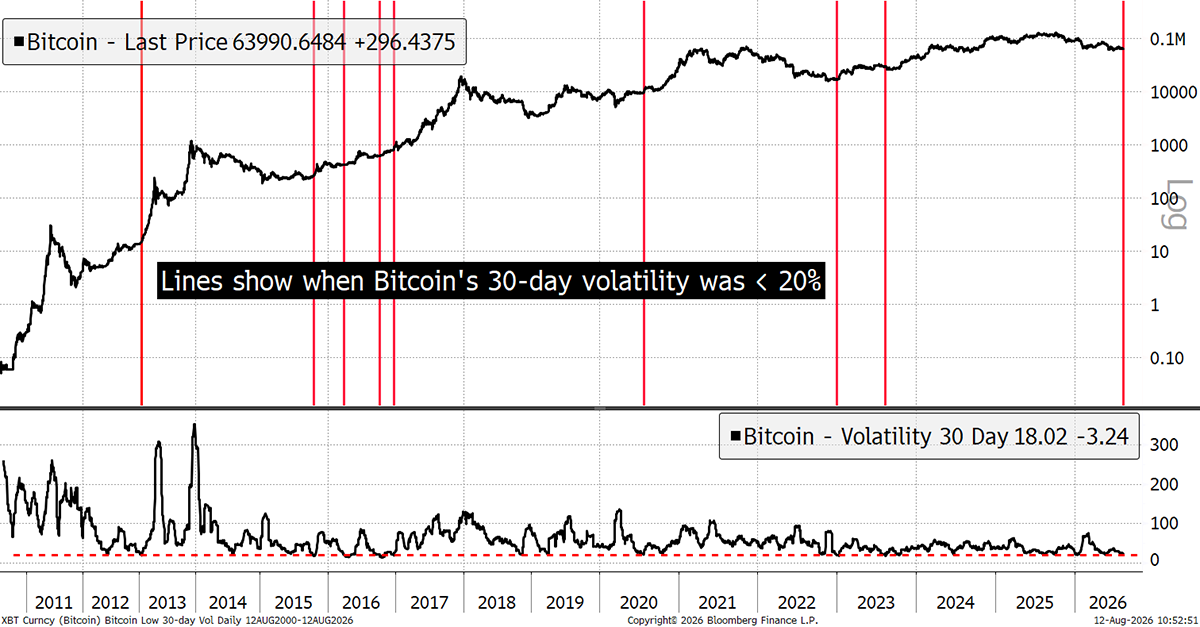
So, if you bought that first day, what happened 12 months later? The results are encouraging.
Bitcoin Returns after 30-Day Volatility is below 20%
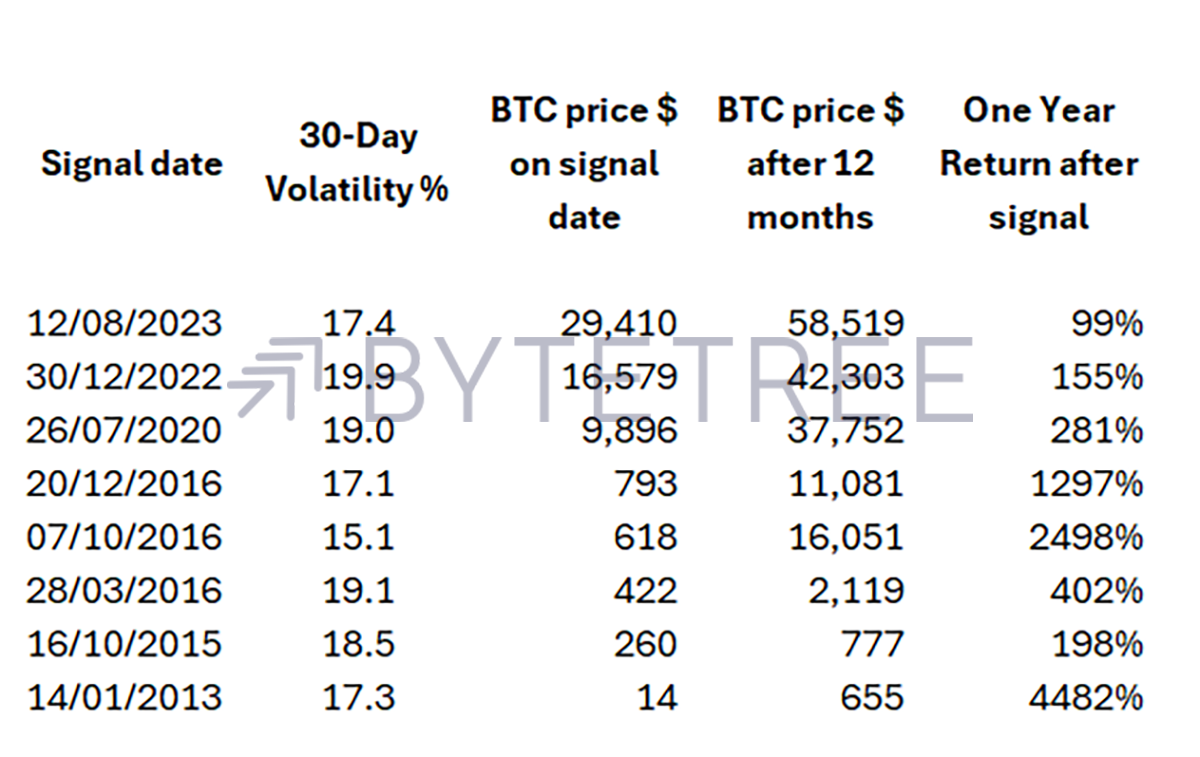
In the interests of caution, I would add there was one exception in November 2018. The 30-day volatility dropped to 22%, not quite 20% but still low, before a nasty fall. But still, a year later, Bitcoin was 23% higher.
The point is that major breakouts often follow periods of ultra-low volatility. Normally they are up, but they don’t have to be. If we see strength from here, we should embrace it.