


How Patriotic Is Your Portfolio?

Spain has won the World Cup, but I prefer Giles Coren’s take that “England won the real final.”
The New UK Government
Much has happened since last week, and our new prime minister, Andy Burnham, has formed a government. The shock was John Healey being appointed Chancellor of the Exchequer, when we had been expecting either Shabana Mahmood or the dreaded Ed Miliband. Mahmood retained the Home Office, while Miliband got “promoted” to the Foreign Office. That’s exactly what I’d do if I were Andy; get Ed on a plane, and as far away as possible. Lord Hermer is also out, which will be celebrated by the military, both past and present.
No leak
It was impressive that Healey’s appointment was not leaked, as always seems to happen these days. Press signalling of new policies is one of those things that have damaged trust in government. There is too much focus on the impact on polling as opposed to the impact on the country.
The Healey announcement reminded me of the 1997 election when Blair won after 17 years of the Conservatives. The markets were worried that Labour would do crazy Labour things, but in a political masterstroke, Brown announced the independence of the Bank of England, thus giving up the Chancellor’s power to set interest rates. The 10-year gilt yields immediately fell by 0.4%, and the Conservatives were made to look stupid for continuously rejecting the idea. The markets gave Labour the benefit of the doubt thereafter, which would never have happened had the news been leaked.
Healey
Healey’s appointment is not exactly central bank independence, but more importantly, it is not Miliband, which is a relief. Had it been, I’m sure the gilt market would have slipped. Healey is no highly trained economist, such as Rachel Reeves, but he did serve as the Economic Secretary to the Treasury from 2002 to 2005, and as the Financial Secretary to the Treasury from 2005 to 2007. I am sure that will put him in good stead.
The Burnham anointment was warm. He accepts that seven PMs in 10 years is not the way to run our country, and that politics has failed us. On the plus side, he is clearly an excellent communicator and wants to bring the country together. On the downside, he’s a taxer and a spender, so in that respect, there’s no change.
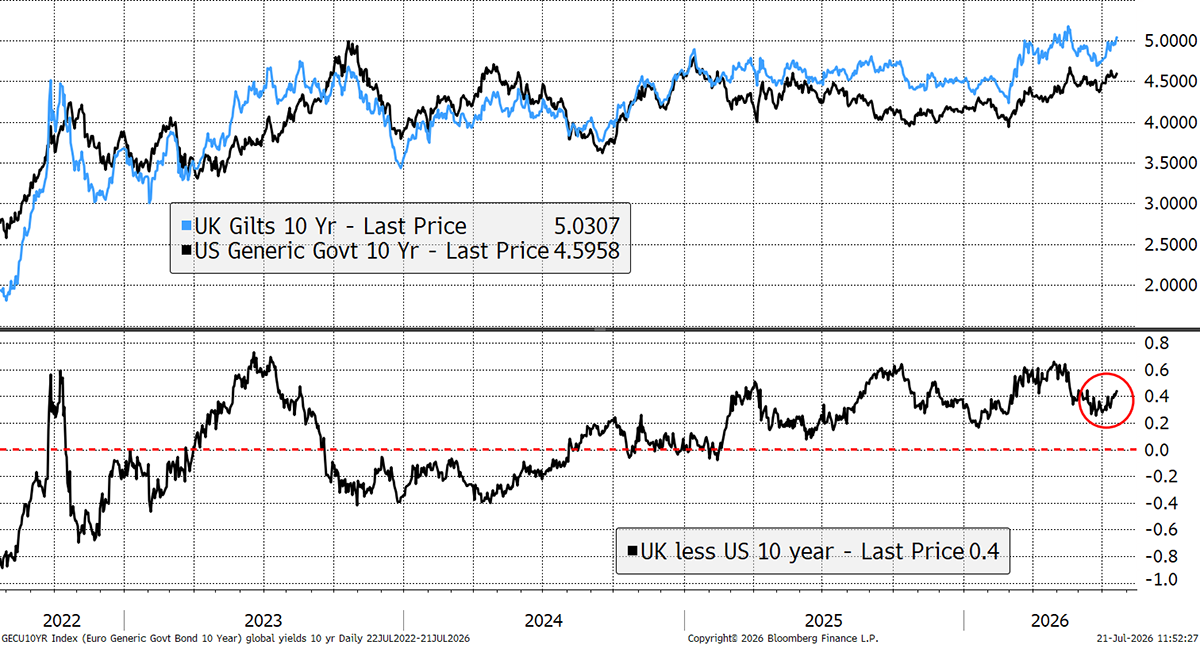
It’s early days, but gilt yields have risen faster than US Treasury yields. Both investors and politicians should keep an eye on this relationship. I am confident that investors will, but it would be reassuring if politicians did the same. Although in different circumstances, Liz Truss was ousted at 4.5%. Andy Burnham starts at 5%.
UK vs US 10-Year Yield
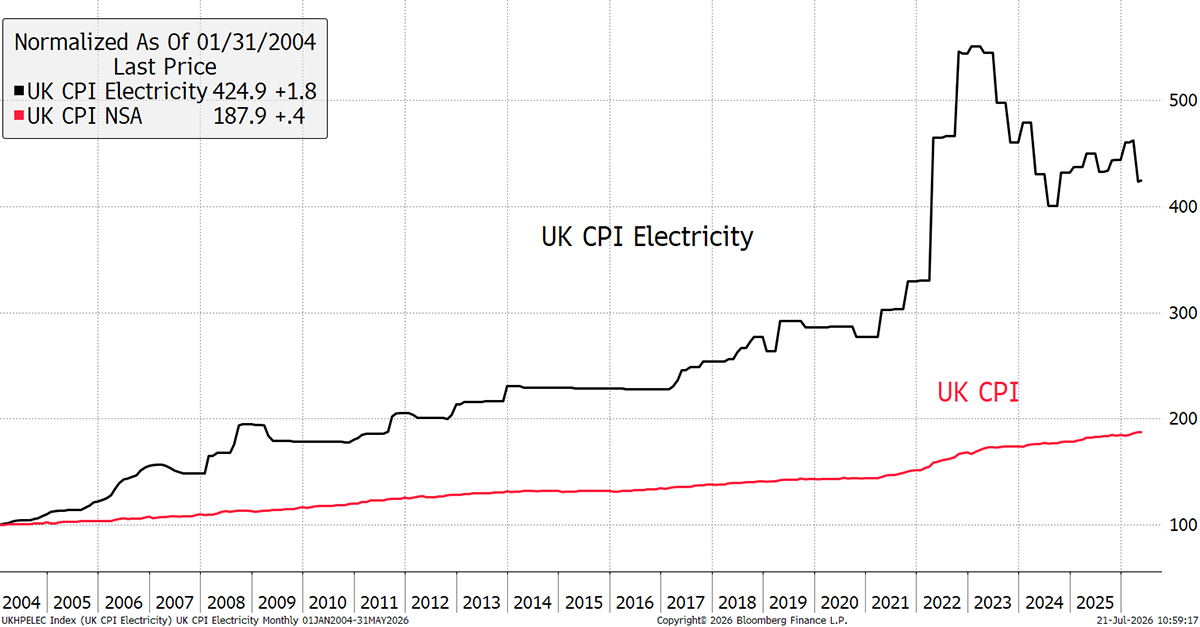
His first giveaway was to house the homeless. I have never quite understood why developed countries have homelessness, or at least rough sleeping. But there is clearly a difference between a compassionate bed and a meal and dishing out newly built houses. Then came removing VAT on electricity bills, which was a political giveaway.
In choosing Healey, the implication is for higher defence spending, which will be well received. He had resigned as the Defence Secretary just a few weeks ago over budget constraints. One can only assume that defence will be his priority, which will please Trump, who is already causing mischief from the sidelines.
Depending on your views, these are all good causes/priorities/essentials, call them what you will, but it’s all money the UK doesn’t have.
Burnham’s stance on the North Sea will be a big question. He criticised Thatcher’s deindustrialisation in the 1980s, but nothing has accelerated that more than UK energy policy, which has sent prices soaring. If he is genuinely pro-industry, he’ll allow North Sea production to grow. The best thing about that policy choice is that the costs sit with the private sector, while the taxed profits go to the government.
UK Electricity Prices
It shouldn’t be a difficult decision, but there’s the manifesto to consider. Since we didn’t win the football, this new government will remain unelected until they decide they are ready to do the right thing, but this has become the new normal. It means they can’t sway too far from the 2024 manifesto and Labour’s Fiscal Plan:
“Our fiscal rules are non-negotiable and will apply to every decision taken by a Labour government. This means that the current budget must move into balance, so that day-to-day costs are met by revenues and debt must be falling as a share of the economy by the fifth year of the forecast.”
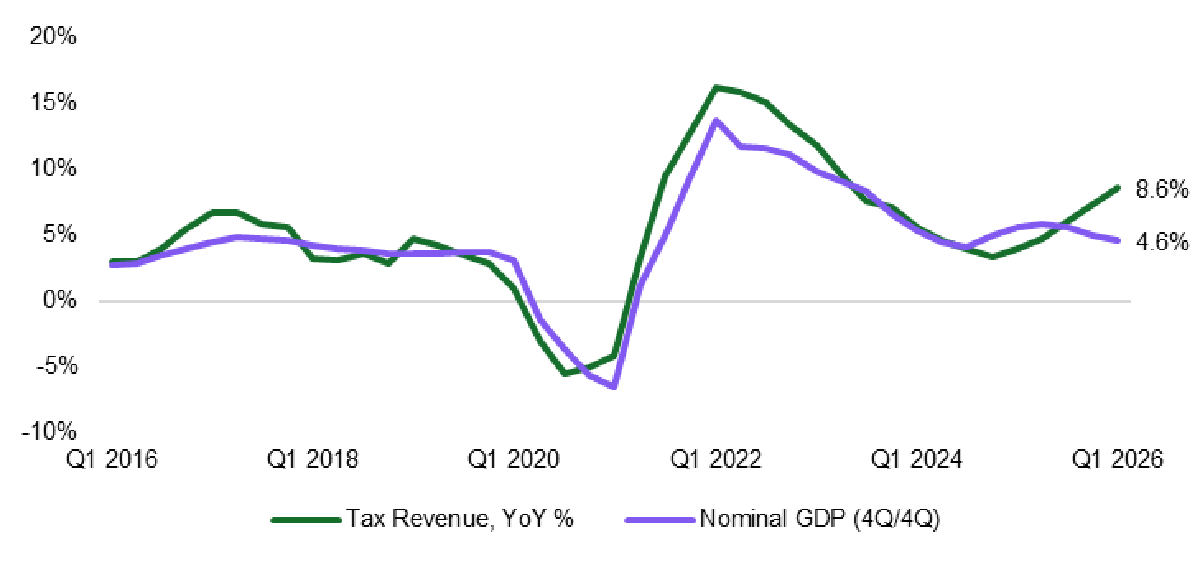
The UK budget hasn’t been balanced since 2001. Economist Simon French highlighted that UK tax revenue has gone up at twice the rate of nominal GDP, which is unsustainable. This means higher spending is not leading to growth, so future tax revenues will continue to lag expectations.
Tax and Growth
They can tax and spend more, but sooner or later, you run out of cows, which reminds me of this old joke:
Socialism: If you have two cows, you give one to your neighbour.
Communism: If you have two cows, you give them to the government and the government then gives you some milk.
Fascism: If you have two cows, you keep the cows and give the milk to the government; then the government sells you some milk.
New Dealism: If you have two cows, you shoot one and milk the other; then you pour the milk down the drain.
Nazism: If you have two cows, the government shoots you and keeps the cows.
Capitalism: If you have two cows, you sell one and buy a bull.
Portfolio Patriotism
Investment portfolios have historically had a “home bias”. That is, the local pension funds and wealth management industry invest a large chunk at home before they look for diversification abroad. Just 20 years ago, this was normal in the UK too, but that changed after the 2008 financial crisis, when overseas diversification ballooned. What was odd is how readily the pension industry embraced this, leaving minimal funds at home and the UK stockmarket worse off as a result. No signs of patriotism there.
Many say the pension funds have gone too far, and indeed the last chancellor was just coming around to the idea of compelling them to come home. Better still, invest in UK infrastructure, which the government can no longer afford to do. I would not be surprised to see more mandated investments by the pension fund sector, and these are the early signs of capital controls, which the strategist Russell Napier has warned us about. Japan has just “encouraged” its pension funds to do just this.
In the absence of capital controls, investors need not worry about how their country is run, because they can choose to invest elsewhere. If the UK government are unable to balance the books, investors don’t need to own gilts. Indeed, any exposure to gilts that we have in the Soda portfolio comes through funds with short-dated holdings, and therefore less exposed to political mayhem.
Similarly, if the UK economy is stalled by high corporate taxes or other policies, we have the ability to invest elsewhere. That remains our freedom and choice, but as I said, so long as there are no capital controls. If and when the gilt market hits breaking point, that could change and severely limit investment choices.
That is still some way down the road, and I hope we never get there, but it is an important consideration. When I assess Soda and Whisky for patriotism, they are almost siding with the enemy.
General - Your capital is at risk when you invest, never risk more than you can afford to lose. Past performance and forecasts are not reliable indicators of future results. Bid/offer spreads, commissions, fees and other charges can reduce returns from investments. There is no guarantee dividends will be paid. Overseas shares - Some recommendations may be denominated in a currency other than sterling. The return from these may increase or decrease as a result of currency fluctuations. Any dividends will be taxed at source in the country of issue.
Funds - Fund performance relies on the performance of the underlying investments, and there is counterparty default risk which could result in a loss not represented by the underlying investment. Exchange Traded Funds (ETFs) with derivative exposure (leveraged or inverted ETFs) are highly speculative and are not suitable for risk-averse investors.
Bonds - Investing in bonds carries interest rate risk. A bondholder has committed to receiving a fixed rate of return for a fixed period. If the market interest rate rises from the date of the bond's purchase, the bond's price will fall. There is also the risk that the bond issuer could default on their obligations to pay interest as scheduled, or to repay capital at the maturity of the bond.
Taxation - Profits from investments, and any profits from converting cryptocurrency back into fiat currency is subject to capital gains tax. Tax treatment depends on individual circumstances and may be subject to change.
Investment Director: Charlie Morris. Editors or contributors may have an interest in recommendations. Information and opinions expressed do not necessarily reflect the views of other editors/contributors of ByteTree Group Ltd. ByteTree Asset Management (FRN 933150) is an Appointed Representative of Strata Global Ltd (FRN 563834), which is regulated by the Financial Conduct Authority.
© 2026 ByteTree Group Ltd


