


Market Madness

Trades in Whisky;
SpaceX got off to a good start. On Friday, the shares floated at $135 and are trading in Europe this morning at $212, valuing the company around $3 trillion. Sales for 2026 are expected to be $34 billion, and in 2027, $60 billion. Thank goodness for the growth. By any measure, what we are seeing in financial markets today is madness. For those riding in the fast lane, it is hard to see how it can end well.
The advantages of staying in the fast lane include profits and glory. The disadvantage is the heightened risk, which could bite at any time. Fortunately, we do own some SpaceX through RIR Capital Partners (RCP). The net asset value (blue) has been rising nicely and deserves to narrow the discount.
RIT Capital
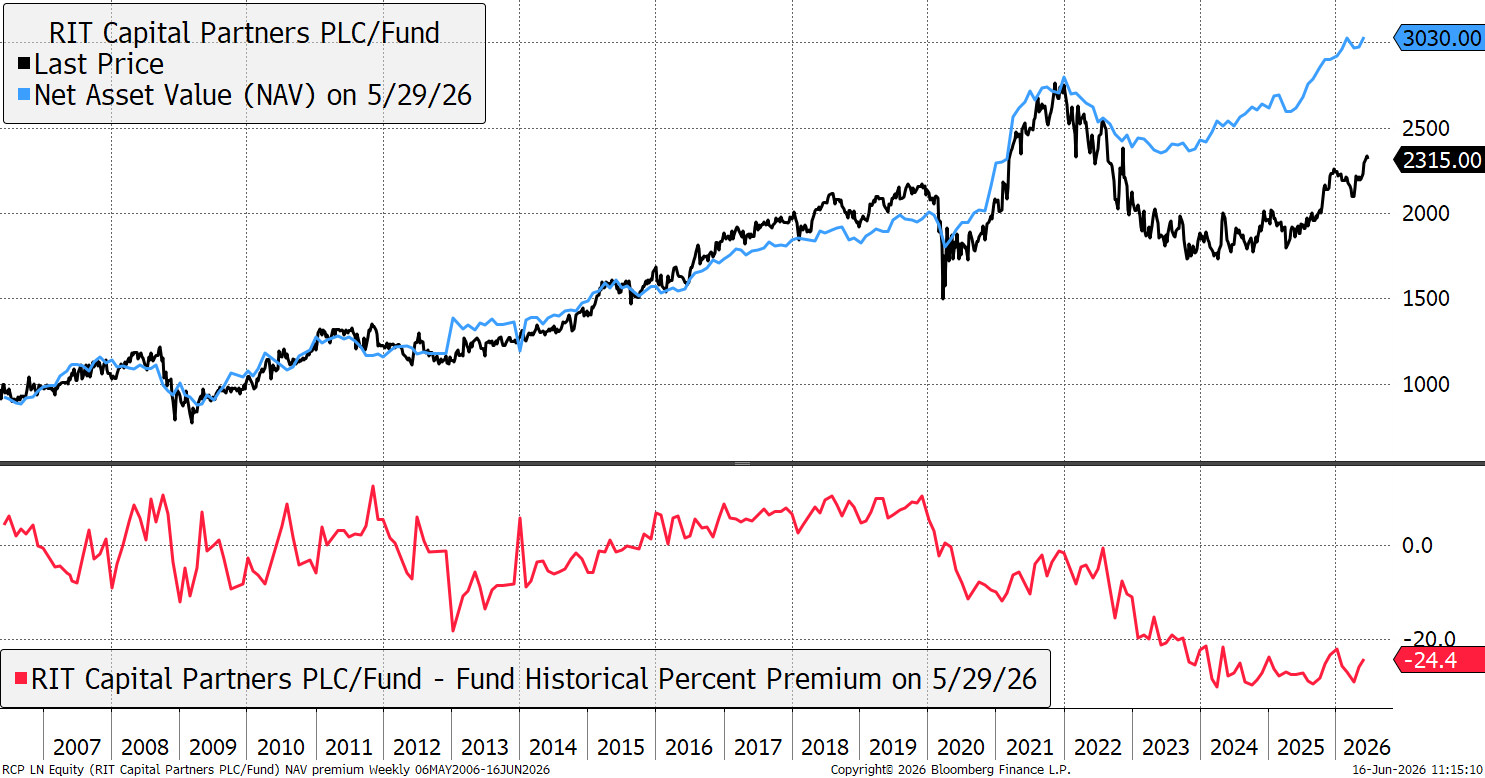
When will they take profits? No doubt they are restricted and locked in for a while. The trouble begins when the early investors and staff are able to sell. Believe me, they will.
The disadvantage of the slow lane in 2026 is a dull journey, with modest profits, but the advantage is greater certainty, as the worst outcomes are defrayed. That is why I have chosen the slow lane. During these times, this comes with different challenges, some good, some bad.
Peace in the Middle East
A peace deal is expected to be signed on Friday between the US and Iran, which has reduced the risk of an oil shock. It is a Memorandum of Understanding, rather than a peace treaty, which aims to end active hostilities involving US and Israeli forces in Iran and Lebanon. The Strait of Hormuz should reopen to commercial shipping, as Iranian restrictions and mines are cleared, along with the US naval blockade.
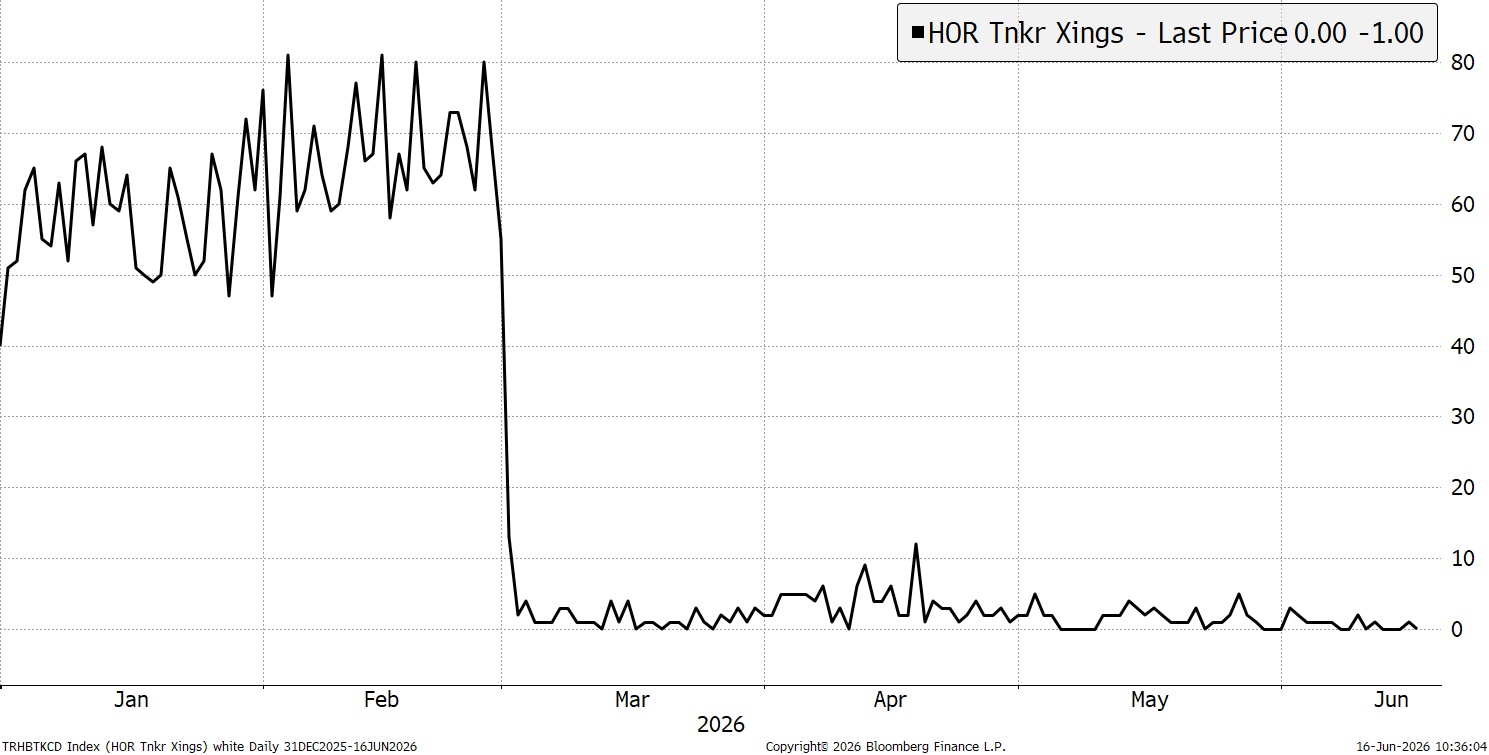
So far, no ships have moved, but President Trump claims oil has been moved along the Southern Highway, along the coast of Oman. Yet so far, only minimal official traffic has been recorded.
Hormuz Tanker Vessel Crossings
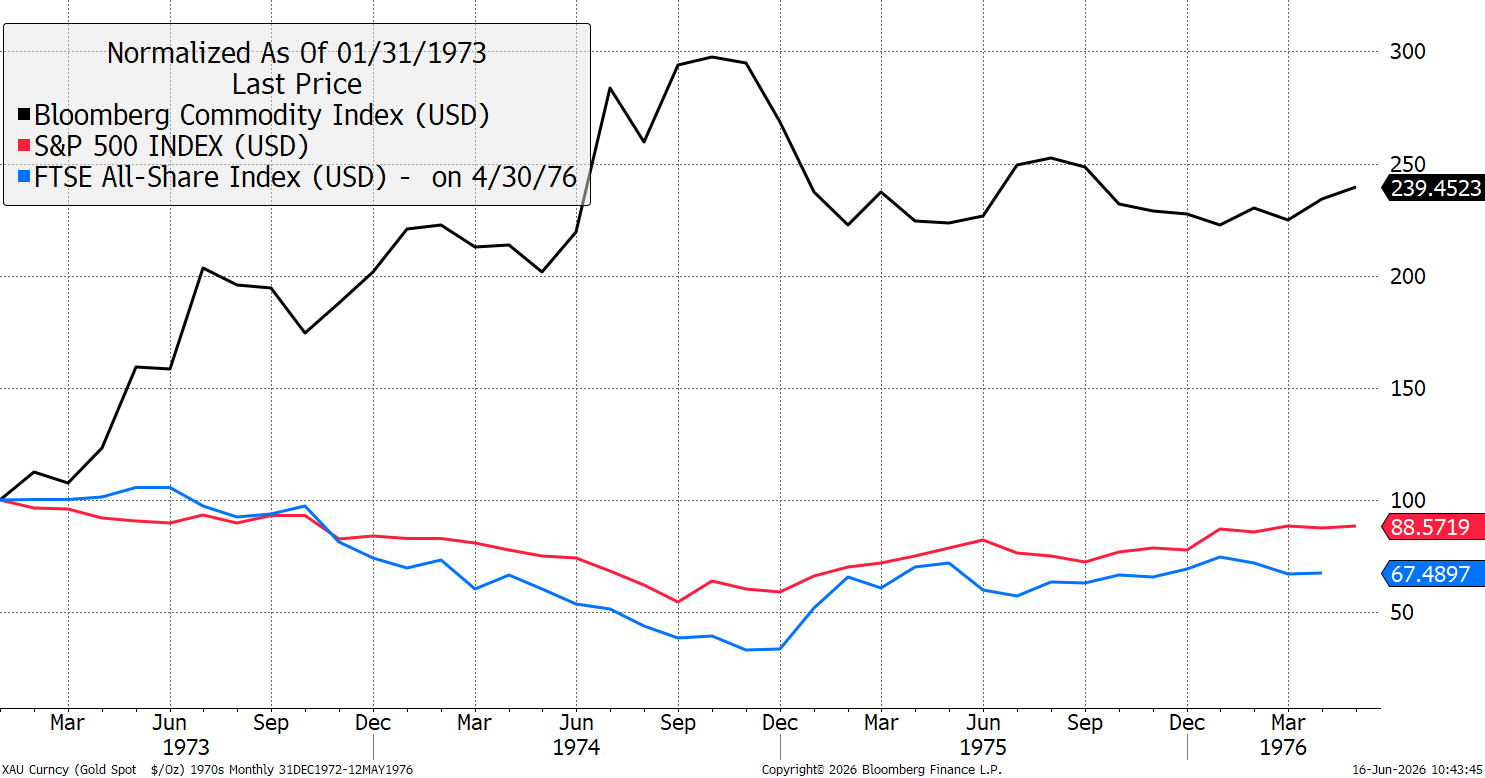
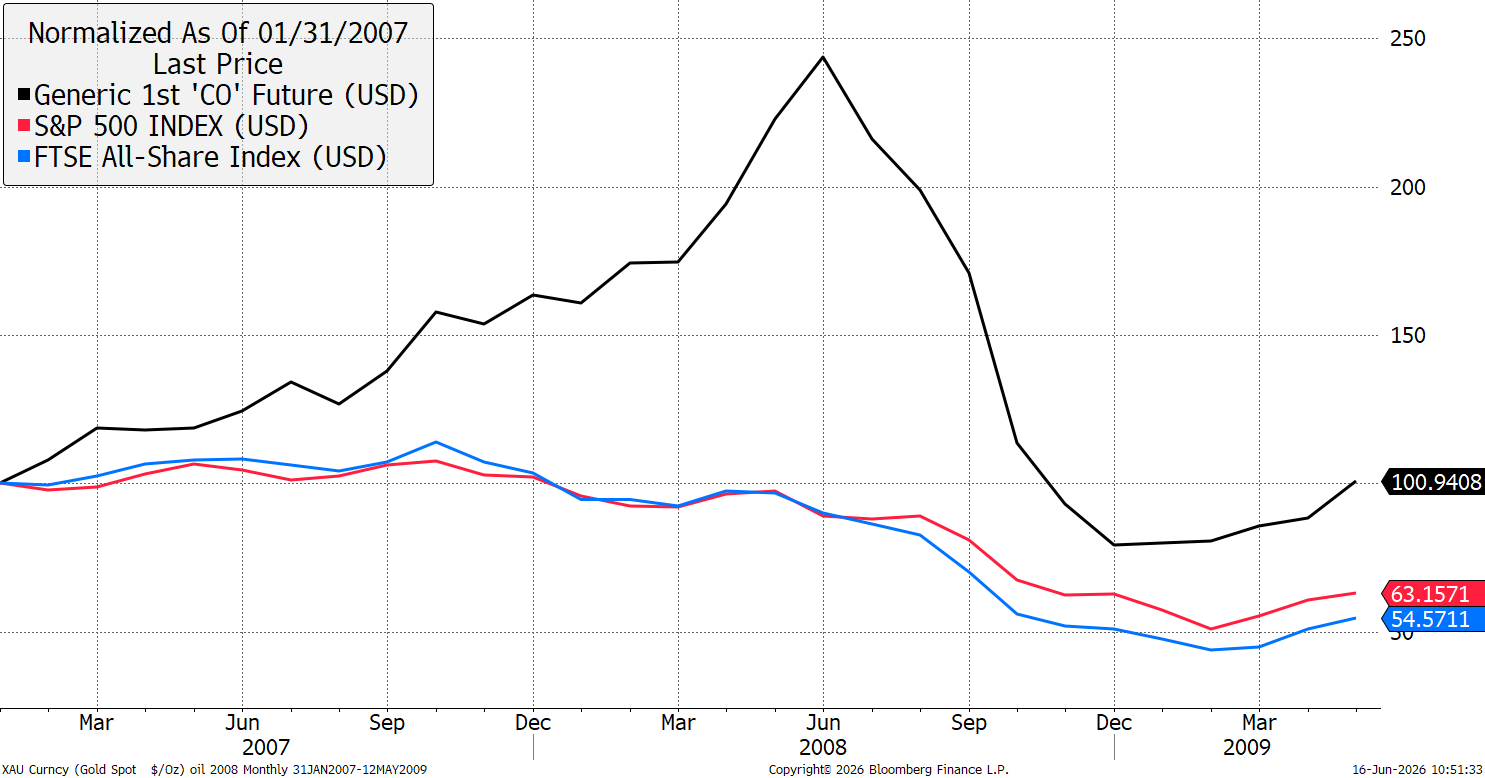
My fear of oil shocks is based on historical precedent. The diminishing inventories in the US and China have averted the worst scenario, which would be expected when removing 20% of the world’s supply. To remind you of the last three oil shocks in…
1974
2008
2022
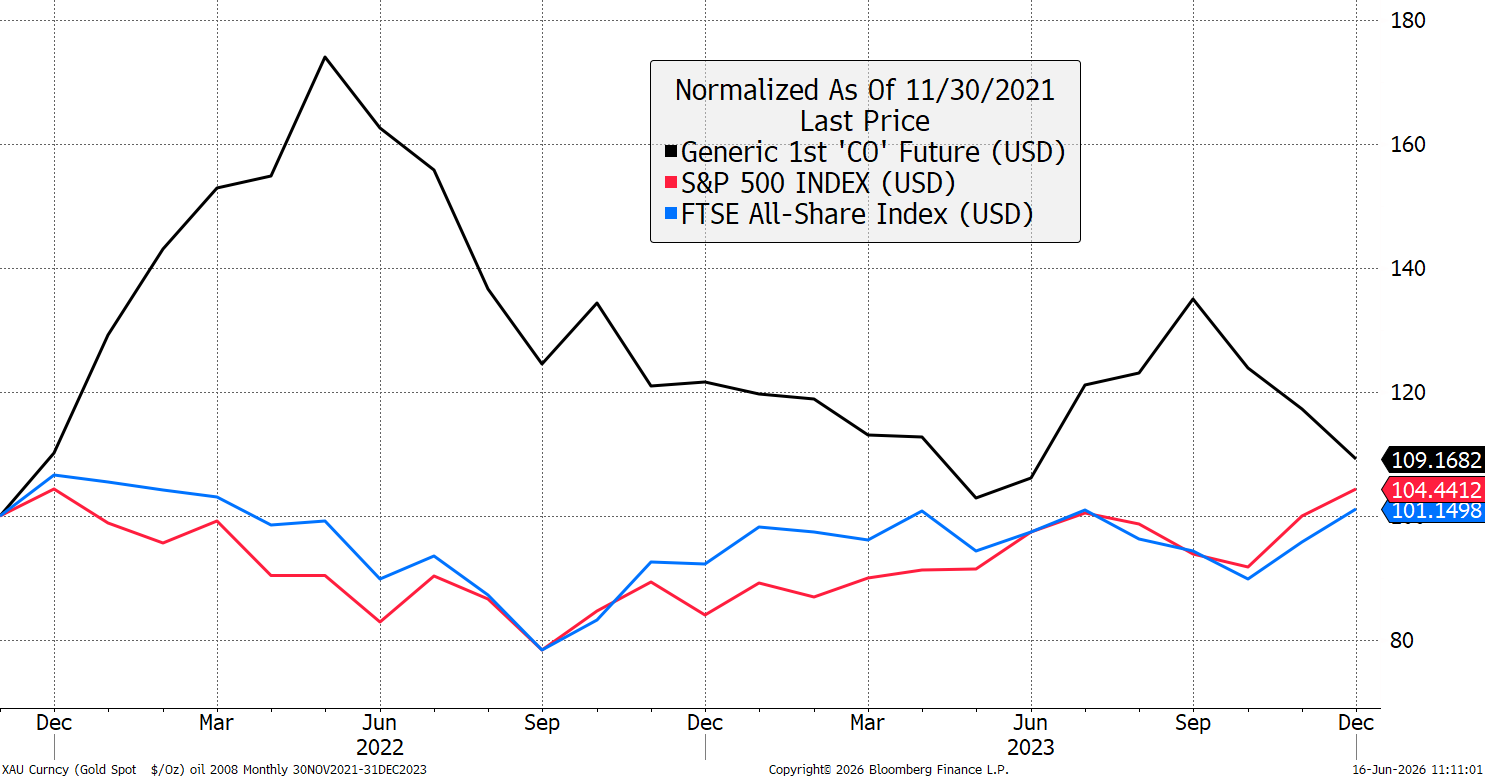
2022 saw a modest 20% correction, but the others were much greater, with stockmarket lows more that 50% below the original shock. In 1974, the low for UK equities was more than 70% down.
Since hostilities in Iran began on 28 February, oil is up just 12% and oil stocks have been flat. The Brent Crude Oil ETP is still up 32% (although we bought later meaning a 10% loss) due to the positive roll yield, which has been highly supportive, and reduces the risk of holding oil for a little longer, while we wait for proof that the market is physically rebalancing.
Oil, Oil futures and Oil Stocks
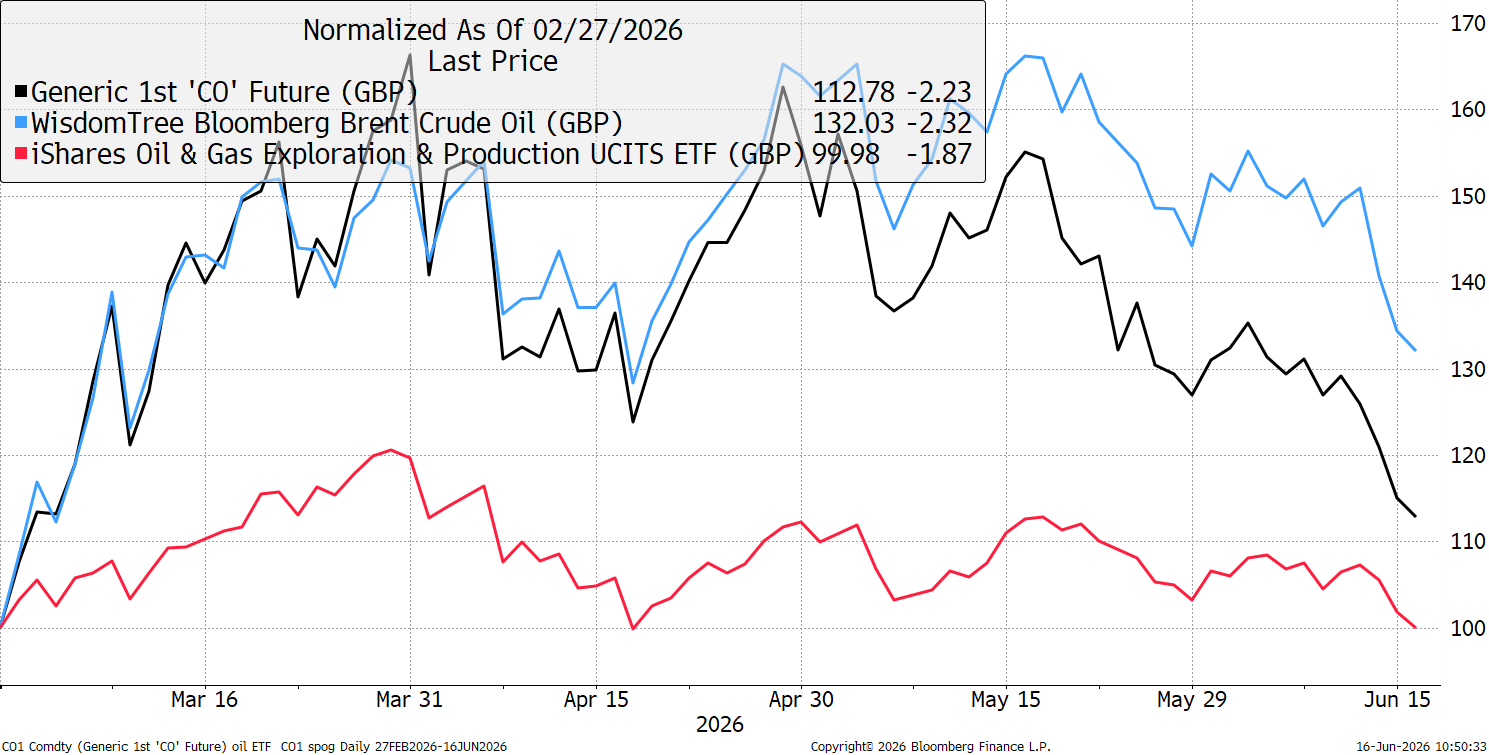
As oil has fallen, gold has bounced along with bitcoin and other stocks. The portfolio impact is therefore modest because the current high level of diversification balances the outcome. That is the point during times of uncertainty.
The travel industry is also relieved that fuel supplies are likely to return to normal before too long.
General - Your capital is at risk when you invest, never risk more than you can afford to lose. Past performance and forecasts are not reliable indicators of future results. Bid/offer spreads, commissions, fees and other charges can reduce returns from investments. There is no guarantee dividends will be paid. Overseas shares - Some recommendations may be denominated in a currency other than sterling. The return from these may increase or decrease as a result of currency fluctuations. Any dividends will be taxed at source in the country of issue.
Funds - Fund performance relies on the performance of the underlying investments, and there is counterparty default risk which could result in a loss not represented by the underlying investment. Exchange Traded Funds (ETFs) with derivative exposure (leveraged or inverted ETFs) are highly speculative and are not suitable for risk-averse investors.
Bonds - Investing in bonds carries interest rate risk. A bondholder has committed to receiving a fixed rate of return for a fixed period. If the market interest rate rises from the date of the bond's purchase, the bond's price will fall. There is also the risk that the bond issuer could default on their obligations to pay interest as scheduled, or to repay capital at the maturity of the bond.
Taxation - Profits from investments, and any profits from converting cryptocurrency back into fiat currency is subject to capital gains tax. Tax treatment depends on individual circumstances and may be subject to change.
Investment Director: Charlie Morris. Editors or contributors may have an interest in recommendations. Information and opinions expressed do not necessarily reflect the views of other editors/contributors of ByteTree Group Ltd. ByteTree Asset Management (FRN 933150) is an Appointed Representative of Strata Global Ltd (FRN 563834), which is regulated by the Financial Conduct Authority.
© 2026 ByteTree Group Ltd


