


The Rotation Favours Quality


ByteTree Quality - Q3 2026 Review
Welcome to our second quarterly review for the ByteTree Quality service and portfolio.
The Quality portfolio enjoyed its best month yet in October. Having launched in July, it is too early to read too much into this, but a major market rotation out of tech stocks and into the rest of the market has occurred in recent months. This has favoured the sectors we are most heavily allocated to.
We recorded a webinar on Wednesday, 11 November, discussing the rapidly shifting situation in global markets, the portfolio, and how we are thinking about both. To watch the webinar, please use the link below.
The Quarter in Review
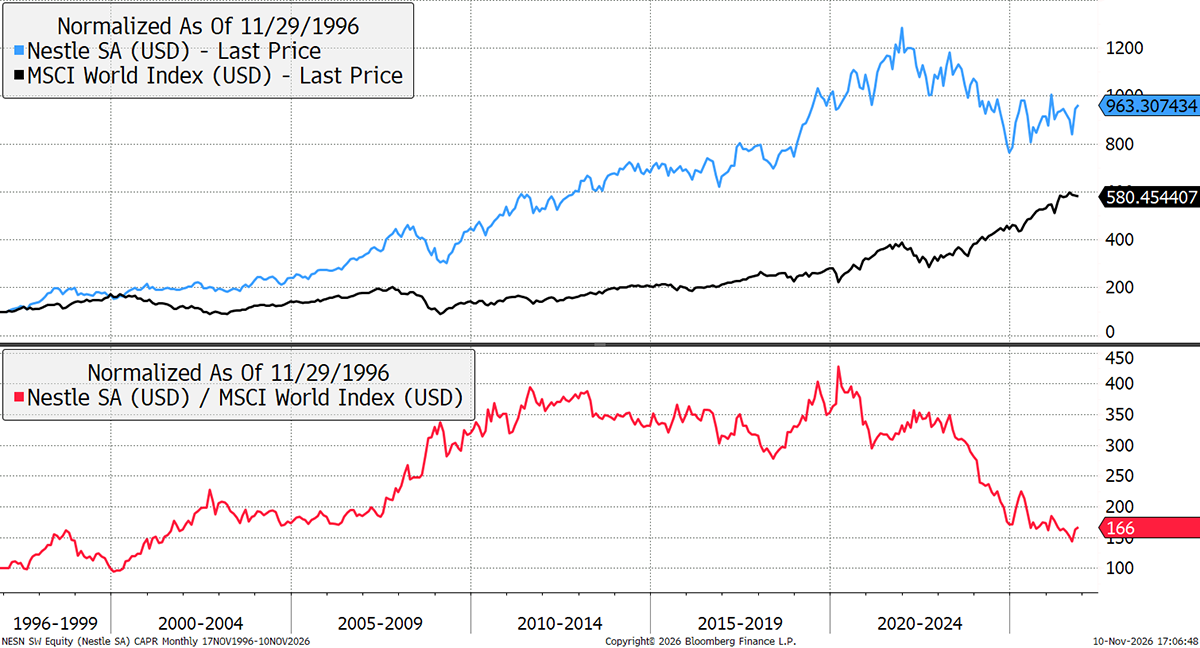
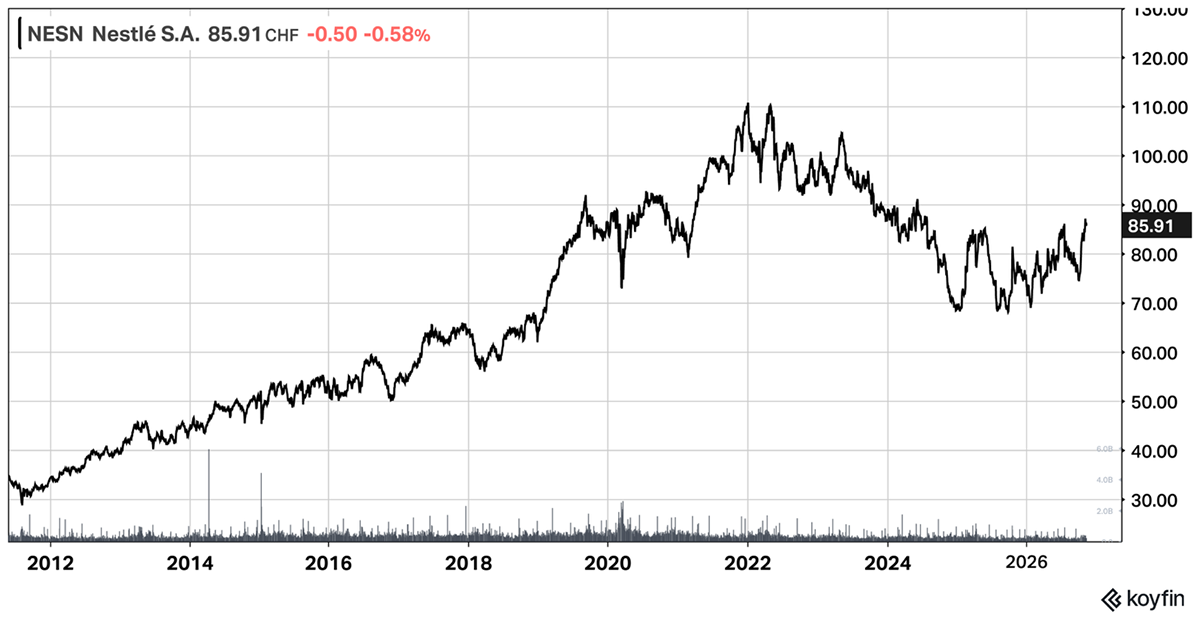
A classic example of a quality stock is Nestlé, perhaps one of the highest quality companies in the world. It is 150 years old, Swiss, and has many of the strongest food and nutrition brands, sold worldwide to people of all ages. It has handily outperformed the World Index over the long term, even without including dividends, as in the chart below.
However, the last five years have been a different story. In 2021, it had reached very high valuations relative to its past, and then interest rates rose sharply while growth moderated – a bad combination.
As a result, Nestlé became available at a much more attractive level relative to the index than five years earlier. This crash in relative performance was widespread among many of the world’s best companies, and that is what prompted us to launch ByteTree Quality last year.
Nestlé vs the World
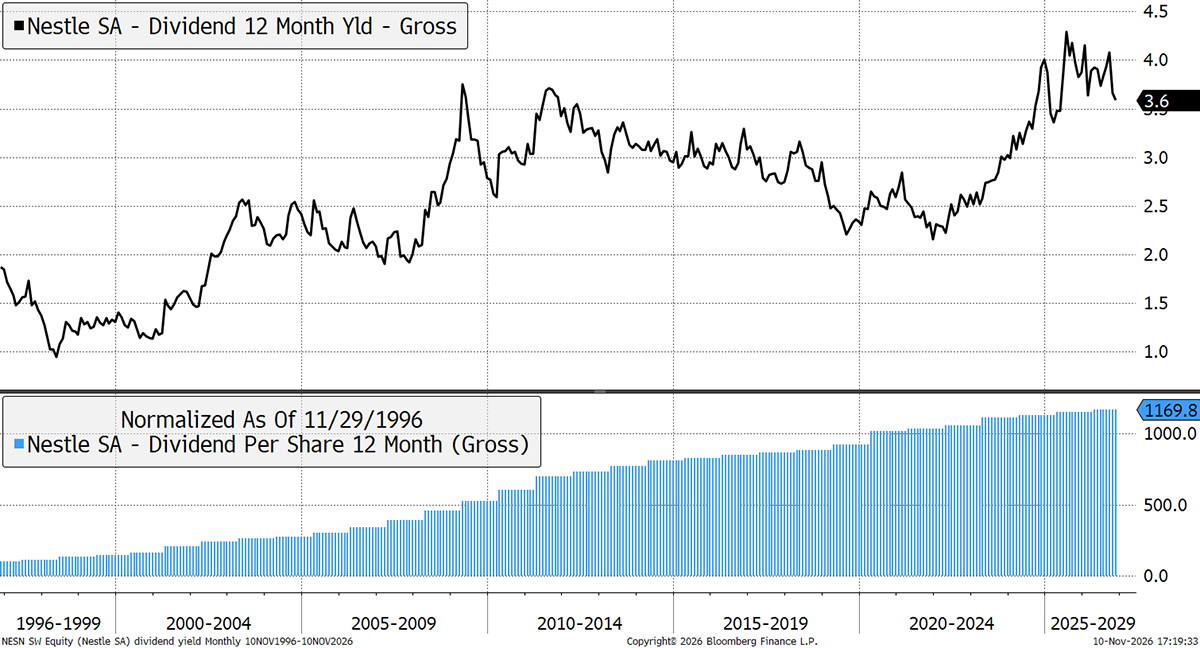
While that chart doesn’t include dividends from Nestlé, these are significant. In the past thirty years, the payout to shareholders has increased 11x, or, given the strength of the Swiss franc, 18x in US dollars, and the stock is available at nearly the highest dividend yield in that time. This is a great company available at a low price, which offers a historically attractive yield on a dividend with a history of good growth. This is the essence of what we are trying to do at ByteTree Quality.
Nestlé Dividend and Yield
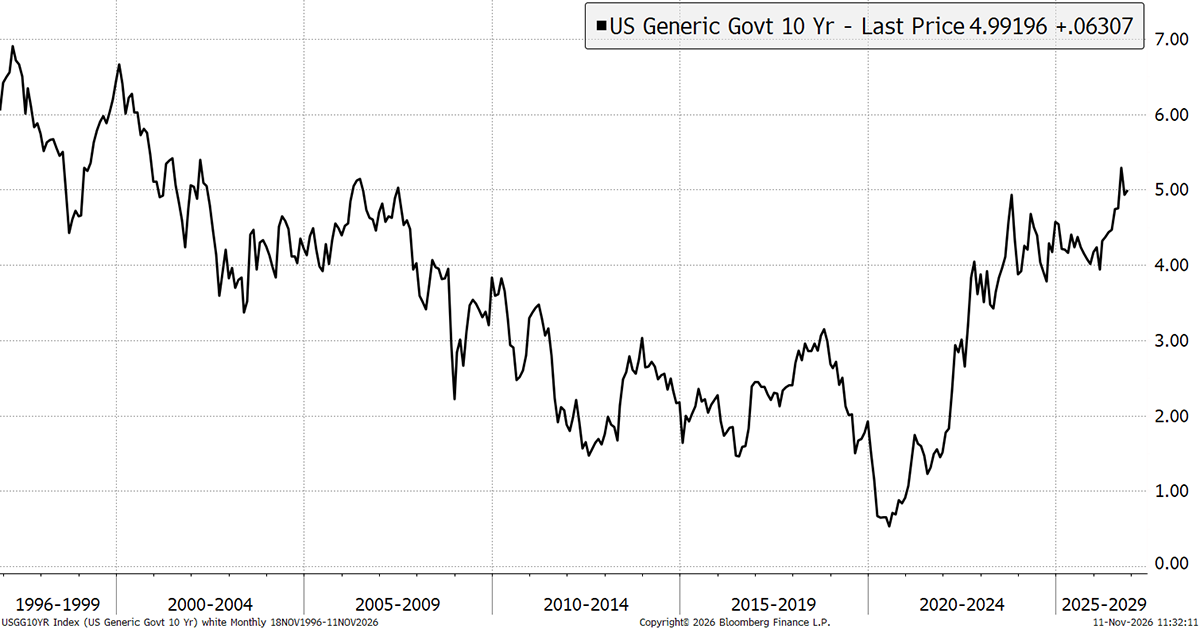
We mentioned that rising interest rates were part of the story behind the decline in quality stock prices earlier this decade. That is visible in the chart below, showing the US 10-year government bond yield. It went from below 1% to 5% in a flash. Over this summer, it pushed even higher to 5.3%, but cooled again in October, providing some relief. This came as the rotation out of highly valued technology stocks accelerated, leading investors to seek safety in bonds and defensive equities like our Quality stocks.
US Government Bond Yield
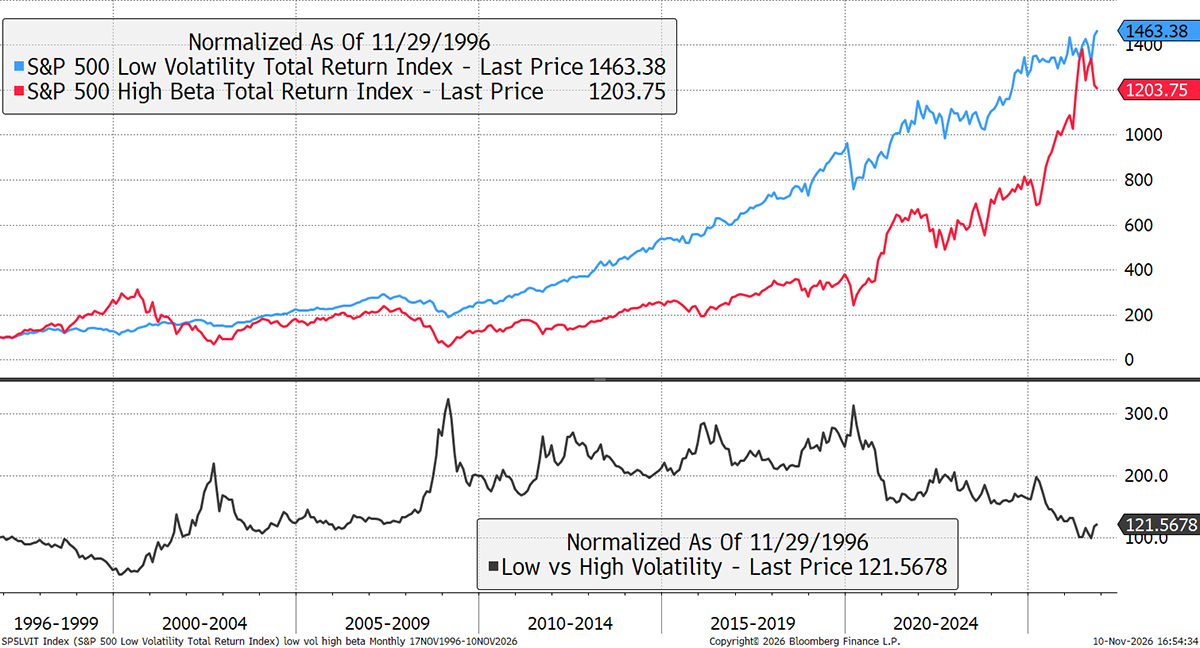
The rotation from risky, highly volatile stocks into safer, low-volatility stocks is a very old story that is coming back to the forefront today. High-beta stocks surged in 1999 before crashing in 2001, while low-volatility stocks offered the reverse: underperformance during the bubble and outperformance during the bust. The same relationship appears to hold today, as low-volatility stocks, including those in the Quality portfolio, have performed the best over the last six weeks, while high-beta stocks like AI and tech hardware have fallen.
High-Beta vs Low-Volatility Stocks
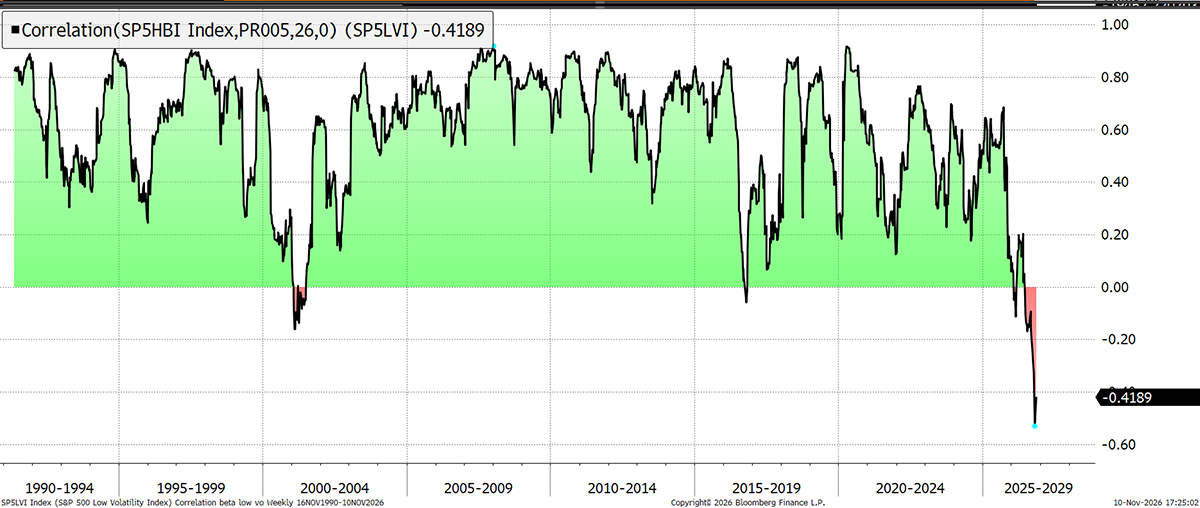
Another way to show this relationship is through the correlation of the two groups. When the line is high and shaded green, it means the two groups are roughly moving in the same direction, albeit with the high-beta stocks moving more. In 2000, the line briefly went negative, showing the anti-correlation that led low-vol stocks to rise even as tech stocks fell during the dotcom bust. Today, that anti-correlation is deeply negative, almost off the chart, and the most extreme reading in forty years.
What that means is that low-volatility stocks are an effective hedge against falling prices among the risky stocks that have led the market in recent years. If it’s safety you want, this is telling you to search among the low-volatility stocks.
Correlation of High-Beta and Low-Volatility Stocks
Taking this one step further, here is an analogue chart showing the performance of the two groups, now (solid lines) and in 2000 (dotted). The similarity in the performance of high-beta stocks in 2000 and today is striking.
2000 vs 2026: Does History Rhyme?
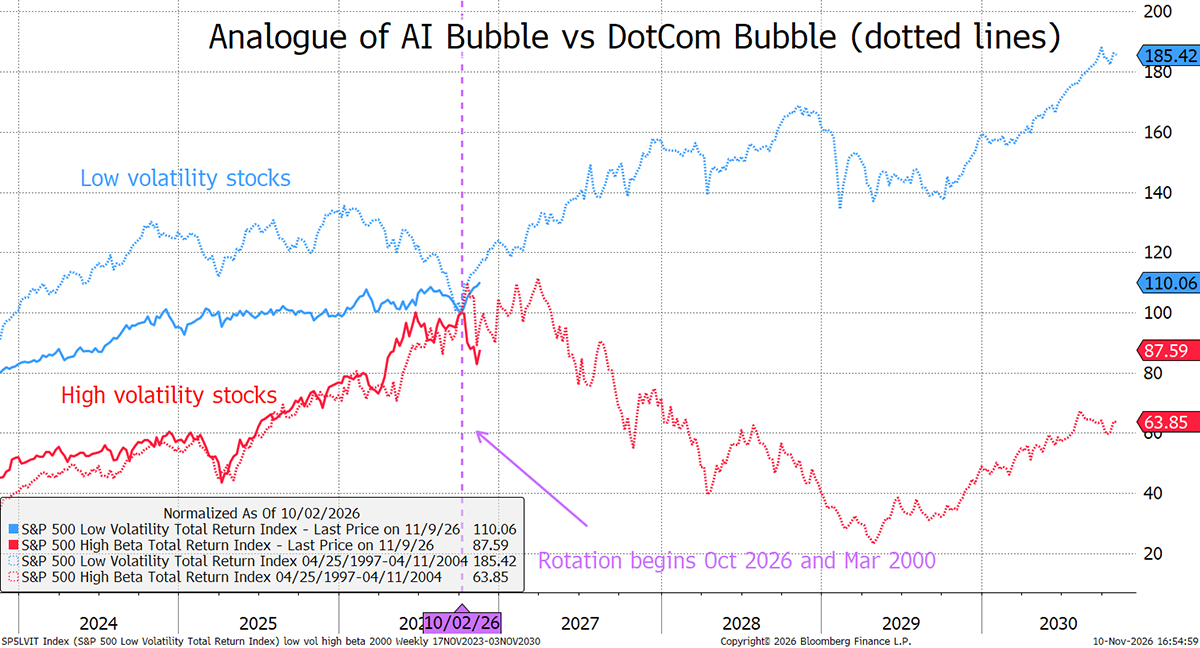
We will continue to monitor this relationship, and the 2000 analogue, as the current market develops.
The Quality Portfolio
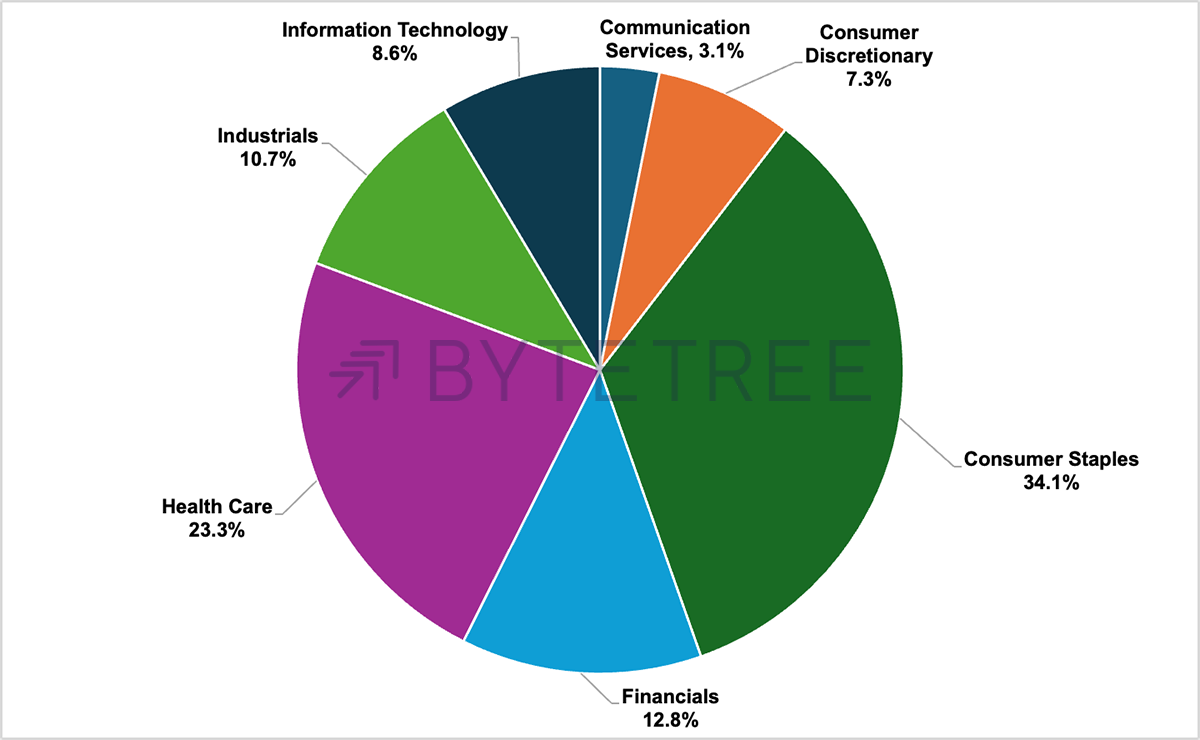
Moving on to look at how the portfolio has been constructed for this environment, we start by highlighting our large exposure to consumer stocks and healthcare. These were two of the most unloved sectors a year ago, after multi-year valuation declines, as investors chased the high-risk tech stocks shown above.
Portfolio Breakdown by Sector
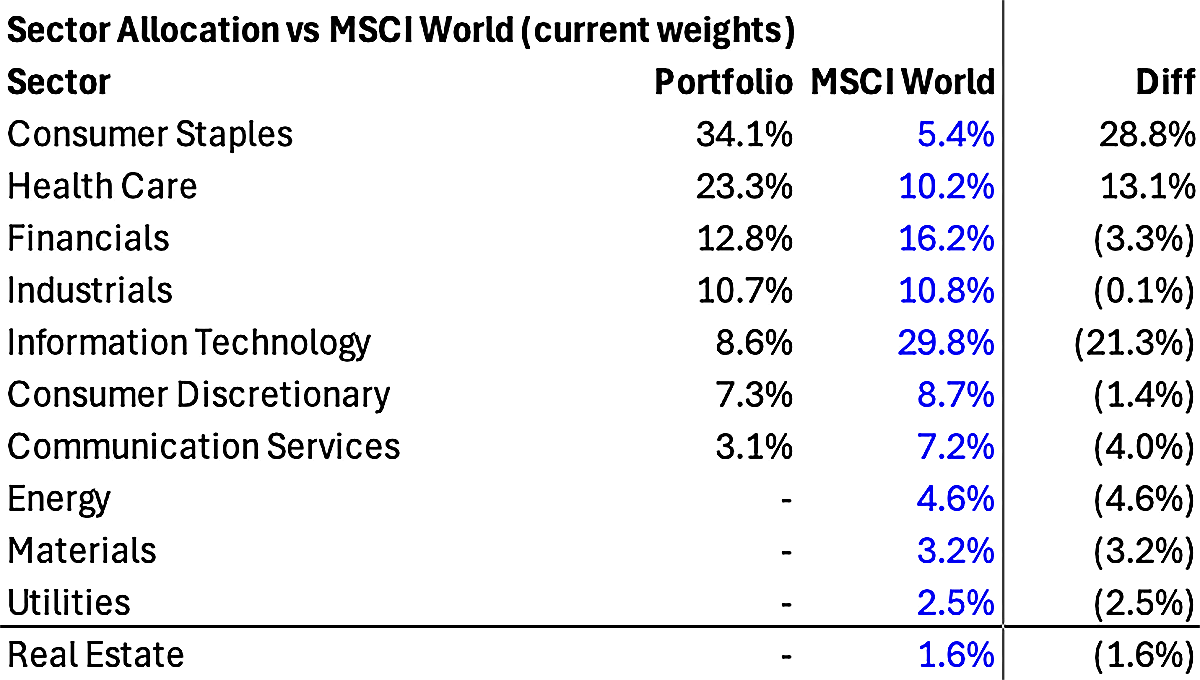
Shown against the sector weights of the index, the difference is clear. We own no stocks from Energy, Materials, Utilities, or Real Estate, which are driven by factors, rates, and prices beyond their control. We also own far less Technology (8.6% vs 29.8%). On the other hand, we are massively overweight in Healthcare and Consumer Staples stocks.
Portfolio Sector Weights vs World Index
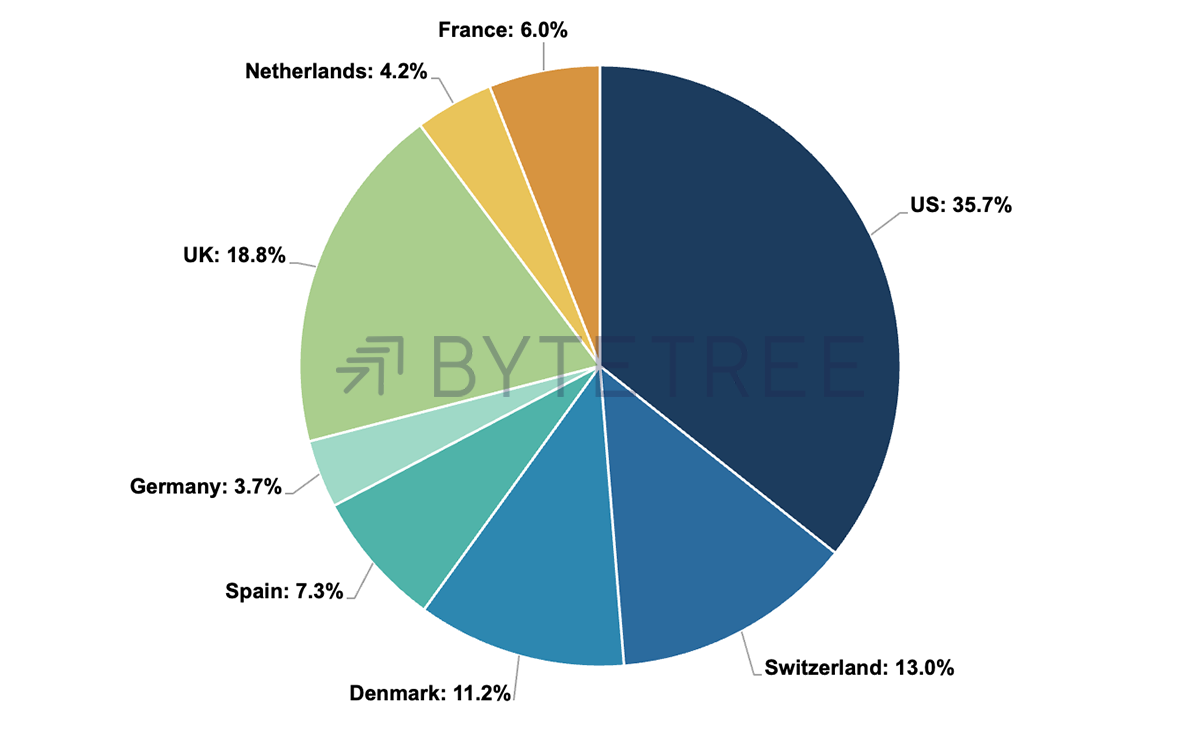
While the World Index is around 65% American stocks, we own far less than that. We don’t want to ignore the world’s largest and best market completely, but we have been selective and cautious in our approach, given the high valuations and concentration of that market. On the other hand, we found a great deal of value in Europe, particularly in the UK and Switzerland, which are home to many historic and great companies.
Portfolio Breakdown by Country
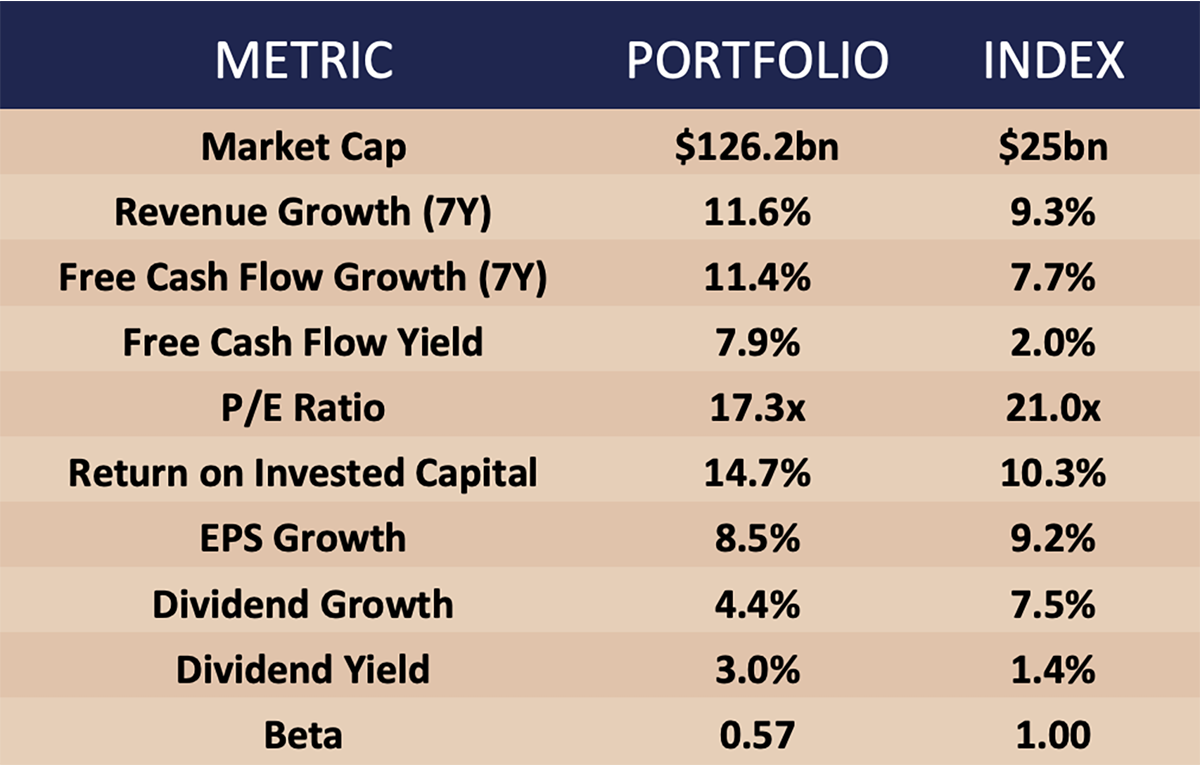
The end result is a portfolio with the following characteristics. Our companies are large, averaging around $125bn in market cap. Moreover, they are growing free cash flow faster than the average company in the index (11.4% vs 7.7%), despite being at a much lower valuation (FCF Yield of 7.9% vs 2.0%). A lower free cash flow yield reflects a more expensive valuation, like a dividend yield. Finally, we note the average beta of our holdings (not the portfolio as a whole) is 0.57, so the average stock will move far less than the index.
Together, these indicate that the ByteTree Quality portfolio has bought better companies at lower prices than the index, while still aiming to provide a smoother ride to our clients.
Portfolio Key Metrics
Portfolio Holdings
Diageo
Diageo traded at £16.50 per share when Dave Lewis was announced as the new CEO (10 November 2025). It jumped to £18 on the day. Later, it fell to £15 again when he started (1 January 2026). Now, it’s at £19. He has been lucky, because while he has delivered some green shoots of improvement, it is more the valuation and the broader market rotation that have driven Diageo higher so far.
Diageo Share Price and CEO Start Date
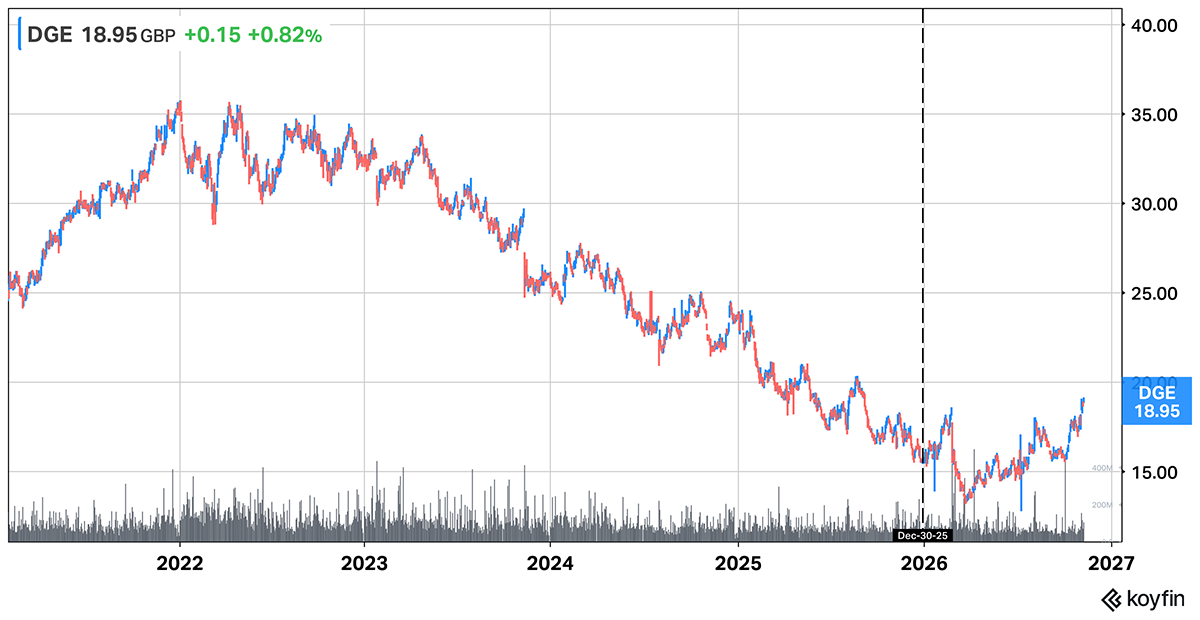
Diageo returned to positive organic growth in its Q3 results last week. Lewis’ focus on the RTD (ready-to-drink) category of cocktails in a can is starting to bear fruit. He has also sold off some key assets, bringing cash into the business and reducing its leverage, and the shares are up over 25% from the lows set in the spring.
Nestlé
Like Diageo, Nestlé has a new CEO (Philipp Navratil) who is focused on selling off the weakest brands, driving internal efficiency, and better adapting to customers and market shifts. For Nestlé, this means bringing new products to market that are tailored to people who are taking GLP-1 (weight-loss) drugs from the likes of Eli Lilly (Mounjaro) and Novo Nordisk (Ozempic/Wegovy).
Nestlé is shifting its portion sizes, adding things like fibre or protein, and acquiring companies which specialise in enhanced nutritional products. Its health science division has launched an online platform for people on the drugs to learn how their nutritional needs have changed.
Both the efficiency drive and product adjustments are working. Results are improving, and the share price is responding.
Nestlé Share Price
Amadeus
Amadeus is a software and IT company that provides critical services to the airline industry. The first half of the year saw both an oil shock and a panic about AI disrupting all software stocks. Once it had fallen to its lowest valuation in decades, we got interested, got comfortable with its resilience, and added it to the Quality portfolio.
Since then, oil prices have been volatile but have not broken to new highs, and recently, they have fallen back below $100 again. Meanwhile, the resilience behind certain software businesses is becoming better understood. Amadeus, for example, is working with:
- Nvidia on flight search solutions
- Anthropic for trusted intelligence
- Salesforce to develop agentic customer support
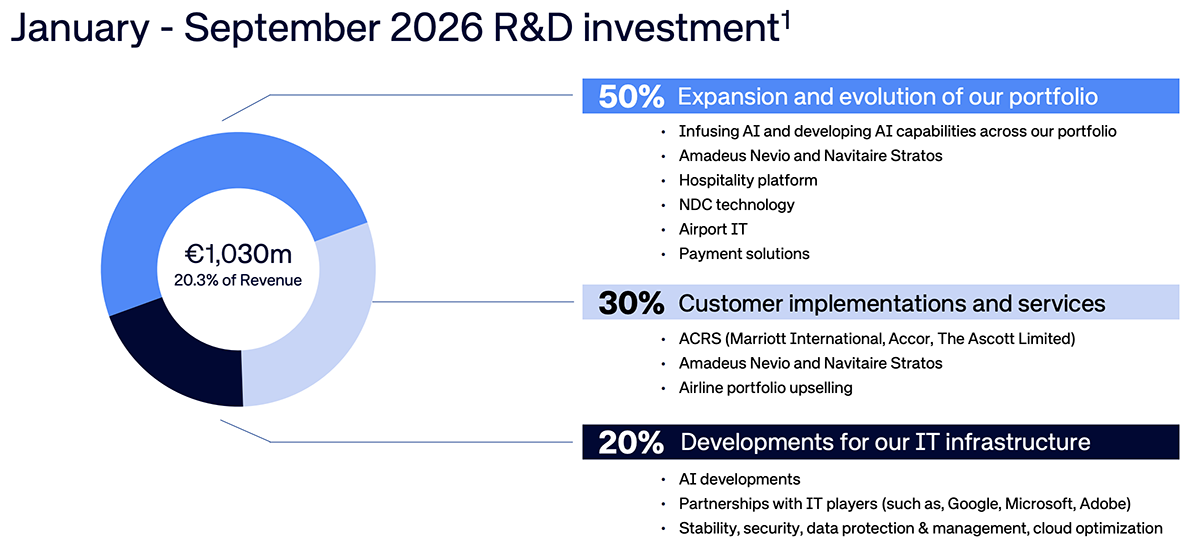
Amadeus continues to invest in improving its technology to adapt to the new era, spending 20% of annual revenues on R&D (over €1bn).
Amadeus Research and Development Spending
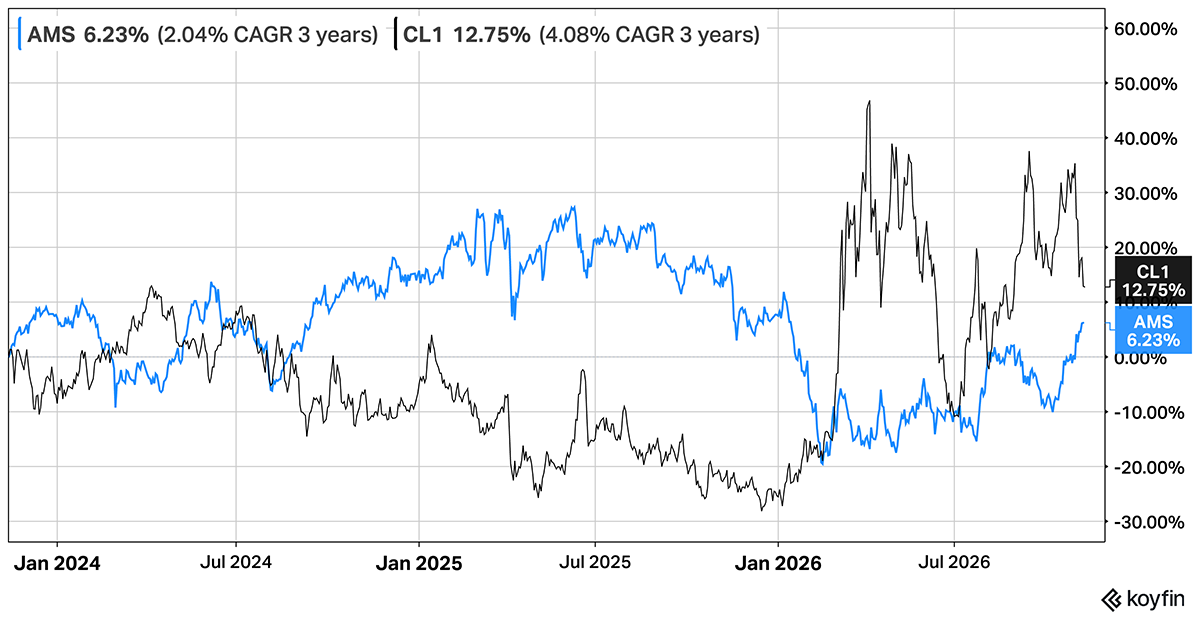
Amadeus also rose in October, even as oil prices rose, showing it is more than just a bet on lower oil prices.
Amadeus Share Price vs Oil Price
Genmab
Genmab is an innovative Danish drug development company with a technology platform for creating antibody-based drugs for various cancers. It also develops some of those drugs itself, or in partnership with other pharmaceutical firms. It has an excellent track record of innovation and a strong culture, leading to repeated medical breakthroughs.
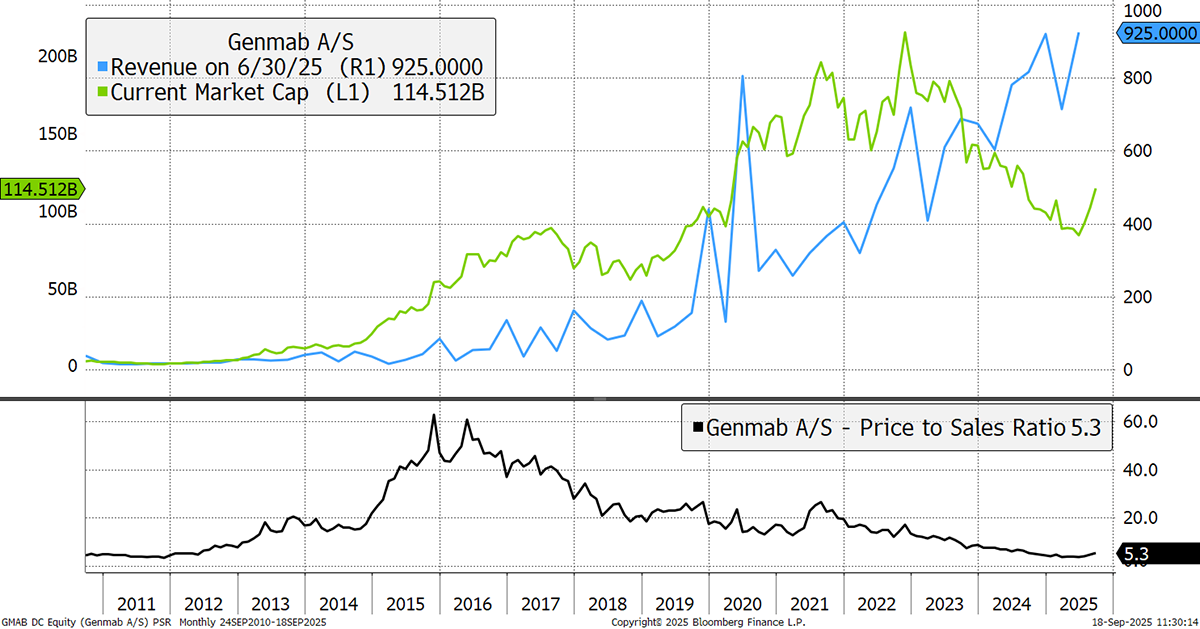
However, around a year ago, this was the picture we saw. Sales (blue line) were rising strongly, while the value of the company (green) was falling. This led to it having the lowest price-to-sales ratio in over a decade. It had just begun to turn higher, having fallen since 2022, when we added it to the Quality portfolio.
Genmab Price-to-Sales, as of September 2025
Most recently, it announced two sets of promising clinical trial results for leading drugs in its pipeline. These are important, as it will lose the patent on its largest drug later this decade.
Firstly, Epcoritamab, developed with AbbVie, was found to roughly halve the risk of lymphoma getting worse when added to standard chemotherapy. Because it’s given as a fixed treatment rather than indefinitely, it could move from a backup option to a first-choice treatment if regulators approve it, which would significantly expand its market. Secondly, Rina-S, for a hard-to-treat form of ovarian cancer, shrank tumours in nearly half of women who had already tried several other treatments. Unlike its main rival, it worked whether or not their tumours carried a particular marker, meaning more women could benefit.
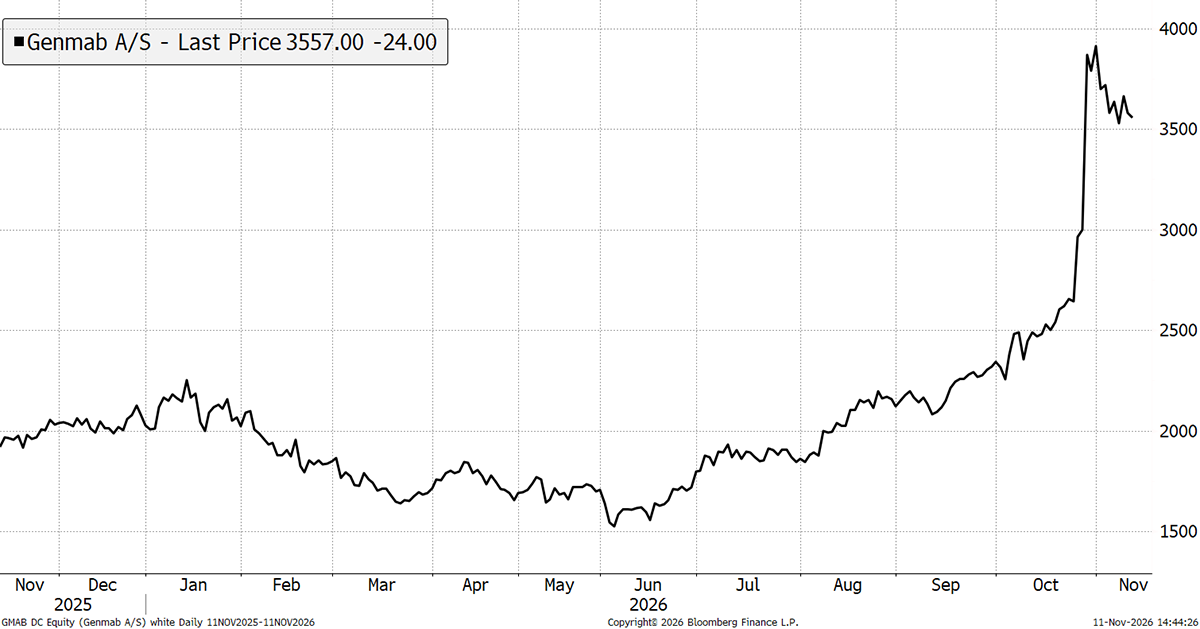
The result is that its share price went from a gentle uptrend into a sharp breakout, jumping 50% in a matter of weeks.
Genmab Share Price
SGS
Finally, SGS is a global market-leading Swiss testing and certification company. It is the company that retailers and service providers use for compliance certification with various regulations, such as exporters getting their cargo verified or food businesses getting safety tested.
The need for these tests gives SGS, the global market leader in this field, a steady and predictable revenue stream with healthy profitability. Recently, AI has also opened up a swathe of new opportunities for them. SGS said,
“The widespread adoption of AI, cloud computing, the IoT (Internet of Things), and automation across industries is generating demand for independent validation of algorithms, data integrity verification, and AI governance certification.”
The SGS Digital Trust division grew by 37% in Q3 2026. This is contributing to faster growth at the group level.
SGS Share Price and Revenue Growth
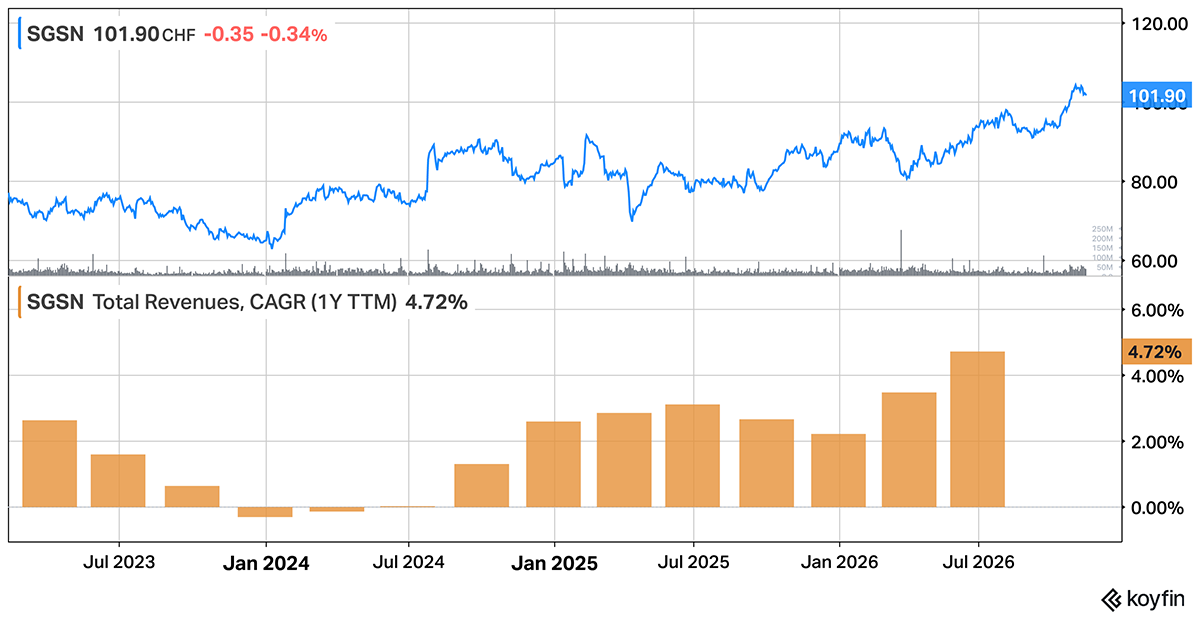
SGS is classic quality: an essential company, a market leader, profitable, with steady growth, historic, and Swiss.
Summary
These are just 5 of the 25 holdings in the ByteTree Quality model portfolio. We send out two updates per month, plus any portfolio changes when they arise. This allows us to stay on top of the portfolio holdings and their share price performance.
So far, we have made no changes to the portfolio since it became fully invested in July. We own great companies at good prices, and while we constantly review a concentrated group of potential candidates, none have yet met the high bar we set for replacing a current holding. We say no more often than yes in ByteTree Quality.
Upcoming Price Change to ByteTree Quality
ByteTree Quality was launched in September 2025, offered as a standalone subscription of £19/month, or bundled with The Multi-Asset Investor for £49/month. As highlighted in this update, Quality stocks have come to the forefront as a safe haven during this major market rotation out of tech and AI stocks, and we are very pleased with the performance so far.
With the ByteTree Quality portfolio now fully invested, we are increasing the subscription fees for new clients from 1 December. The standalone ByteTree Quality plan will increase from £19/month to £29/month. Similarly, the Quality and Multi-Asset Investor subscription bundle (TMAI + Quality) will increase from £49/month to £59/month.
If this is a service that interests you, and you’ve been thinking about subscribing, now is a good time to act. Subscribing to either the standalone plan or the bundle before the end of November will keep the ongoing subscription cost at the current lower price. There is no lock-in period, and you can cancel at any time.
Many thanks,
Charlie Morris and Kit Winder
Editors, ByteTree Quality
General - Your capital is at risk when you invest, never risk more than you can afford to lose. Past performance and forecasts are not reliable indicators of future results. Bid/offer spreads, commissions, fees and other charges can reduce returns from investments. There is no guarantee dividends will be paid. Overseas shares - Some recommendations may be denominated in a currency other than sterling. The return from these may increase or decrease as a result of currency fluctuations. Any dividends will be taxed at source in the country of issue.
Funds - Fund performance relies on the performance of the underlying investments, and there is counterparty default risk which could result in a loss not represented by the underlying investment. Exchange Traded Funds (ETFs) with derivative exposure (leveraged or inverted ETFs) are highly speculative and are not suitable for risk-averse investors.
Bonds - Investing in bonds carries interest rate risk. A bondholder has committed to receiving a fixed rate of return for a fixed period. If the market interest rate rises from the date of the bond's purchase, the bond's price will fall. There is also the risk that the bond issuer could default on their obligations to pay interest as scheduled, or to repay capital at the maturity of the bond.
Taxation - Profits from investments, and any profits from converting cryptocurrency back into fiat currency is subject to capital gains tax. Tax treatment depends on individual circumstances and may be subject to change.
Investment Director: Charlie Morris. Editors or contributors may have an interest in recommendations. Information and opinions expressed do not necessarily reflect the views of other editors/contributors of ByteTree Group Ltd. ByteTree Asset Management (FRN 933150) is an Appointed Representative of Strata Global Ltd (FRN 563834), which is regulated by the Financial Conduct Authority.
© 2026 ByteTree Group Ltd


