


Quality: Staying True


This is an interesting time to be a quality investor. Rising rates are not friendly to these bond-like equities with healthy dividends and steady growth. However, rates are rising enough to raise serious concerns among investors about high valuations and the narrow concentration of equity markets. Such fears make the safety of defensive quality stocks attractive.
There is a tipping point at which rising rates go too high, and the safety of quality begins to outweigh their rate sensitivity. Other than high growth stocks, at least while it lasts, few stocks like higher rates, but quality stocks have a history of proving resilient in a crisis. This is key to their attraction.
How serious is the move in bond yields? This is only the second time in history that the US 10-year yield has gone from under 4% to over 5.3% in 500 trading days or less. The only other time was June 2007, and we know what happened next. Meanwhile, French government bonds are at levels not seen since the 2011 Euro crisis, and U.S. mortgage rates are at levels last seen in 2001. Only China (black line) is seeing yields fall, as its deflation shock rumbles on.
Major Global Yields Since 2022
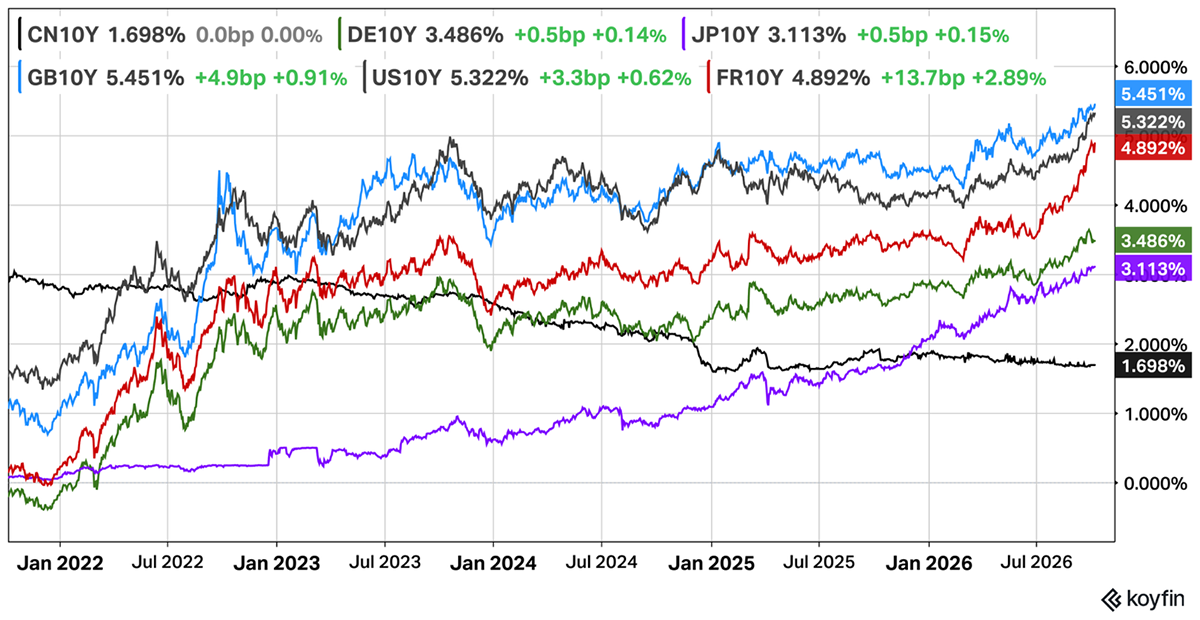
Some call this a normalisation after the abnormal zero-rate era of the 2010s; others call it a crisis. Either way, this is not a goldilocks market with low rates and low inflation. As a result, we are currently experiencing some of the narrowest breadth – i.e. a market with fewer stocks in uptrends – in 20 years.
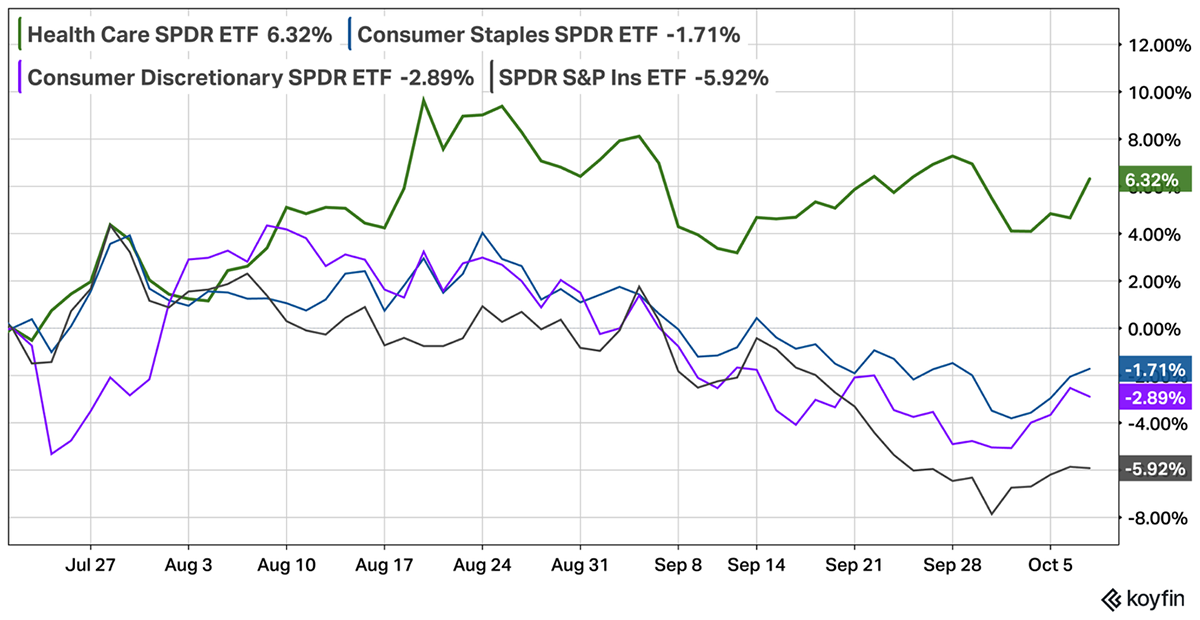
Within quality, some areas are stronger and others weaker. Consumer stocks are struggling, but healthcare is doing well. Software was strong until early September, but has had a weak month since. Insurance likes high rates because they boost income in their bond portfolios, but not rising rates, because they reduce the value of those portfolios. These are complex times.
Healthcare, Staples, Consumer Discretionary, and Insurance
Above all, the challenge for long-term investors who are clear-eyed about the dangers inherent in fast-moving, highly valued AI and technology stocks is whether to chase expensive large-cap momentum or wait patiently for the winds to change.
Quality in the Long Run
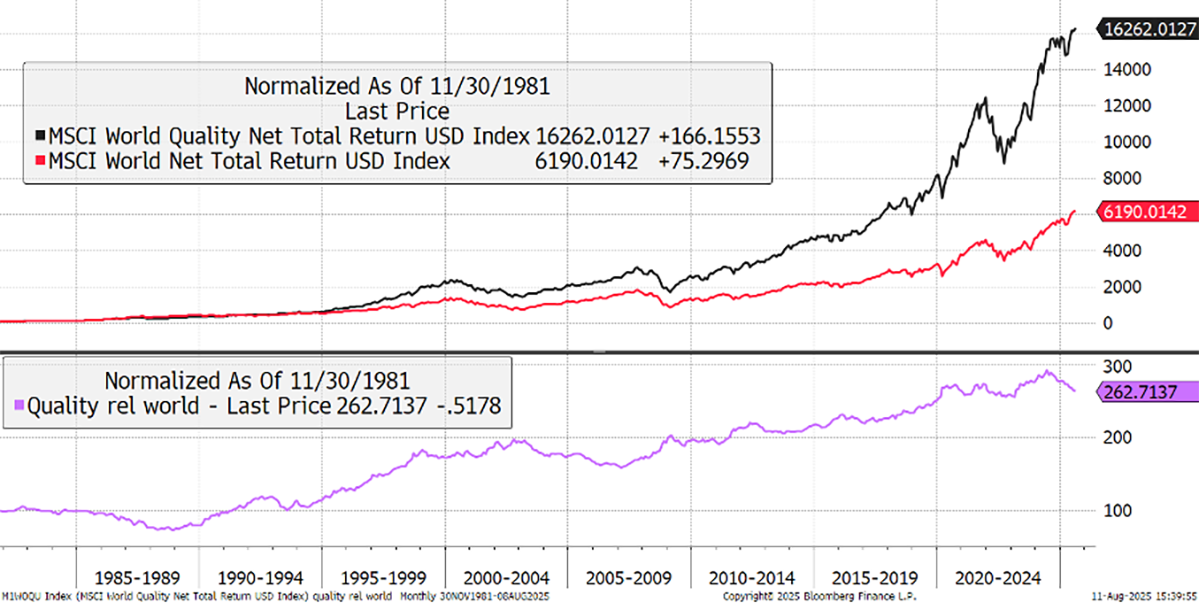
While we are not immune to performance pressures, ByteTree Quality’s answer is clear. We will stay true to sound investing principles, and not chase the latter stages of a narrow, expensive rally. We may make changes around the edges – e.g. shifting more from consumer staples into healthcare - but wholesale changes are not in order. We own the strongest brands, the best products, run by the best management teams, at the most historic companies, with the cheapest valuations. It is rare to find all these advantages in a single stock, but across the Quality portfolio, they are in abundance.
We are not making decisions on macro, nor on government policy, or geopolitics. We are betting that buying the best companies when they are truly cheap (against absolute metrics, their own history, peers, and future expected cash flows) will be a winning strategy through thick and thin. The more we can align with the prevailing winds, the better, but we won’t go wrong sticking with great companies at low prices.
General - Your capital is at risk when you invest, never risk more than you can afford to lose. Past performance and forecasts are not reliable indicators of future results. Bid/offer spreads, commissions, fees and other charges can reduce returns from investments. There is no guarantee dividends will be paid. Overseas shares - Some recommendations may be denominated in a currency other than sterling. The return from these may increase or decrease as a result of currency fluctuations. Any dividends will be taxed at source in the country of issue.
Funds - Fund performance relies on the performance of the underlying investments, and there is counterparty default risk which could result in a loss not represented by the underlying investment. Exchange Traded Funds (ETFs) with derivative exposure (leveraged or inverted ETFs) are highly speculative and are not suitable for risk-averse investors.
Bonds - Investing in bonds carries interest rate risk. A bondholder has committed to receiving a fixed rate of return for a fixed period. If the market interest rate rises from the date of the bond's purchase, the bond's price will fall. There is also the risk that the bond issuer could default on their obligations to pay interest as scheduled, or to repay capital at the maturity of the bond.
Taxation - Profits from investments, and any profits from converting cryptocurrency back into fiat currency is subject to capital gains tax. Tax treatment depends on individual circumstances and may be subject to change.
Investment Director: Charlie Morris. Editors or contributors may have an interest in recommendations. Information and opinions expressed do not necessarily reflect the views of other editors/contributors of ByteTree Group Ltd. ByteTree Asset Management (FRN 933150) is an Appointed Representative of Strata Global Ltd (FRN 563834), which is regulated by the Financial Conduct Authority.
© 2026 ByteTree Group Ltd


