


Venture: Update


Issue 128;
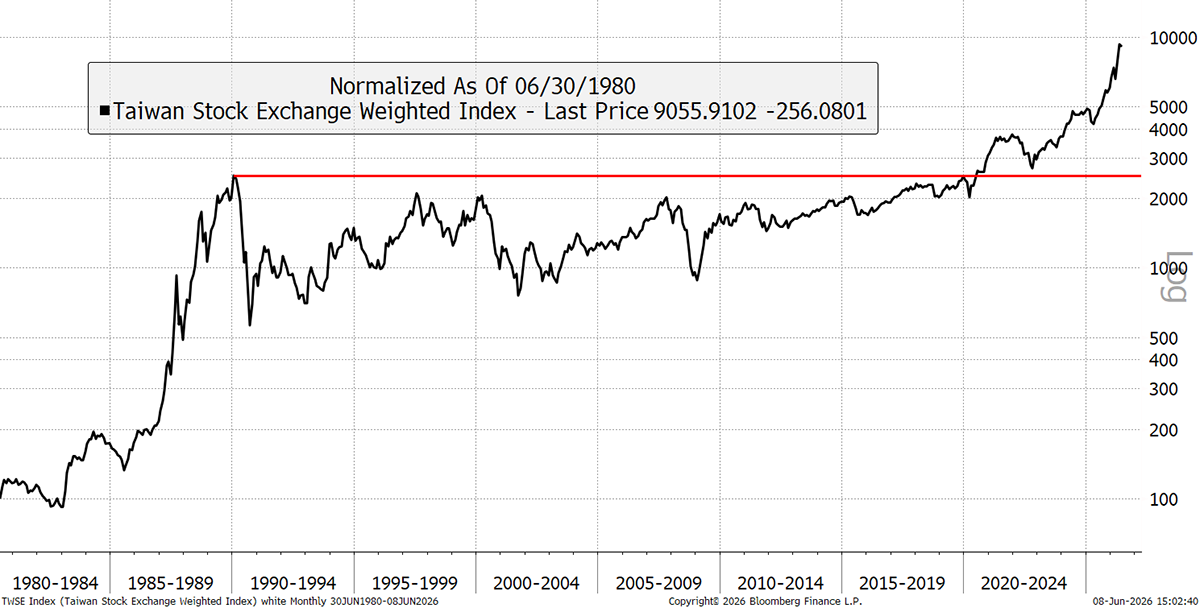
I bought the KOSPI, the Korean market Index, for the first time back in 2005. It peaked around the same time as Japan and Taiwan in the late 1980s, only to go sideways for the next 15 years. I will show the three markets since 1980.
Taiwan didn’t make a new high until after the pandemic, which was a 30-year wait. The market crashed in 1990, falling by 80% in just eight months.
Taiwan Stock Exchange since 1980
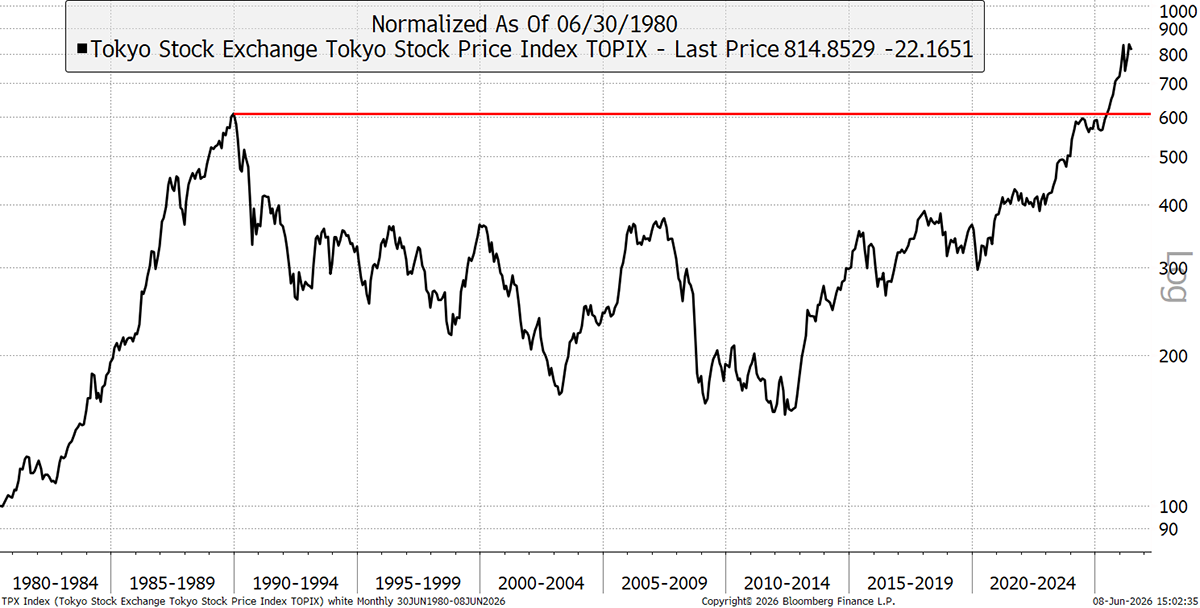
Japan had to wait even longer to make a new high, and didn’t break out until 2025, which was a 35-year wait.
The Japanese TOPIX since 1980
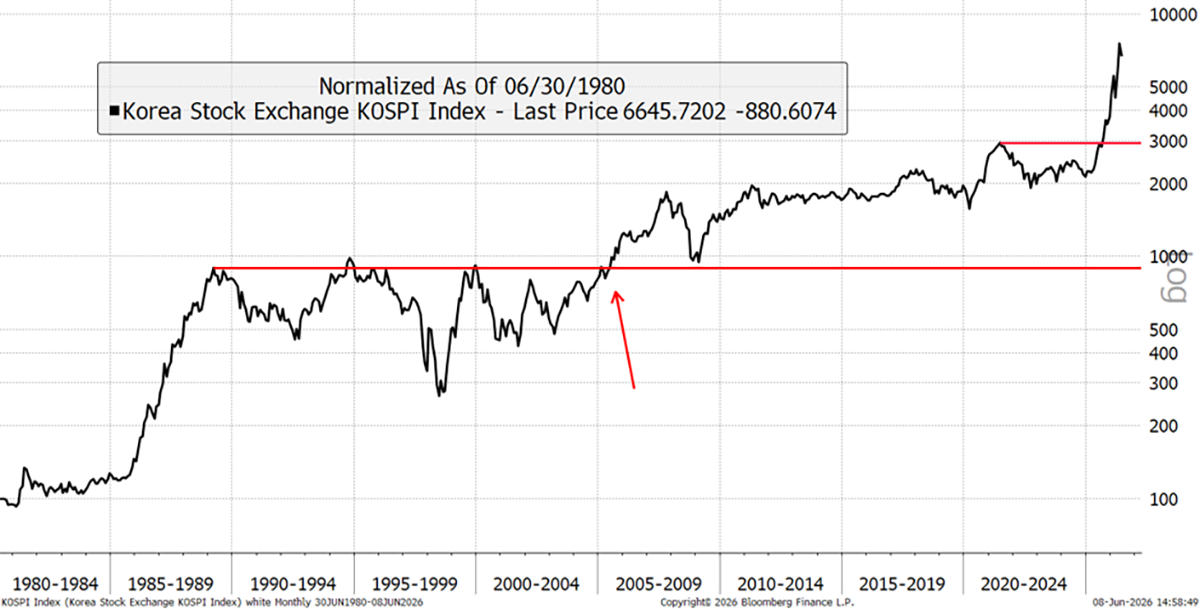
The KOSPI was the first to break out in 2005, a 15-year wait, which was 20 years ahead of Japan and 15 years ahead of Taiwan. In 2005, the appeal wasn’t electronics, but industry. POSCO had become the world’s most efficient steel producer and symbolised the country’s broad industrial progress.
The Korean KOSPI since 1980
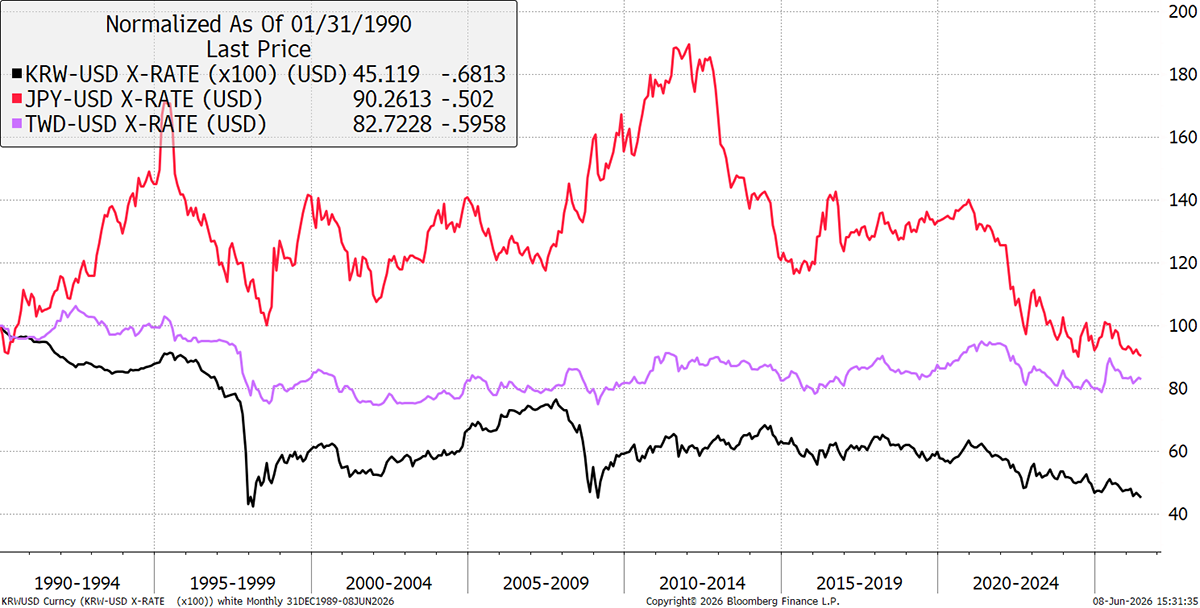
The currencies are different stories. The Taiwan Dollar has been stable other than a minor devaluation in the late 1990s, during the Asian Financial Crisis. The Japanese Yen was one of the world’s strongest currencies until 2012, when it started to devalue. The Korean Won stands as the weakest, down 55% against the dollar over the period. The savage Won correction of 60% during the Asian Crisis helps to explain why the KOSPI was the first to recover.
Korean Won, Japanese Yen, Taiwan Dollar vs US Dollar since 1990
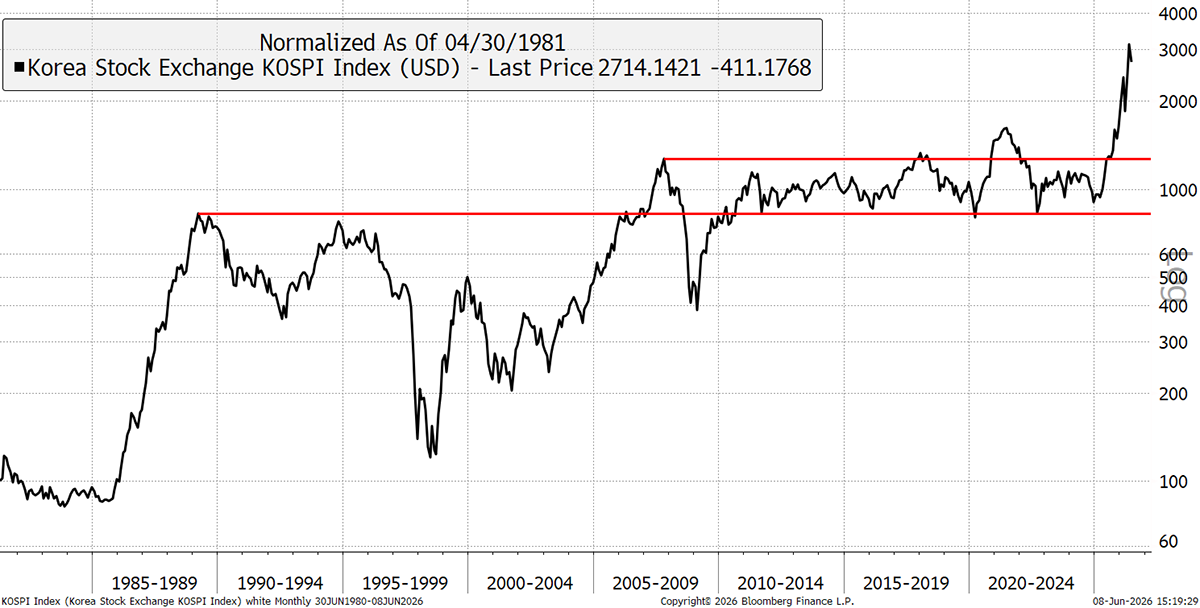
The KOSPI in US dollars is a curious chart. So much money was made in Korean stocks (10x) in the late 1980s. The index doubled in 2005 but stalled by 2007. The market traded within a range for another 20 years before the recent breakout. The 1980-to-present gain is 30x in USD (half the S&P 500 in capital terms), with much of that performance coming recently.
The Korean KOSPI since 1980 – in USD
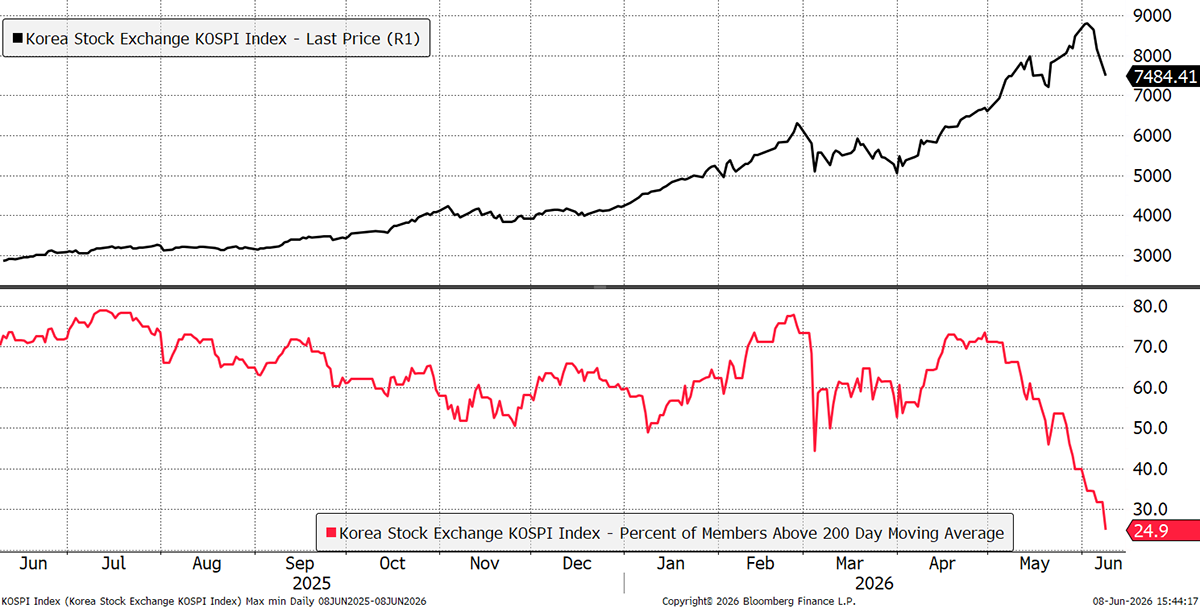
The curious thing about the latest rally is how the market has been so strong despite having such weak breadth. Just 25% of stocks are trading above their 200-day moving averages, a trend that has been deteriorating since late April. It is a clear sign that this won’t last much longer.
The Korean KOSPI – Past Year
Last Friday saw a sharp correction in global semiconductor stocks, and we await the forthcoming IPO spree. To us, it doesn’t seem that the good times can last for much longer.
This week, we are reducing some risk.
General - Your capital is at risk when you invest, never risk more than you can afford to lose. Past performance and forecasts are not reliable indicators of future results. Bid/offer spreads, commissions, fees and other charges can reduce returns from investments. There is no guarantee dividends will be paid. Overseas shares - Some recommendations may be denominated in a currency other than sterling. The return from these may increase or decrease as a result of currency fluctuations. Any dividends will be taxed at source in the country of issue.
Funds - Fund performance relies on the performance of the underlying investments, and there is counterparty default risk which could result in a loss not represented by the underlying investment. Exchange Traded Funds (ETFs) with derivative exposure (leveraged or inverted ETFs) are highly speculative and are not suitable for risk-averse investors.
Bonds - Investing in bonds carries interest rate risk. A bondholder has committed to receiving a fixed rate of return for a fixed period. If the market interest rate rises from the date of the bond's purchase, the bond's price will fall. There is also the risk that the bond issuer could default on their obligations to pay interest as scheduled, or to repay capital at the maturity of the bond.
Taxation - Profits from investments, and any profits from converting cryptocurrency back into fiat currency is subject to capital gains tax. Tax treatment depends on individual circumstances and may be subject to change.
Investment Director: Charlie Morris. Editors or contributors may have an interest in recommendations. Information and opinions expressed do not necessarily reflect the views of other editors/contributors of ByteTree Group Ltd. ByteTree Asset Management (FRN 933150) is an Appointed Representative of Strata Global Ltd (FRN 563834), which is regulated by the Financial Conduct Authority.
© 2026 ByteTree Group Ltd


