Bitcoin – The Hedge Against War


ByteFolio Issue 201;
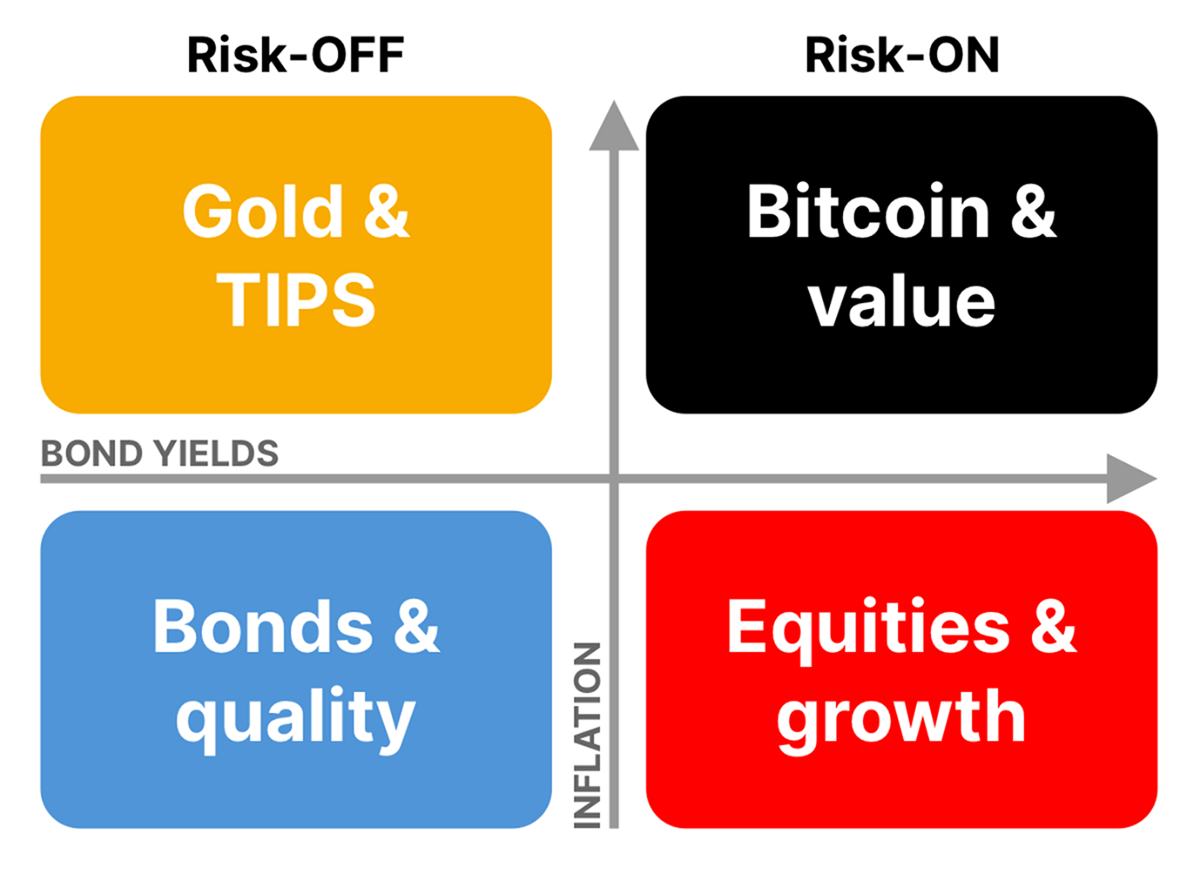
Bitcoin’s ByteTrend Score has risen to a 3. Bitcoin has been the best performing major asset, oil excepted, since the invasion of Iran began. When will institutional investors finally take note of this outcast asset with $50 billion in daily liquidity?
Bitcoin
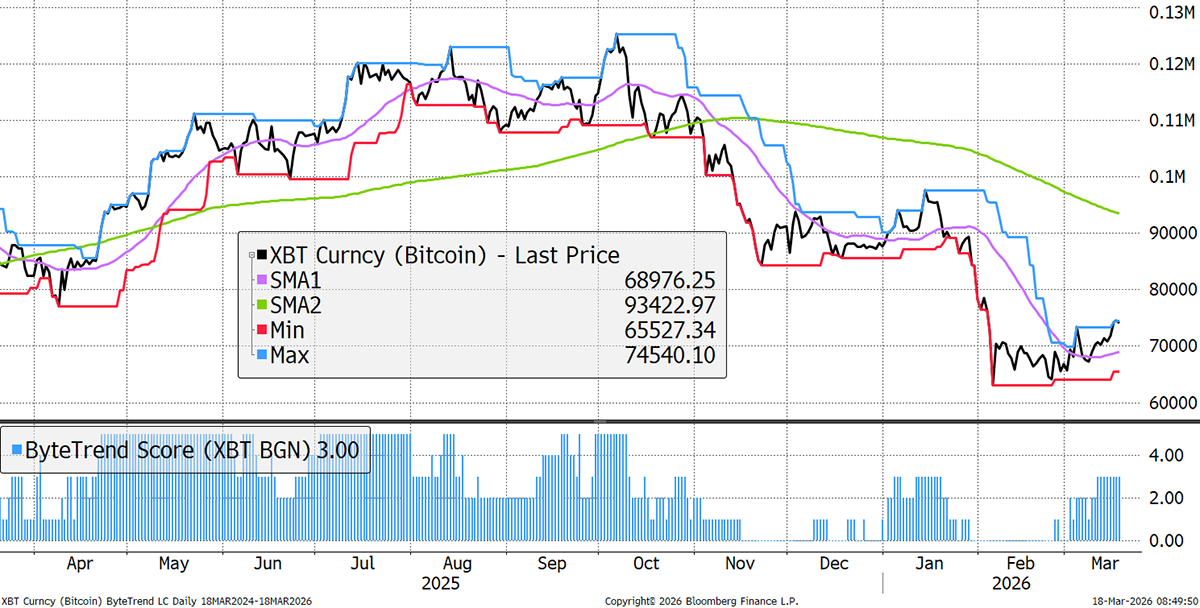
Like oil, Bitcoin sits in the top-right box of ByteTree’s Money Map. It performs best when bond yields and inflation are rising, i.e. when nominal GDP growth is buoyant and when money is awash. In that same group, which I call value, we also find hard assets such as commodities and heavy industry, and, lo and behold, the banks.
The ByteTree Money Map
To illustrate this, I show Bitcoin against bonds. The red line combines two-year interest rates and inflation expectations. These relationships are imperfect, as there are many influences in markets, but it does appear that the price of Bitcoin (black) prefers rates and inflation to be rising rather than falling.
Bitcoin Is a Value Asset
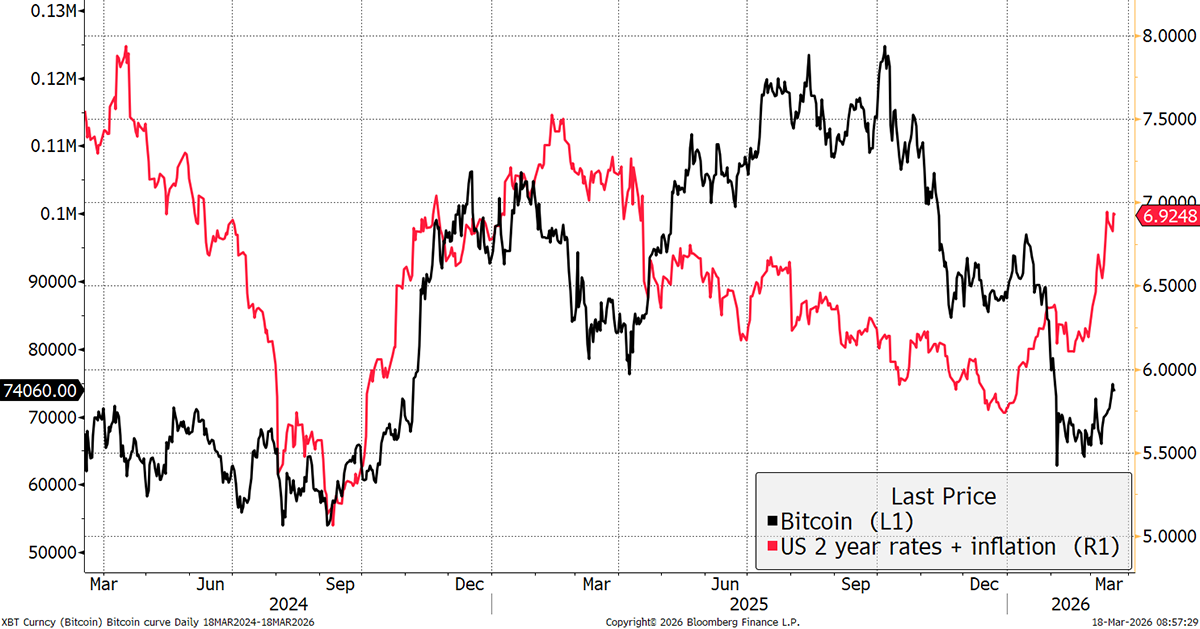
That helps to explain why Bitcoin has been strong since the war in Iran began, as rates and inflation have risen. Bitcoin is also virtual and decentralised. Virtual is attractive in times of conflict, and decentralised reminds us of the importance of avoiding a single point of failure. No military power could shut down the Bitcoin network.
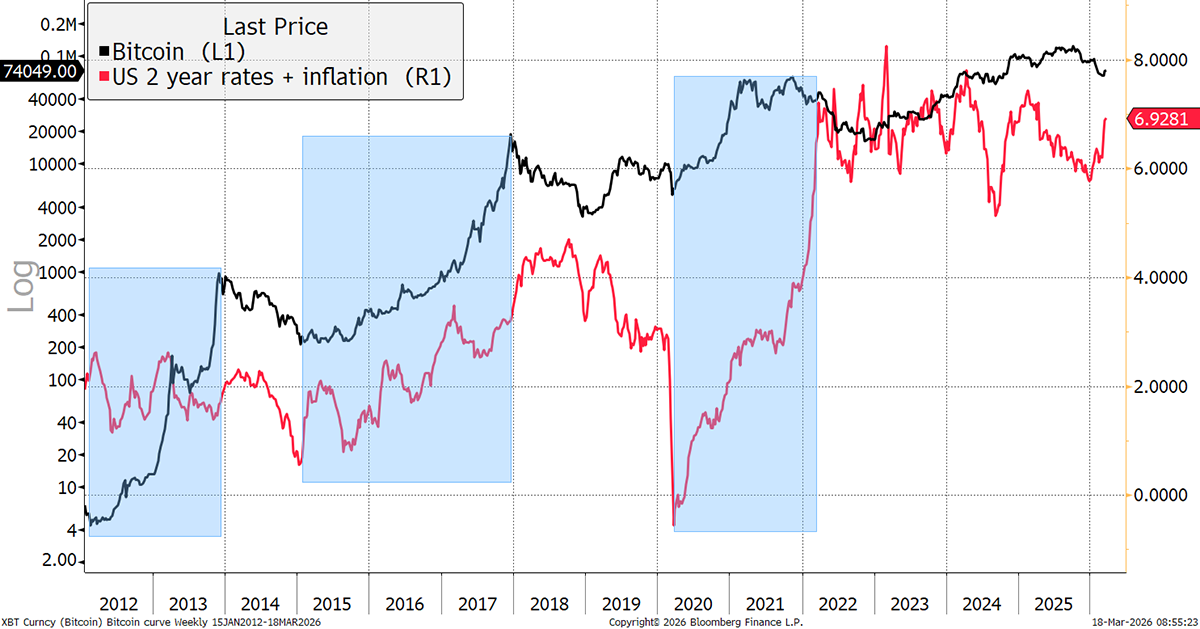
With the pandemic and the associated rates and inflation crisis post-2020, this relationship seems mixed, as many other factors were at play, but the previous decade makes it clear. Bitcoin has seen circa 95% of its appreciation when rates and inflation have been flat or rising.
Bitcoin Performs Best when Rates and Inflation Are Rising
This naturally differentiates Bitcoin from Gold, which prefers real rates to be falling. In other words, both assets like rising inflation, but Bitcoin prefers rising rates, and Gold prefers falling rates. It therefore stands to reason that Bitcoin priced in Gold is responsive to the bond yield. Again, imperfect but pretty good, nevertheless.
Bitcoin Priced in Gold vs Bond Yields
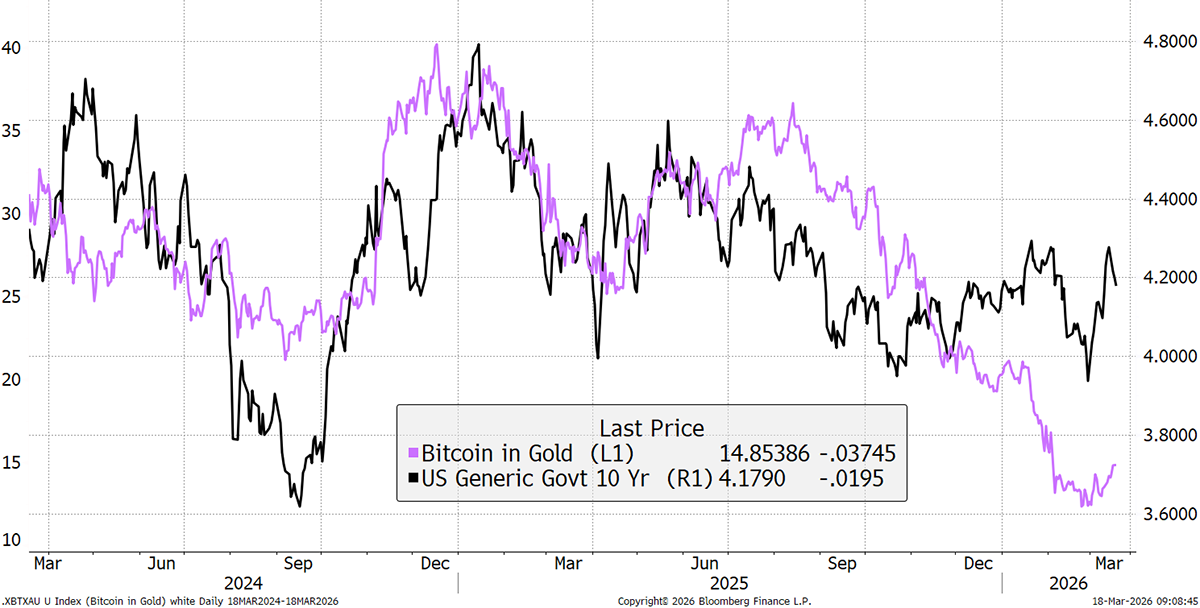
Bitcoin and Gold are highly liquid, alternative assets with a key difference, which can be summarised by the change in bond yields. It is normally the case that we associate rising yields with Risk-ON, and falling yields with Risk-OFF, but of course, an oil shock drives yields higher, and can hardly be described as Risk-ON. Nothing is assured in financial markets. There’s also the fact that Gold came into the Iran conflict red hot after a spectacular run, while Bitcoin had been dumped alongside software stocks.
Bitcoin is the world’s second-most liquid alternative investable asset after Gold. It has the same long-term objective as Gold, which is to protect against inflation and debasement, but kicks in at different times, and therefore is an efficient diversifier. When will the institutional investors wake up and engage with Bitcoin and digital assets? It’s real, and it’s legal. Current attitudes can only be described as prejudiced.
Bitcoin and Gold Leave Equities for Dust
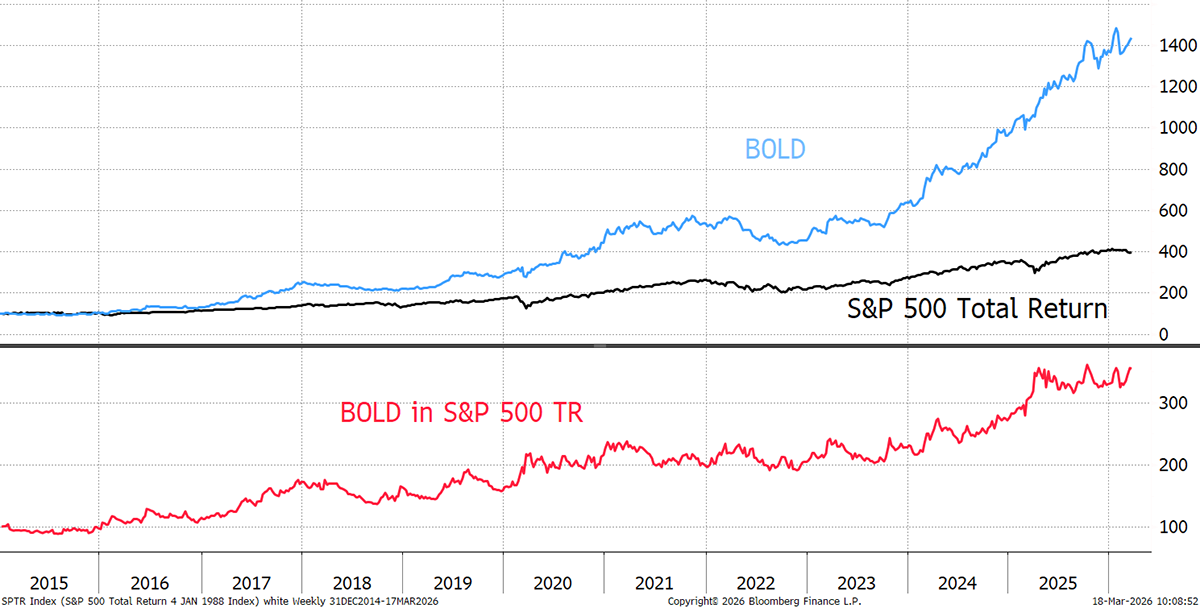
To learn more about combining Bitcoin and Gold as an investable strategy, please look at my short presentation on ByteTree’s BOLD Index. Curious institutional investors should look up the BOLD1 Index on Bloomberg, but beware, it takes risk-adjusted returns to a new level.