


Venture: Commodities


Issue 124;
The fastest-rising trend is in semiconductors, which are expensive, volatile, and overbought. For calmer, younger and cheaper trends, the best place to look is in commodities, which have a catalyst. The war in Iran is driving inflation higher, and a key beneficiary is commodities.
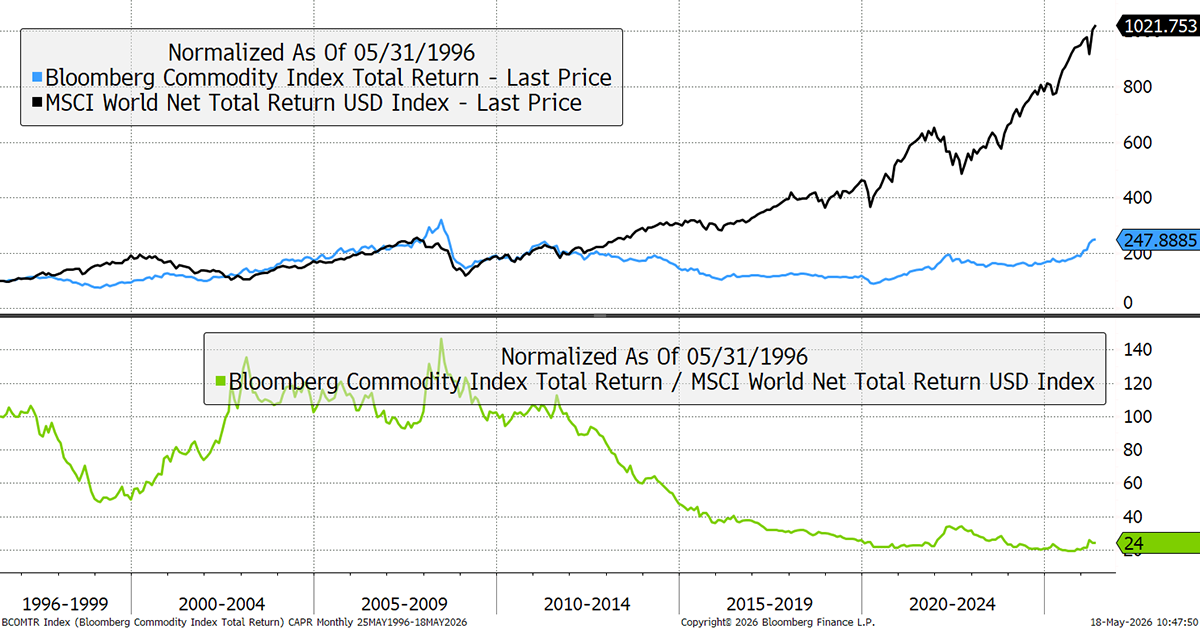
Precious metals have done most of the work in recent years, but that is now spreading to energy, agriculture, and industrial metals. Not only are commodities starting to outperform, but they also have low correlation with equities, making them a powerful diversifier. Moreover, investors’ allocations are still not high enough.
Equities vs Commodities since 1996
Some years ago, I created this somewhat hectic chart showing the major commodities compared to gold. When high, they are cheaper than gold, and when low, they are pricier than gold. Natural gas (light blue) is the cheapest of all, but it is hard to invest in, due to a punitive roll yield. For example, spot natural gas is up 48% over 10 years, but the ETP that tracks it is down 92% over the period. Don’t blame the ETP; it is just how gas futures work, with a massive negative roll yield, driven by high storage costs and a low above-ground supply.
Commodities vs Gold
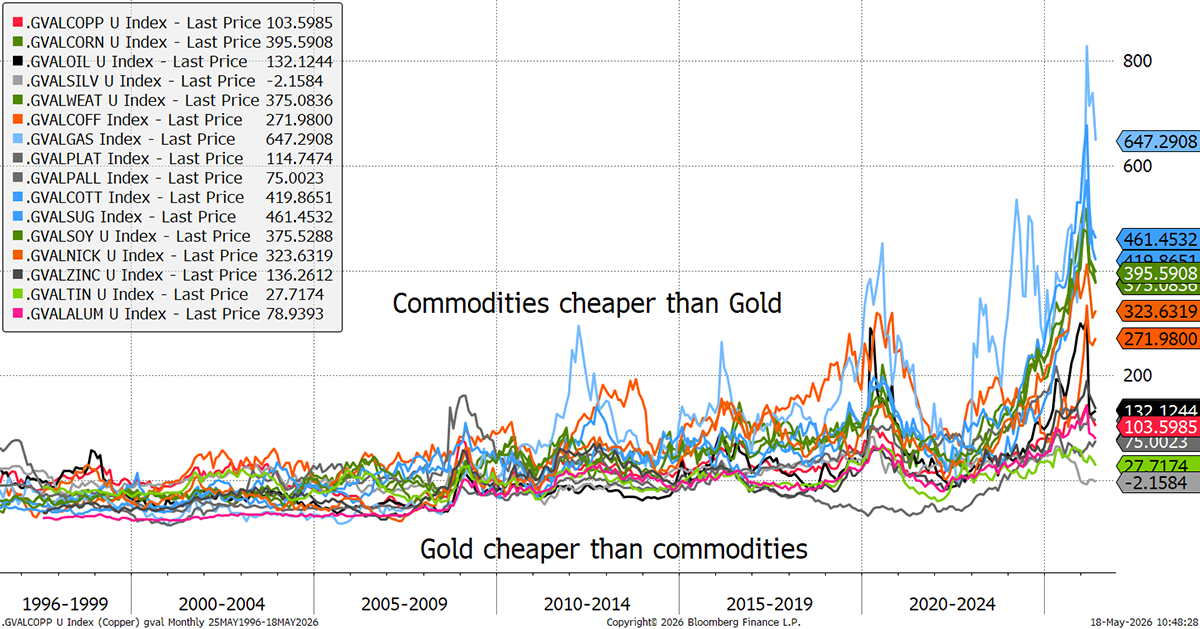
The next cheapest group, still in blue, is agriculture, and that is what I will discuss today.
General - Your capital is at risk when you invest, never risk more than you can afford to lose. Past performance and forecasts are not reliable indicators of future results. Bid/offer spreads, commissions, fees and other charges can reduce returns from investments. There is no guarantee dividends will be paid. Overseas shares - Some recommendations may be denominated in a currency other than sterling. The return from these may increase or decrease as a result of currency fluctuations. Any dividends will be taxed at source in the country of issue.
Funds - Fund performance relies on the performance of the underlying investments, and there is counterparty default risk which could result in a loss not represented by the underlying investment. Exchange Traded Funds (ETFs) with derivative exposure (leveraged or inverted ETFs) are highly speculative and are not suitable for risk-averse investors.
Bonds - Investing in bonds carries interest rate risk. A bondholder has committed to receiving a fixed rate of return for a fixed period. If the market interest rate rises from the date of the bond's purchase, the bond's price will fall. There is also the risk that the bond issuer could default on their obligations to pay interest as scheduled, or to repay capital at the maturity of the bond.
Taxation - Profits from investments, and any profits from converting cryptocurrency back into fiat currency is subject to capital gains tax. Tax treatment depends on individual circumstances and may be subject to change.
Investment Director: Charlie Morris. Editors or contributors may have an interest in recommendations. Information and opinions expressed do not necessarily reflect the views of other editors/contributors of ByteTree Group Ltd. ByteTree Asset Management (FRN 933150) is an Appointed Representative of Strata Global Ltd (FRN 563834), which is regulated by the Financial Conduct Authority.
© 2026 ByteTree Group Ltd


